Choosing a cobot usually starts with price and brand and ends with a problem: the arm can’t reach, can’t lift the gripper with the part, or fails the safety check. To avoid this, collect six parameters — they determine whether a model suits your task.
1. Payload: include the gripper
The rated payload is the mass the robot can hold at the flange. It includes the part, the gripper, the sensors and the cables. If the part weighs 3 kg and the gripper 1.5 kg, a 5 kg model may not be enough: you need a margin, especially at speed and at maximum reach, where the permitted payload is usually lower.
- small lab and teaching manipulators: from 250 g (Elephant myCobot 280 Pi) to 600 g (UFACTORY Lite 6);
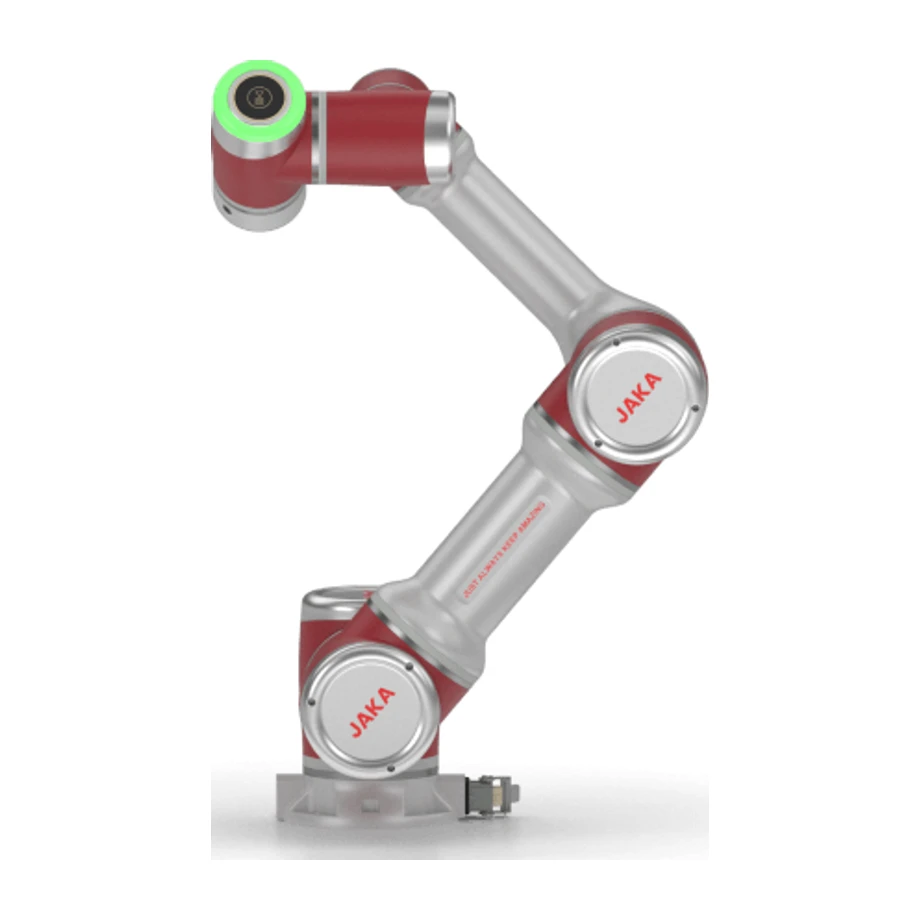
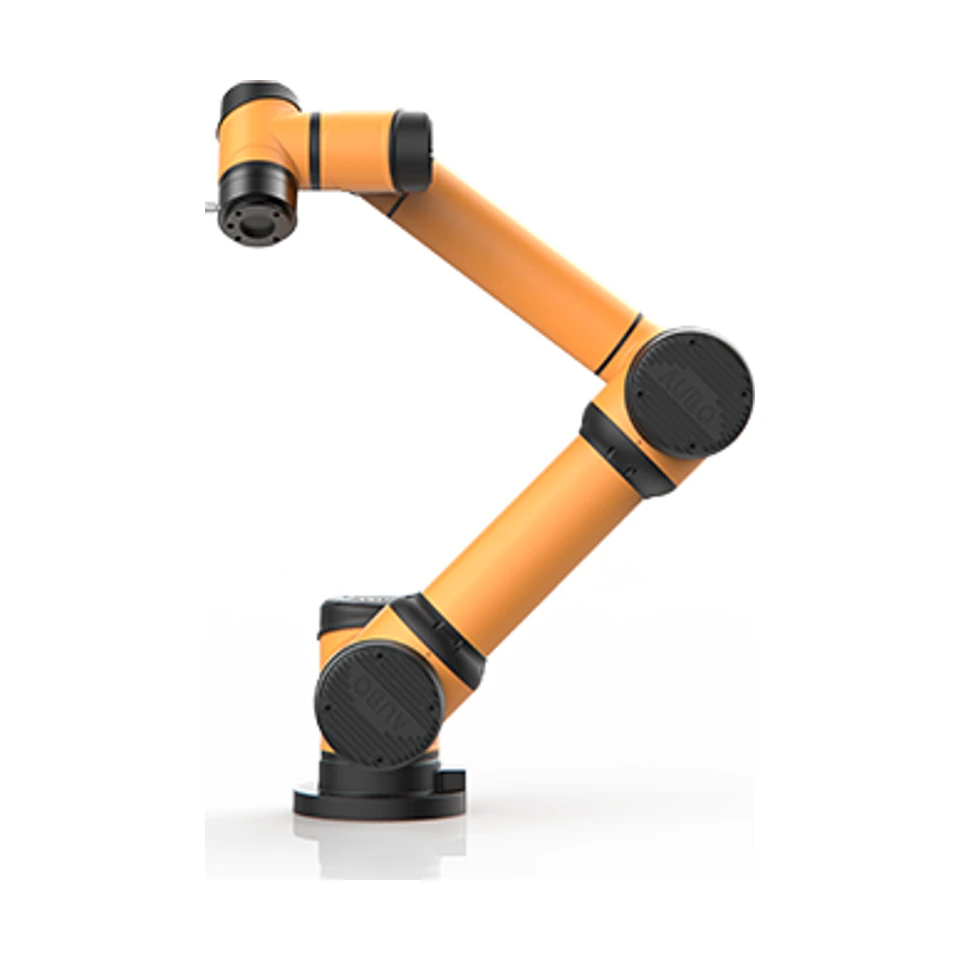
- light cobots for assembly, cafés and retail: 5–7 kg (Dobot Nova 5, AUBO i5, JAKA Zu 7);
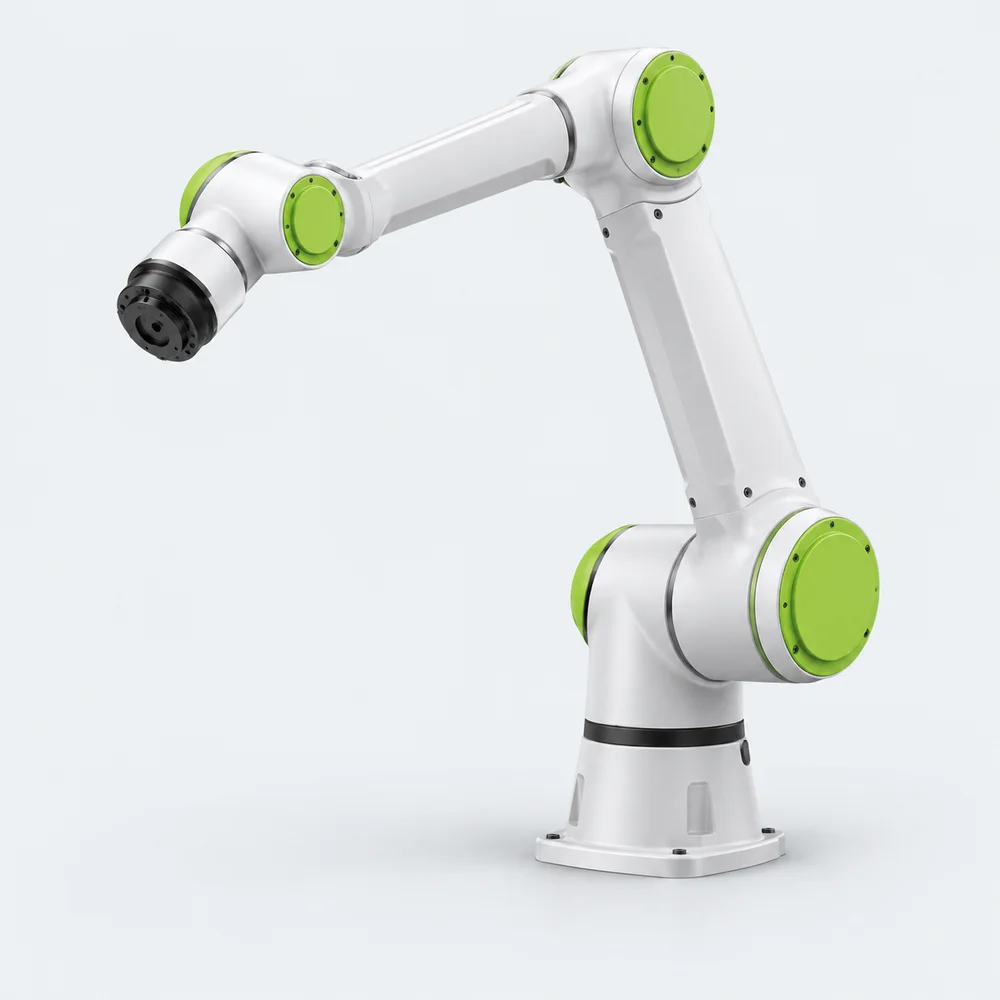
- industrial: 10 kg and above (Dobot CR10A, FANUC CRX-10iA), up to 15 kg in some series (KUKA LBR iisy).
2. Reach: check that every point is within range
Reach is the distance from the base to the farthest point the tool can touch. But distance is not everything: a cobot has a “dead zone” near the base and awkward configurations. Draw the cell to scale or check it in the manufacturer’s simulator: make sure every pick and place point is reachable with the required tool orientation.
In the catalog the reach of light cobots is 800–900 mm (Dobot Nova 5 — 850 mm, JAKA Zu 7 — 819 mm, AUBO i5 — 886.5 mm), and for 10 kg models about 1250–1300 mm.
3. Repeatability and accuracy are not the same thing
Repeatability shows how precisely the robot returns to the same taught point: for catalog models it is ±0.02 mm (AUBO i5, JAKA Zu 7), ±0.03 mm (Dobot CR10A), ±0.05 mm (Dobot Nova 5, FANUC CRX-10iA). Absolute accuracy is hitting a coordinate set by calculation, and it is usually worse. For moving parts between fixed points repeatability is enough; for camera- or drawing-based work look at accuracy and calibration.
4. Safety and operating environment
- ask whether the model complies with ISO 10218 (stated for the Dobot CR10A) and which safety functions the controller supports;
- check the ingress protection rating: the FANUC CRX-10iA is rated IP67, which matters near coolant and dust;
- assess the tool: a sharp attachment or hot part will require a fence even if the arm itself is collaborative.
5. Programming and integration
Find out who will start and modify the programs. If it is a process engineer with no robotics experience, you need hand guiding, drag-and-drop and an understandable interface: the Dobot Nova 5 offers drag-and-drop programming and the JAKA Zu 7 can be programmed from a tablet or phone. If it is engineers and researchers, open interfaces matter: the AUBO i5 supports an open API and ROS, the UFACTORY Lite 6 — Python, ROS and Blockly.
Separately, check how the robot connects to the machine, the conveyor and the camera: whether there are ready-made libraries, I/O and supported grippers.
6. Supply, service and documents
When ordering through SHKARAN, lead time, warranty and service matter: who sets up, repairs and trains staff, which spare parts are in stock and what happens if the robot fails. For Western brands the catalog shows a supply status (made to order, pre-order, etc.); for Chinese ones, terms are confirmed per order. Check certification and approval for your industry before buying.
Selection checklist
| Question | What to check |
|---|---|
| How much do you need to lift? | Part + gripper + sensors, plus a 20–30% margin for speed and reach |
| Where does the arm need to reach? | All pick and place points, to scale or in a simulator |
| What accuracy do you need? | Repeatability for transfers, accuracy and calibration for camera-guided work |
| Who will program it, and how? | Hand guiding and a tablet for process engineers; API and ROS for engineers |
| Where will it be installed? | Protection rating, fence, sharp tool, proximity to people |
| Who services it? | Warranty, spare parts, training, lead time |
Read also
- Cobot at the machine: automating part loading
- Fingers or suction cups: choosing the right gripper for your cobot
- Cobots by task: what to choose for a lab, café, assembly and machine tending
Frequently asked questions
How do I choose a cobot by payload?
Add up the mass of the part, gripper and sensors and add a margin. The rated payload applies at the flange; at long reach and high speed the permitted payload is usually lower.
How does repeatability differ from accuracy?
Repeatability is how precisely the robot returns to a taught point; accuracy is how precisely it reaches a calculated coordinate. For most transfers repeatability is enough.
Which cobot should I take for a small factory?
For light parts and assembly, 5–7 kg models fit: Dobot Nova 5, AUBO i5, JAKA Zu 7. For machine tending and palletizing, 10 kg and above, for example the Dobot CR10A or FANUC CRX-10iA.
Can I order a cobot for a specific task?
Yes. Describe the part, weight, cycle and conditions — we will select a model and calculate the price with delivery. You can leave a request on the site.