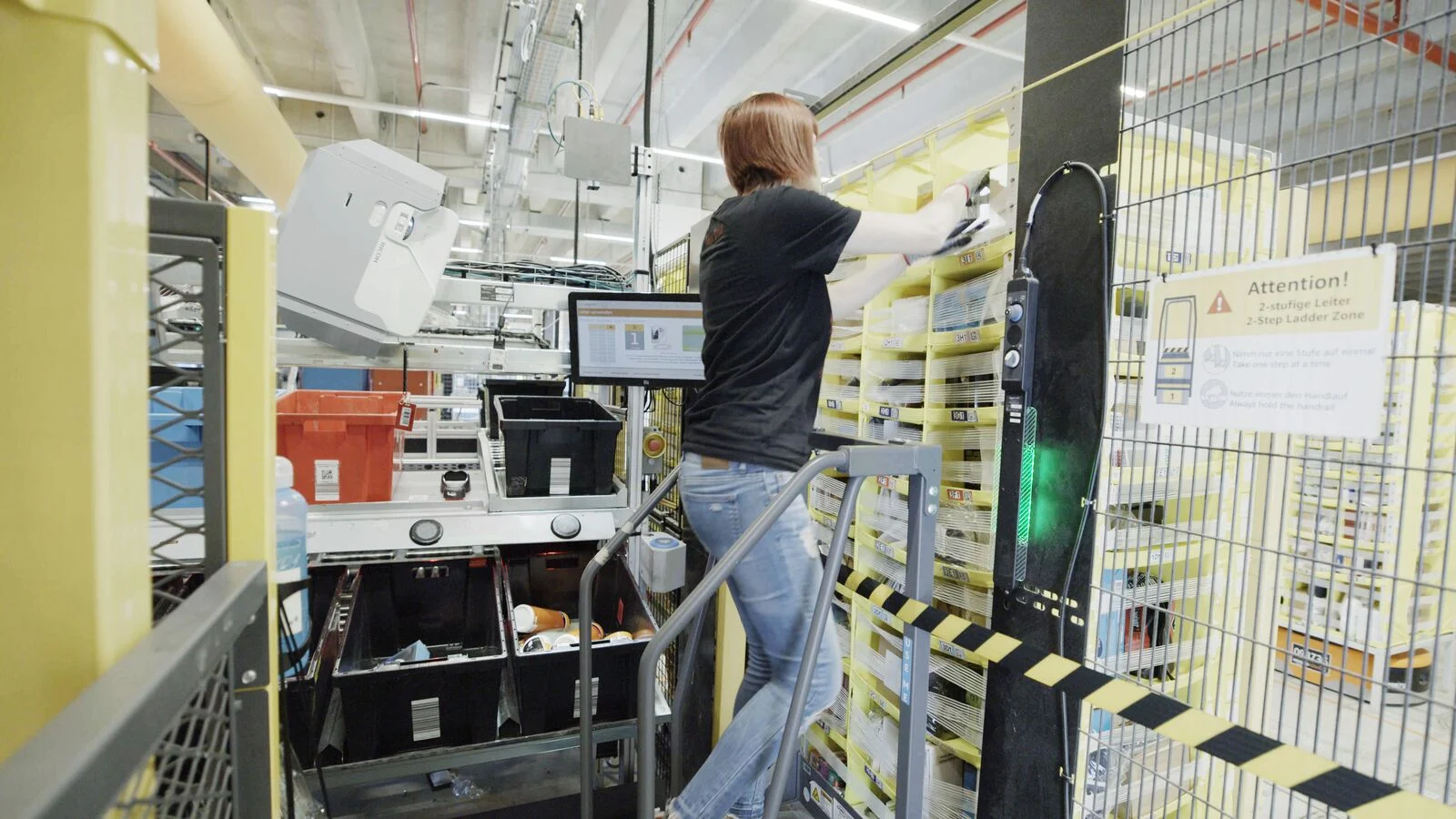
When a robot moves identical boxes between known points, the task can be described strictly. On a crowded warehouse shelf, it’s much harder: packages differ in shape, items touch, and there’s almost no free space. The camera helps see the situation, but interaction with the item starts at first contact.
Vulcan is Amazon’s system, first introduced in 2025. The company calls it its first robot with a sense of touch. We break down what this means, where the limits are, and what practical questions this example raises for a typical warehouse owner. This is a technology explanation, not an announcement of a new launch in October 2026.
Touch is information about contact
For humans, hand movement is constantly adjusted by sensation. To remove an item from a tight box, we feel resistance, adjust force, and reposition fingers if needed. In robotics, feedback on contact force helps solve similar tasks: movement shouldn’t continue the same way if conditions change.
It’s important not to see touch as a single sensor that instantly makes any hand universal. You need coordinated mechanics, perception, control, and handling of edge cases. Even if the system detects resistance, it still needs to determine the right action. For different packages, the same contact can mean very different things.
What exactly does Amazon show
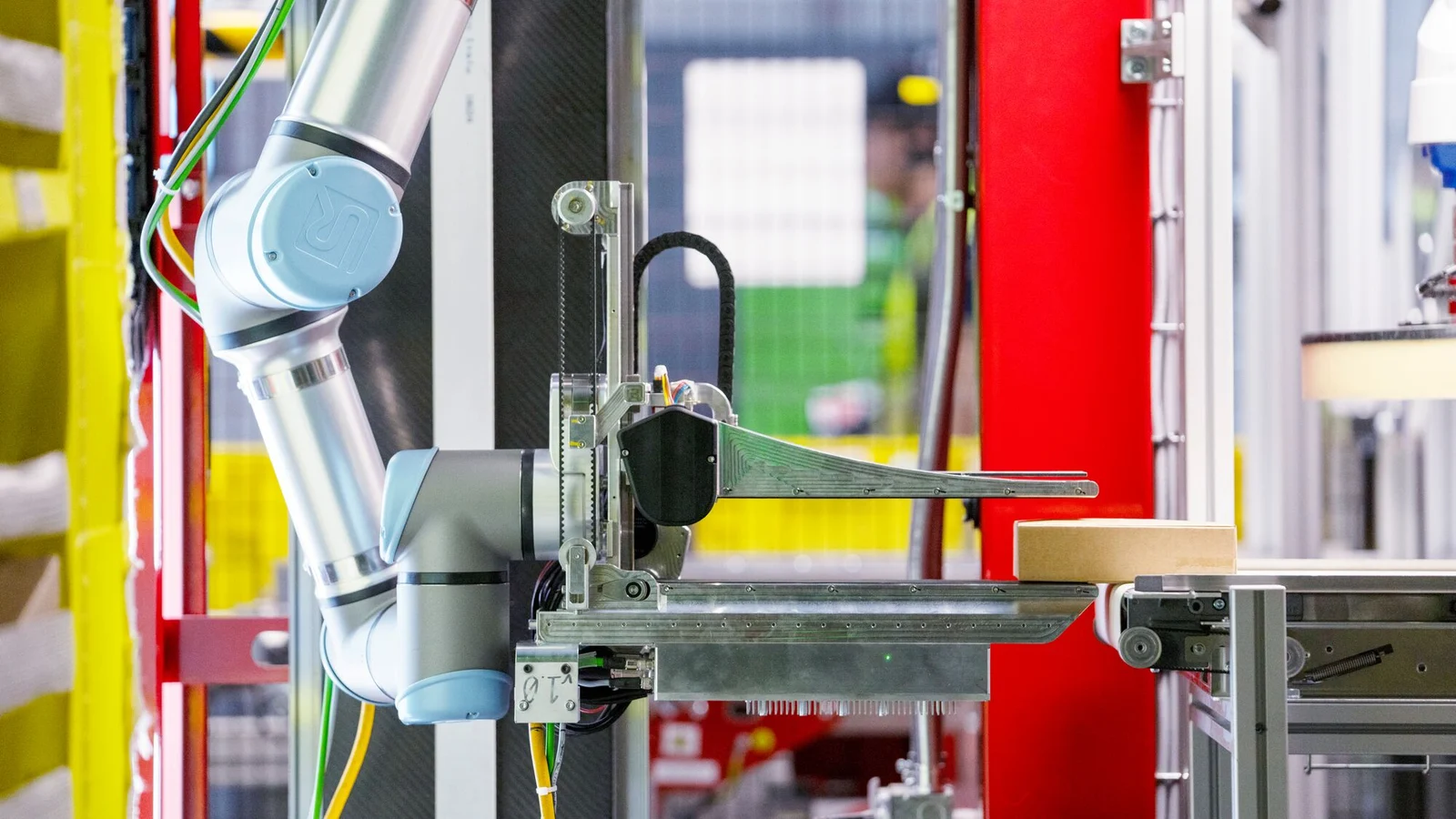
In the official Vulcan description, tools with force feedback are used for placing goods, and a hand with a camera and suction cup is used for picking. The company also describes checks to ensure only the intended item is picked, not its neighbor. This is an example of combining vision, touch, and specialized tooling within a specific warehouse operation.
According to Amazon, the system works with about 75% of item types in its fulfillment centers and can hand off complex cases to a human. The figure refers to the range of item types. It does not mean that 75% of warehouses are fully automated or that the robot can handle any randomly chosen fourth problem without help.
Why a crowded shelf is harder than a single box
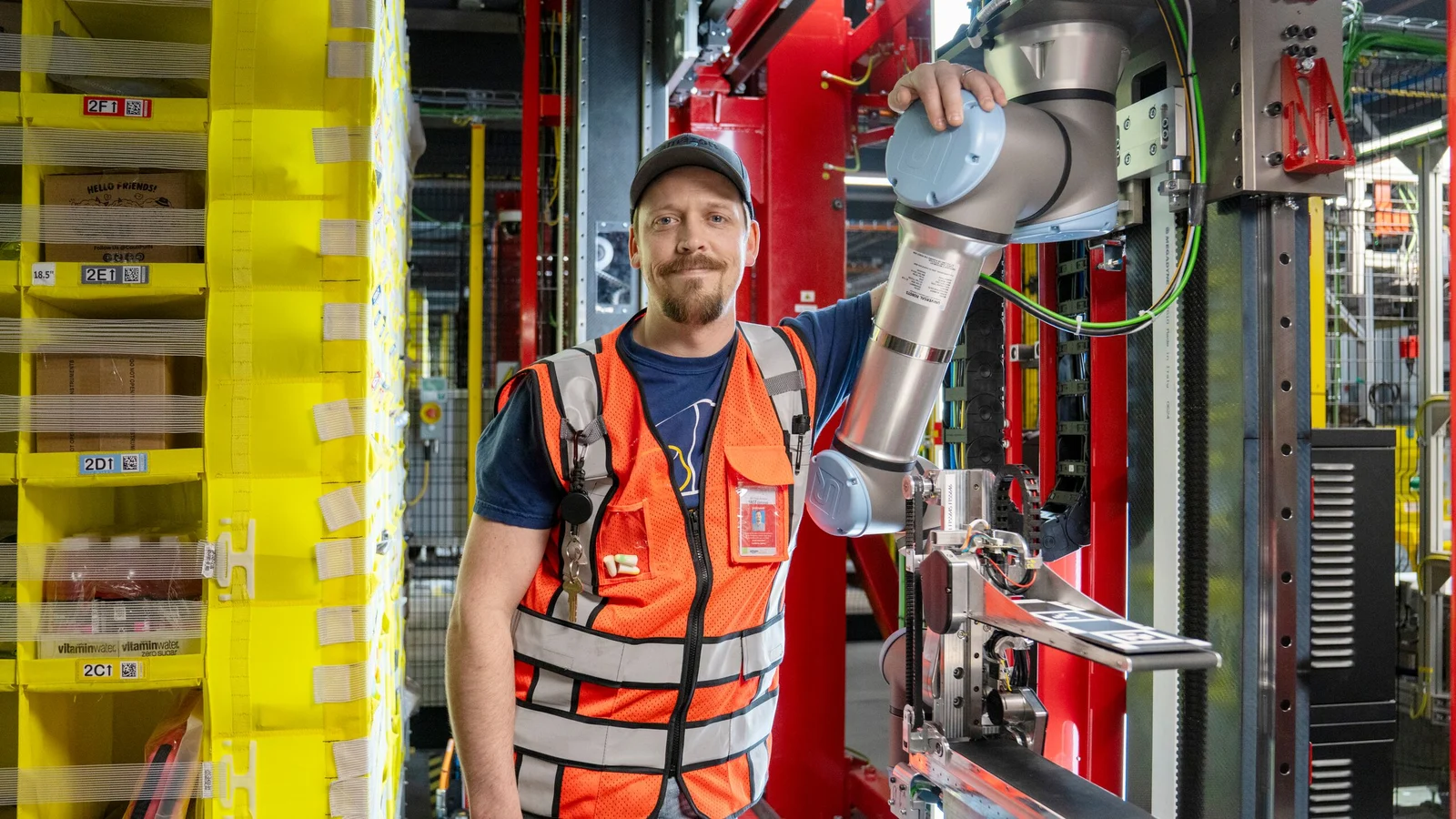
Imagine a cell containing a soft package, a small box, and a flat envelope. The needed item may be visible in the image, but its extraction path is partly blocked. As the gripper moves, neighboring items may shift. So, recognizing and retrieving the object are two separate steps.
A single nice pick from an empty table isn’t enough for this task. You need a series of attempts with varying packing density, orientation, and package condition. This is a general engineering takeaway for warehouse robotics, not a claim that any robot with a camera and force sensor can match Vulcan’s capabilities.
When a specialized tool is better than a universal hand
The choice of tool depends on the task. Do you need to grip, lift, pull, separate from neighbors, or gently place in a tight space? Each operation has different requirements. Sometimes, a simpler tool for a narrow scenario delivers results faster than trying to fully copy the human hand.
When evaluating equipment, ask not just for the number of degrees of freedom, but also for a description of the work cycle. Where is the item before the operation? How is a successful pick confirmed? What counts as completion? The answers show which parts of the process the system truly handles on its own, and how much prep work remains for the human.
Exceptions are part of the system, not an inconvenient add-on
A robot may perform well on most tasks, but overall results suffer if staff constantly stop the line for the remaining cases. That’s why you need an exception route in advance: where to send the item, how to notify the operator, how to resume work, and what to save for later review. Requesting help can be the right system decision.
During a pilot, track how often such requests occur and the time spent on each. For example: two setups achieve the same number of successful picks per minute, but one takes much longer to recover from a fault. A short video may make them look similar, but shift results can differ greatly. Focus on completed useful operations.
What metrics matter for a typical warehouse
Before discussing a specific robot, gather your own data. How many different package types pass through the area? Which items get stuck or damaged most often? How does work change when the assortment grows? This information helps distinguish routine tasks from rare exceptions and set the scope for your first project.
| Metric | Why measure it |
|---|---|
| Share of successfully processed items | Understand the actual coverage of your assortment |
| Full cycle time | Include search, transfer, and result confirmation |
| Number of manual interventions | Assess the actual operator workload |
| Damages and incorrect picks | Check operation quality |
| Recovery time | Understand the impact of stoppages on the area |
| Working with new items | Assess the complexity of expanding the assortment |
How to organize a showcase pilot
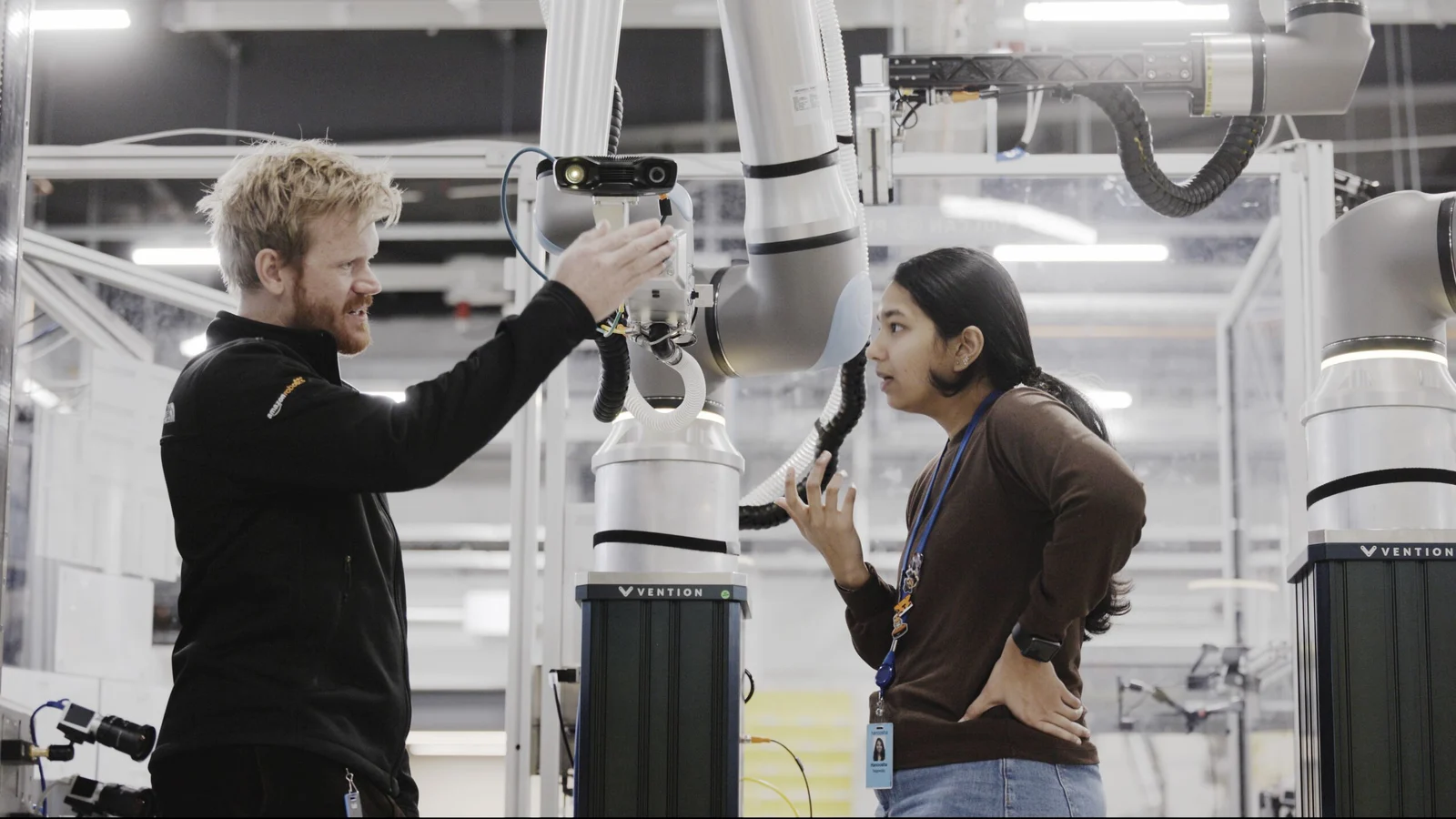
Select a limited area and create a test sample of goods. It should include not only convenient boxes but also the complex packaging typical for your warehouse. Agree on initial conditions: lighting, cell filling, acceptable deviations, and the method of supplying goods. Otherwise, it will be difficult to reproduce the demonstration results.
Conduct several planned failure checks separately: missing item, cell filled differently, pick not confirmed. Tests must follow a coordinated safety procedure with the integrator. The key is not a dramatic failure, but a clear equipment response and a way to return to normal operation.
What can be adapted from the Vulcan example
Amazon uses its system in its own logistics environment; it cannot be automatically considered a ready-made product for any business. However, the approach to task setting is broadly useful: define a specific operation, collect real cases, choose suitable tooling, and decide in advance how exceptions are handled.
SHKARAN editorial conclusion: Tactile sensing matters not as a marketing metaphor, but as extra data for motion control. For robotics buyers, the main question is practical: what action can the system reliably complete with your specific items? The answer should be backed by measurements in real workflows, not just general AI descriptions.