In a hotel, clinic or business center, delivery has different requirements than in a restaurant: the cargo is often personal or valuable, there is a single addressee, and the route passes through elevators and doors. That is why robots with closed compartments and the ability to interact with the building are chosen here.
How a delivery robot differs from a waiter
- closed compartments with a lock instead of open trays;
- access for the recipient by password, phone or NFC;
- the ability to call an elevator and pass through automatic doors;
- routes between floors and buildings, not around a single room.
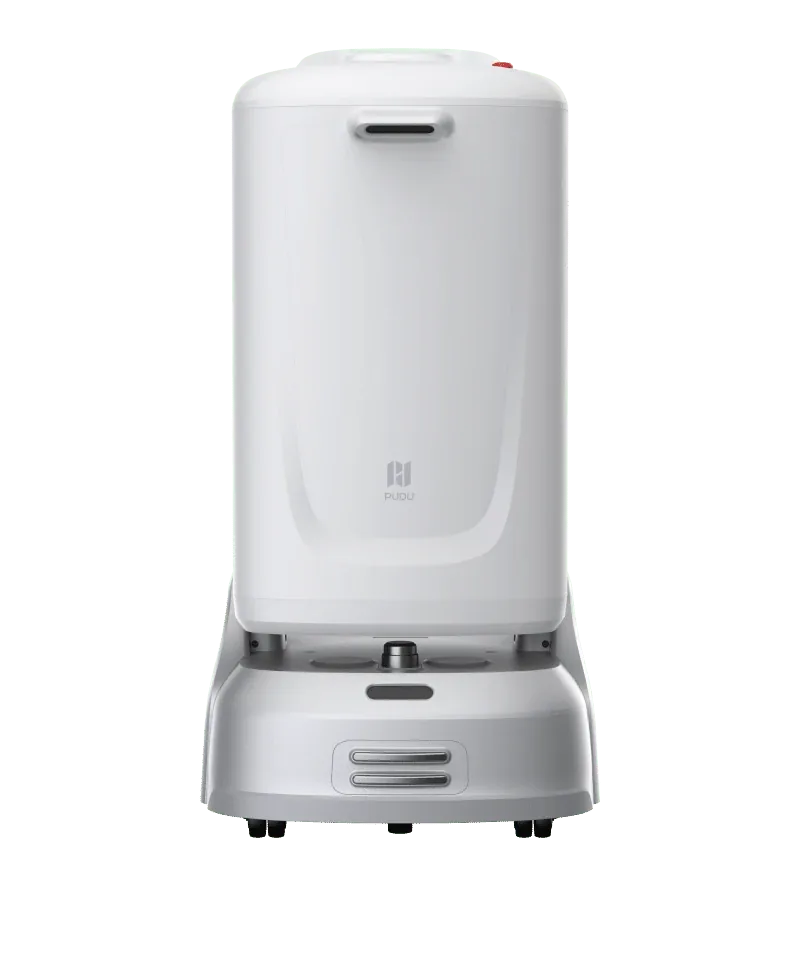
Pudu FlashBot
A delivery robot for hotels, offices, clinics and residential complexes. Two to four closed compartments of up to 10 kg per tier, access by password, phone or NFC, up to 9 hours of operation, about 4 hours of charging, VSLAM and lidar navigation, passes from 70 cm. It calls the elevator and opens doors itself through IoT integration.
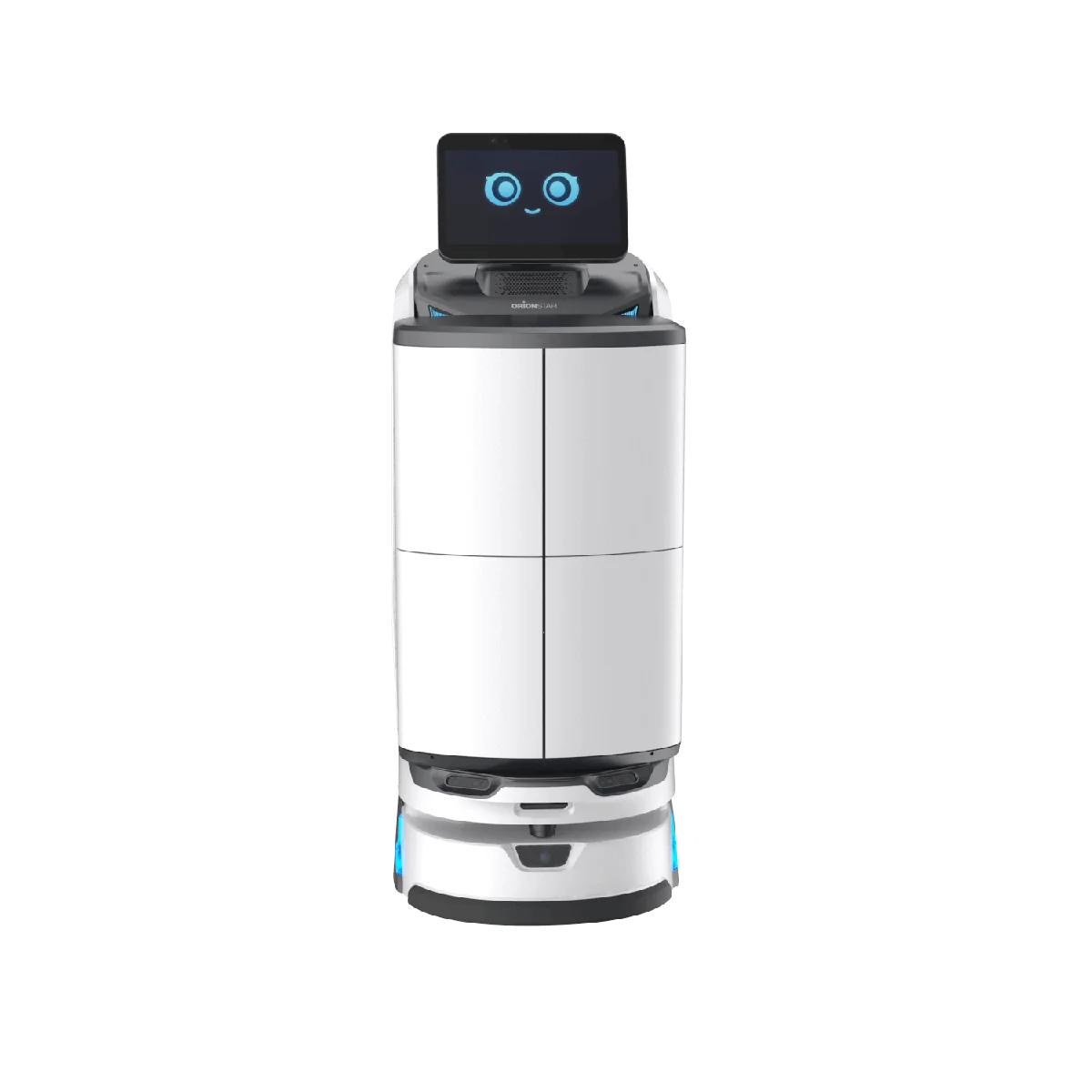
OrionStar LuckiBot Pro Autodoor
A closed delivery robot: a 69 L compartment with four-leaf “falcon wing” doors, a code lock for each delivery, three RGBD cameras and lidar, a 14-inch screen, voice communication, up to 12 hours of operation and automatic charging. Only the addressee receives the order.
Compare
| Parameter | Pudu FlashBot | OrionStar LuckiBot Pro Autodoor |
|---|---|---|
| Compartments | 2–4 closed, up to 10 kg per tier | One closed 69 L compartment |
| Access | Password, phone, NFC | Code lock for each delivery |
| Elevators and doors | Calls the elevator, opens doors | — |
| Navigation | VSLAM + lidar, passage width from 70 cm | 3 RGBD cameras and lidar |
| Runtime | up to 9 h, 4 h charging | up to 12 h, auto-charging |
| Best for | Hotels, offices, residential complexes, hospitals | Hotels and sites with closed delivery |
What to prepare in the building
- check whether the robot can be integrated with elevators and doors: a communication module and agreement with the maintenance organization will be needed;
- define zones where the robot must not go;
- agree on who loads the robot and who accepts orders;
- think through how a guest or employee confirms receipt;
- take confidentiality into account: clinics and closed sites need rules on who may transport what.
Read also
- Service robots: which types exist and where they work
- A waiter robot for a restaurant: how to choose and deploy one
Frequently asked questions
Can a robot deliver documents and parcels in an office?
Yes, closed models with password or NFC access fit: the Pudu FlashBot and OrionStar LuckiBot Pro Autodoor.
Can the robot ride an elevator?
The Pudu FlashBot calls the elevator and opens doors, but for that the building must support elevator integration.
How do I protect an order from outsiders?
Closed compartments with a code for each delivery: only the recipient will open the order.
How much time does the launch take?
It depends on the building: the map is built on the first pass, but integration with elevators and doors requires approvals. We discuss timelines when you order.