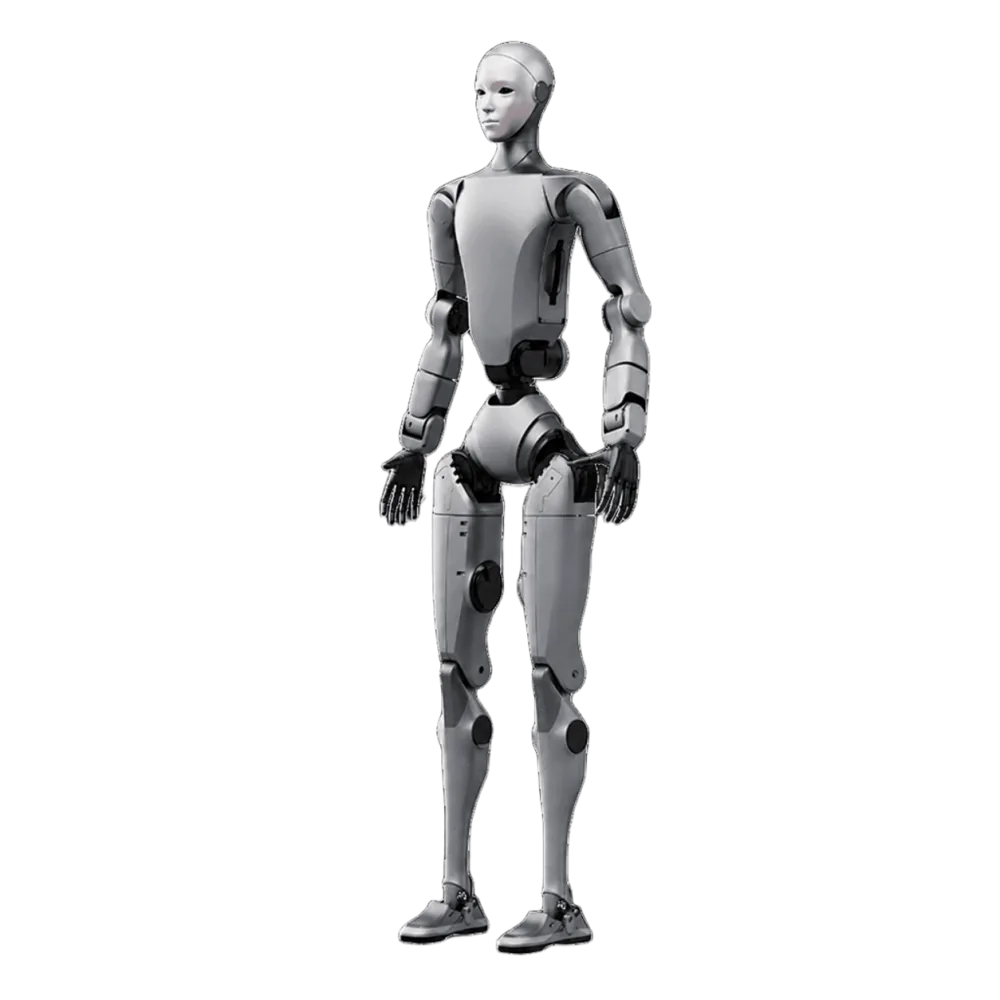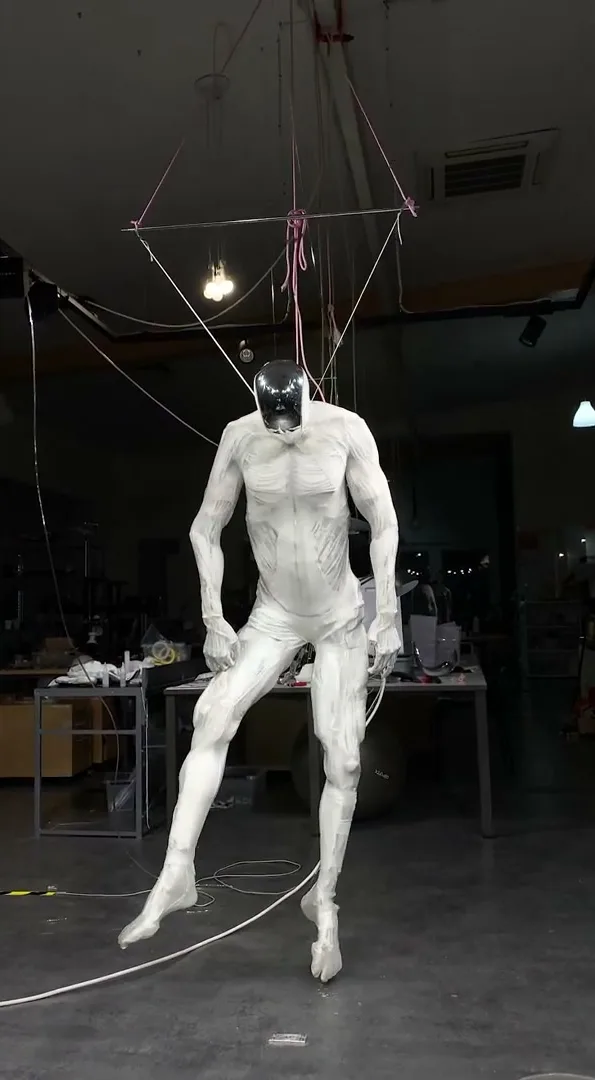
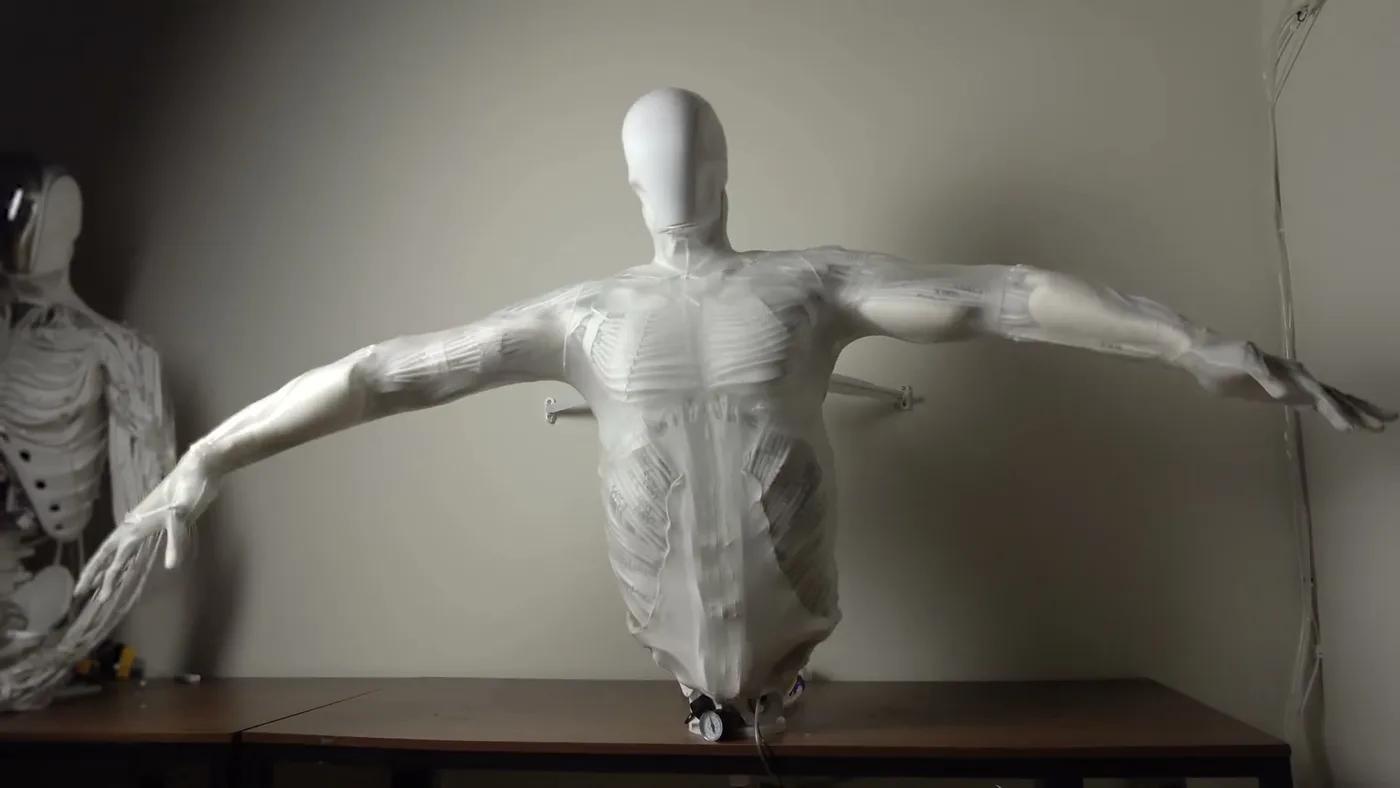
This robot has more than a thousand artificial muscles, and its skeleton follows the structure of the human body. This is Protoclone from Clone Robotics. It was first shown in February 2025.
How it is built
- the polymer skeleton reproduces the anatomy of 206 human bones;
- artificial muscles and tendons are attached to the skeleton: they pull the bones and bend the joints;
- ligaments and tendon attachment points follow the human pattern to preserve the natural mechanics of movement;
- the prototype has more than 200 degrees of freedom, and hundreds of sensors track its position.
According to the developers, one muscle fiber weighing three grams pulls with a force of at least the weight of a one-kilogram load and reacts in less than five hundredths of a second.

What was really shown
In the demonstration the robot is suspended from a frame, so this video does not show independent walking. The company's goal is to create an android for everyday tasks, but Protoclone is still a prototype for testing: the developers have yet to turn the unusual design into a useful helper.
Hand and power
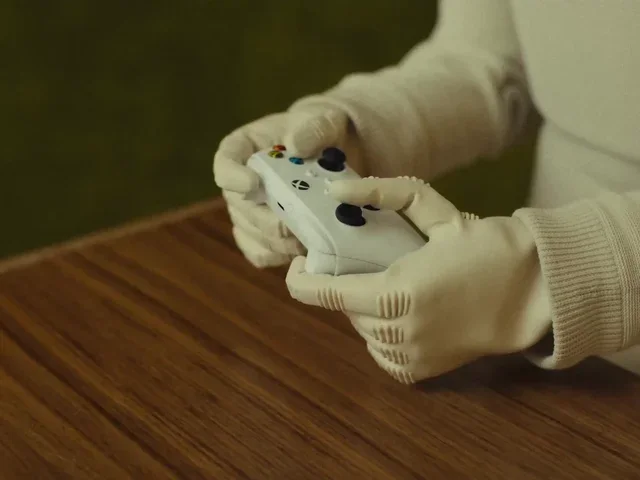
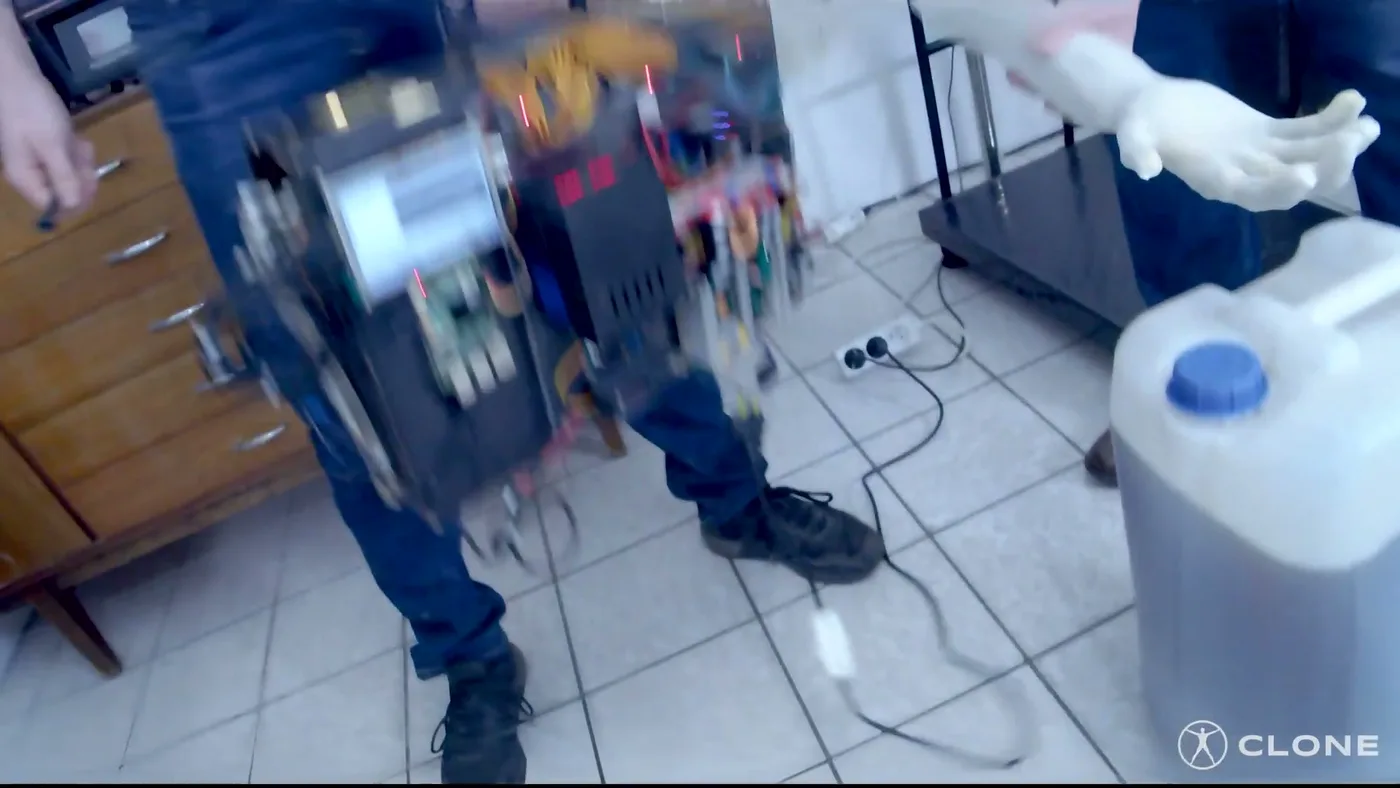
Separately, Clone tested a robotic hand. In one of the videos the company showed that the whole hand system with its power supply can be packed into a suitcase: according to the company, the entire setup weighs 8 kg. This is a response to guesses that the hand needs a huge compressor, and a step toward a portable design without which a household helper is impossible.
Why this matters
Most humanoids are built on electric motors in the joints. Clone takes a different path: it copies anatomy to get movements close to human ones. The approach is risky and far from a production product, but such experiments show where the limits of the possible lie.
Read also
Frequently asked questions
Can Protoclone walk by itself?
In the video shown the robot is suspended from a frame; independent walking is not demonstrated.
Can Protoclone be bought?
No, it is a prototype for testing. There is no data on sales.
How is Protoclone different from other humanoids?
It copies human anatomy: a polymer skeleton, artificial muscles and tendons instead of electric motors in the joints.