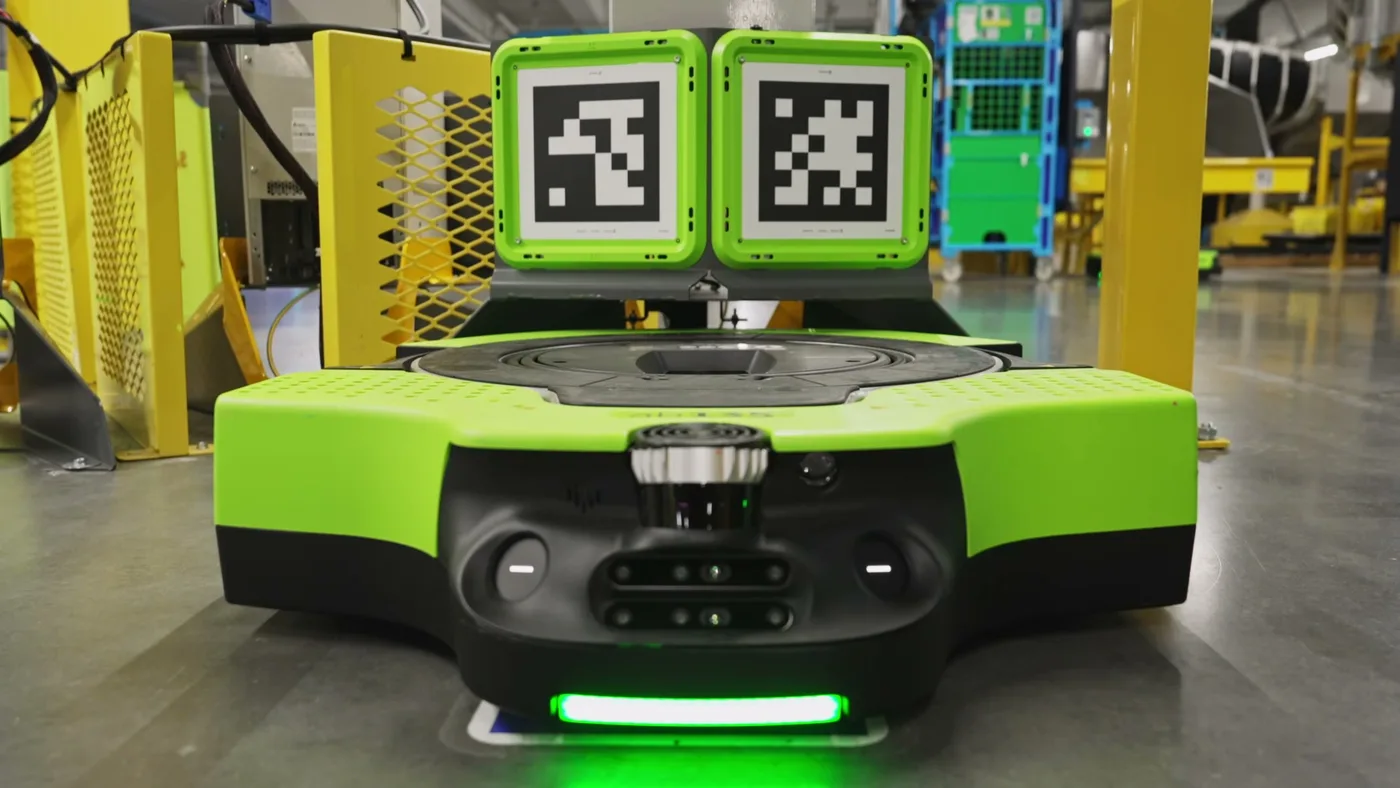
A commercial cleaning robot is needed where the area is large and cleaning repeats every day: shopping malls, offices, warehouses, hotels, universities, airports. But cleaning robots come in different kinds, and they should be chosen by type of work, not by brand.
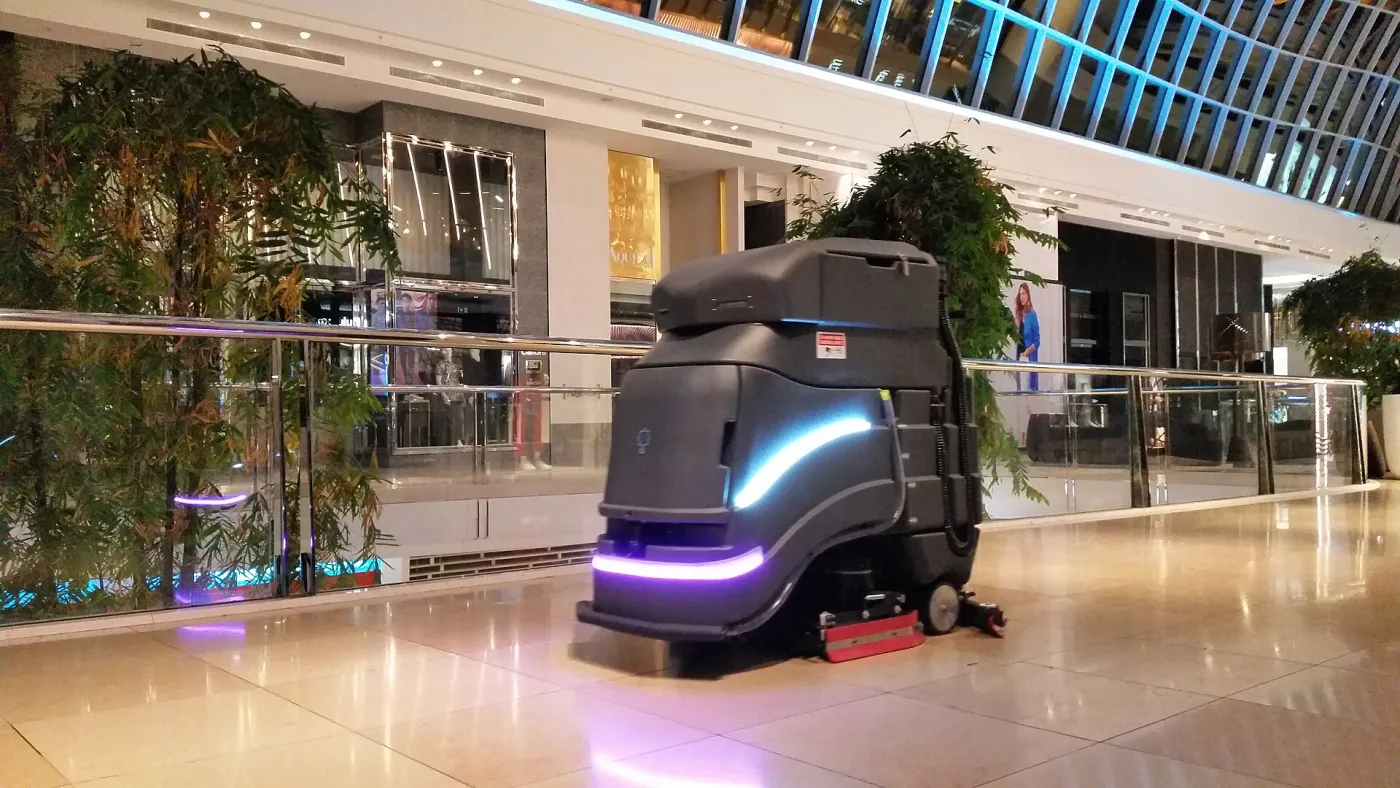
Four types of cleaning
- dry cleaning: sweeping and collecting dust and debris from hard floors;
- wet cleaning: washing with brushes or discs with water supply and dirty water collection;
- carpet vacuum: strong suction and a dust container;
- universal: several modes in one machine.
Models in the catalog
| Model | Type | Performance | What to know |
|---|---|---|---|
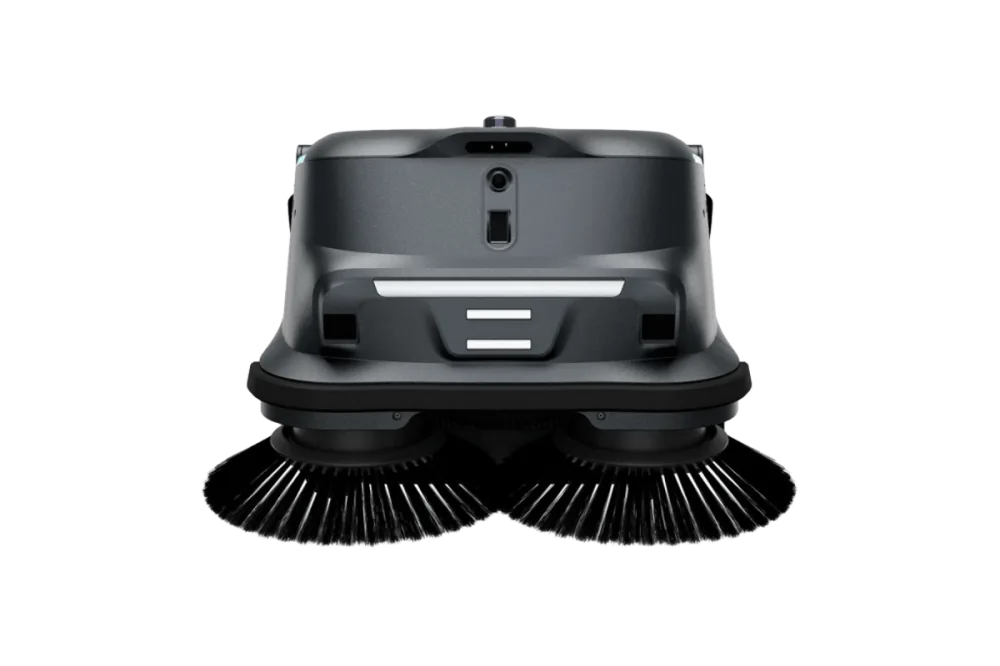
| Pudu MT1 | Dry cleaning | up to 1800 m²/h, in local mode up to 6000 m²/h | Cameras recognize debris and clean spot by spot, 35 L tank, 4–8 hours of operation, docks itself to charge |
| Pudu CC1 | 4-in-1 | 700–1000 m²/h | Sweeping, brush washing, vacuum and mop, suction up to 17,000 Pa, tanks 15 + 15 L, night operation without people |
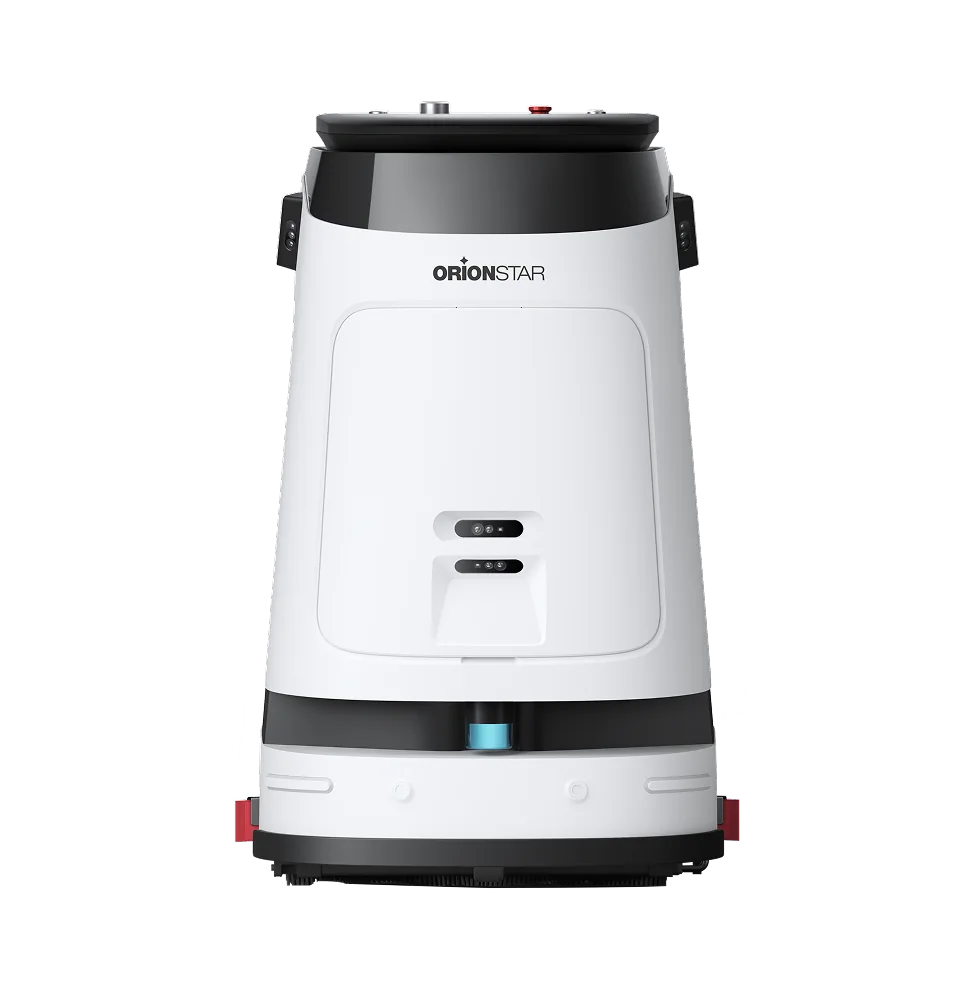
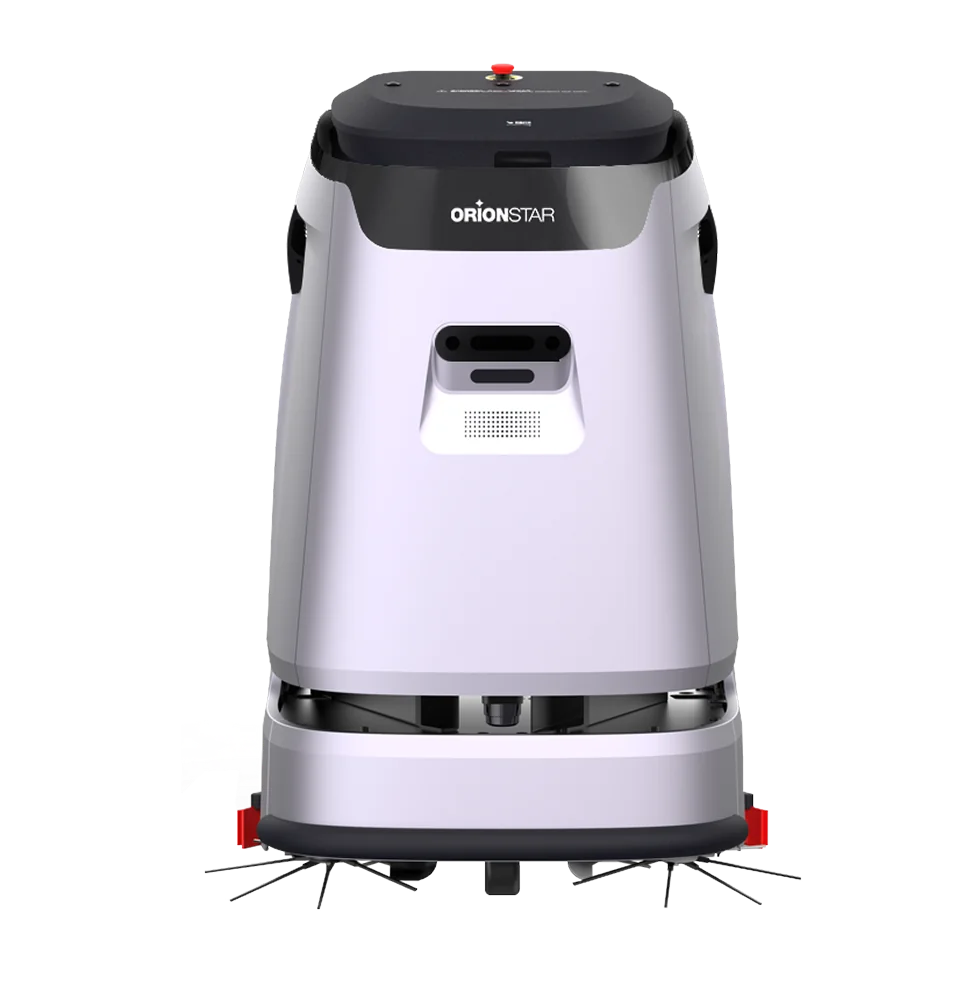
| OrionStar CleaniBot M1 | Floor scrubber | up to 1200 m²/h | 35 and 33 L tanks, auto-refill, auto-drain and auto-charging, 11 sensors |
| OrionStar CleaniBot C5 | Large floor scrubber | up to 1980 m²/h | 45 + 45 L tanks, 25 kg brush pressure, 550 mm cleaning width, 170 kg weight |
| OrionStar CleaniBot K1 | Carpet vacuum | up to 700 m²/h | 20 kPa suction, 10 L dust container, 440 mm cleaning width, up to 8 hours of operation |
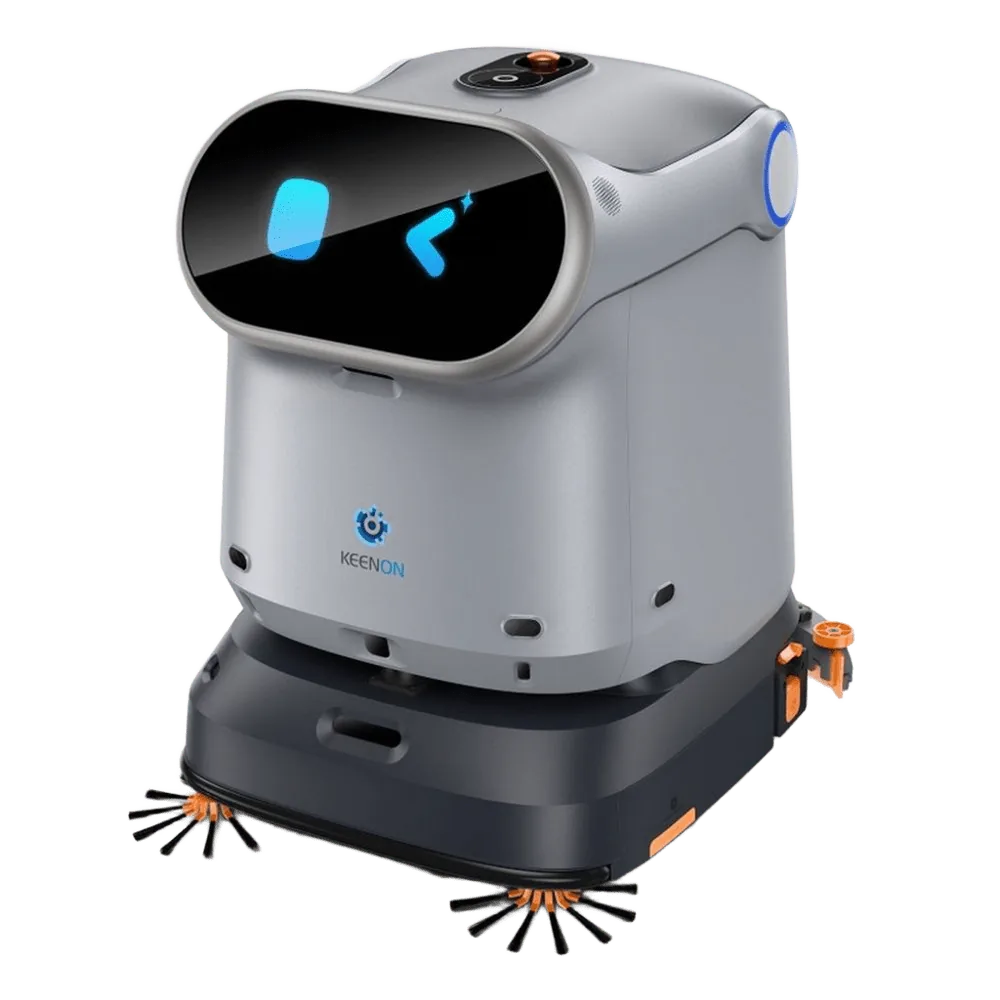
| Keenon KLEENBOT C40 | Dry and wet | — | Suction up to 23,500 Pa, passes from 65 cm, thresholds up to 3.5 cm, works with elevators (E-BOX module) |
How to choose
- Floor type. Smooth tile and concrete — a scrubber or dry cleaning. Carpets and carpeting — a vacuum such as the OrionStar CleaniBot K1.
- Area and time. On large areas choose high productivity and capacious tanks: the C5 has up to 1980 m²/h and 45 L tanks.
- Elevators and floors. If cleaning covers several floors, look at elevator support (Keenon C40).
- Aisles and thresholds. Check passability and threshold height: for the C40 it is from 65 cm and up to 3.5 cm.
- Maintenance. Find out how brushes and filters are replaced, how water is drained and where the robot charges.
What to prepare for launch
- make a map: the robot drives around the premises and remembers them;
- clear wires and small objects from the floor;
- choose a place for charging and draining water;
- agree on a schedule: many robots work at night without people;
- assign someone responsible for the daily launch and monitoring.
SHKARAN editorial conclusion: for a large shopping mall, start with floor scrubbers and universal robots; for offices and hotels, with compact universal machines and carpet vacuums. And to avoid mistakes with the model, send us the floor plan and the floor coverings.
Read also
- Service robots: which types exist and where they work
- A waiter robot for a restaurant: how to choose and deploy one
Frequently asked questions
Which cleaning robot should I choose for a shopping mall?
For large areas — high-productivity scrubbers, for example the OrionStar CleaniBot C5 (up to 1980 m²/h) or the Pudu MT1 for dry cleaning (up to 1800 m²/h).
Are the robots suitable for carpets?
Yes, a vacuum is better for carpets: the OrionStar CleaniBot K1 with 20 kPa suction and a 10 L dust container.
Can the robots ride an elevator?
Some can: the Keenon KLEENBOT C40 works with elevators through the E-BOX module.
Are people needed for cleaning?
The robot cleans on its own, but a person starts it, changes the water, cleans the filters and monitors the condition of the machine.