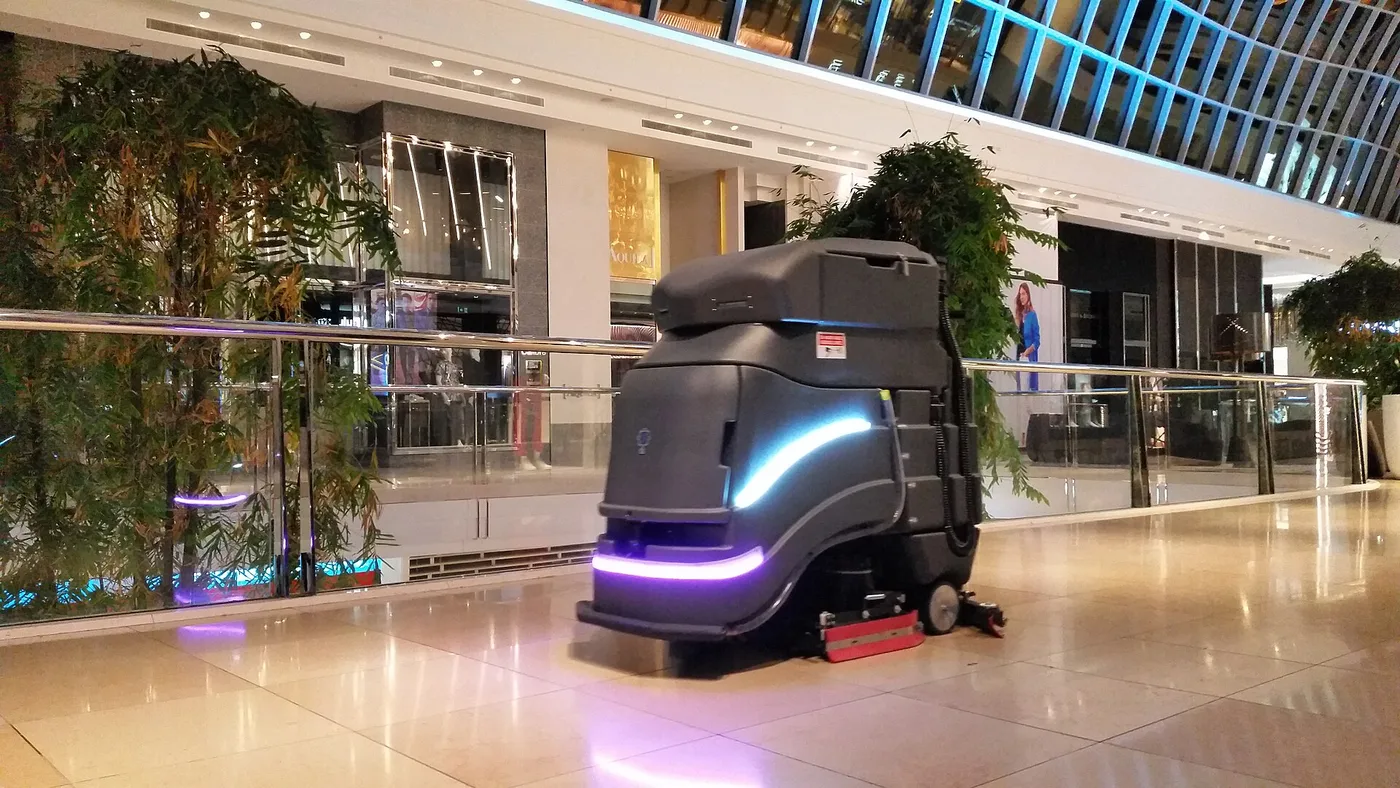
Sweeping and scrubbing robots clean floors autonomously: by mapping the space, on schedule, and without an operator at the wheel. A floor-scrubbing robot navigates the corridors of a mall, warehouse, or station, sweeps, washes, and dries the floor in a single pass, then returns to its charging station on its own. In this review, we break down the types of commercial cleaning robots, how they work, where they perform best, how models differ, and how to choose the right robot for your facility.
A guide for facility managers, cleaning companies, and operators of malls, warehouses, hotels, clinics, and offices. Model specifications are sourced from the SHKARAN catalog and official manufacturer materials; they depend on configuration and conditions. Prices are not listed here: cost is calculated per project.
Sweeping and scrubbing robot: what it is and how it differs from a conventional cleaning machine
A conventional floor scrubber requires a person: they guide it alongside or drive it, monitor the route, and decide where cleaning is still needed. The robot does the same autonomously. It maps the space, plans the route, avoids people and obstacles, refills clean water and drains dirty water itself, and heads to the station when the battery is low.
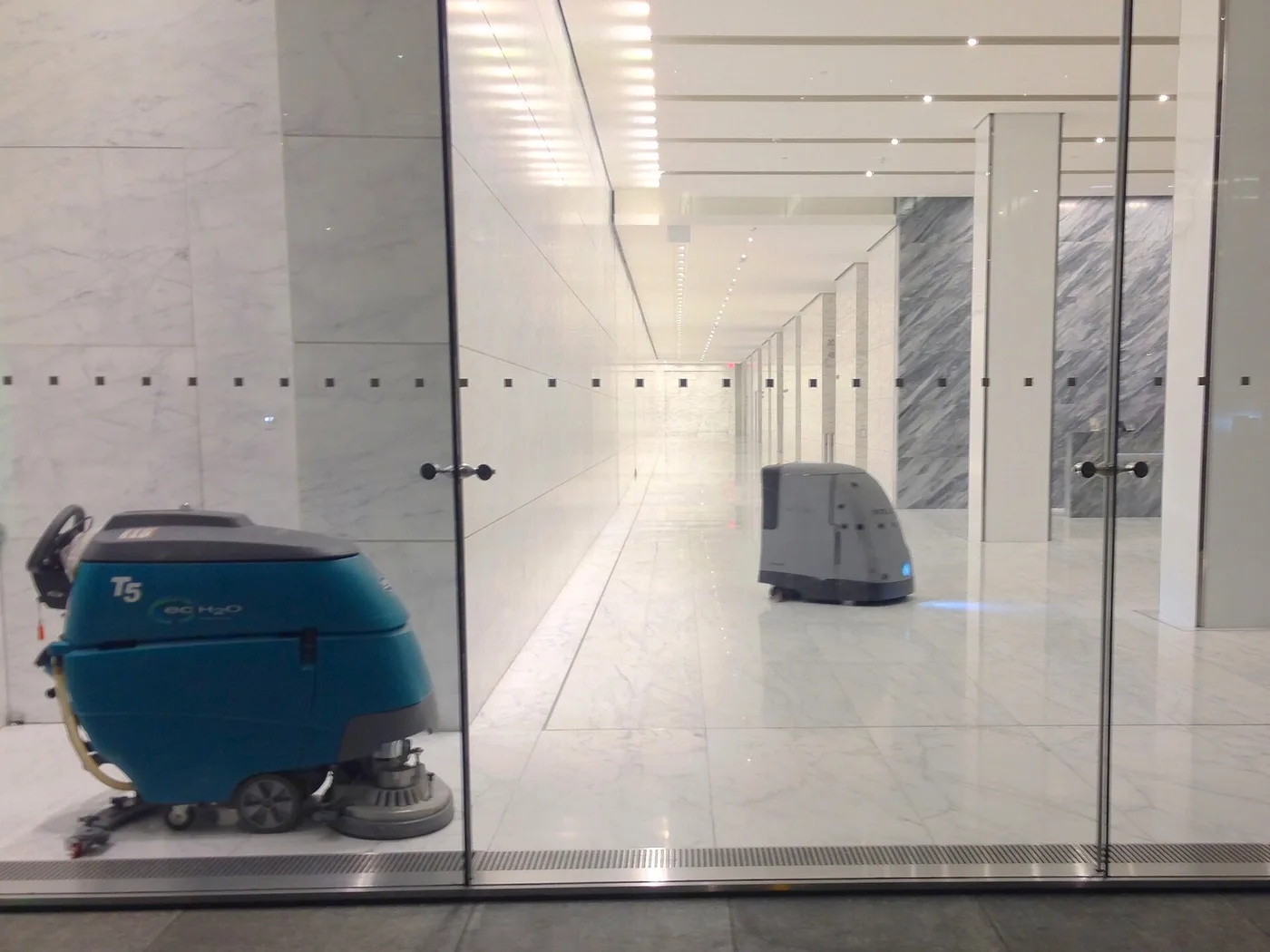
The main difference isn’t that the robot cleans better than a person. It delivers consistent results: the same route, zones, and quality every day, even at night. This frees people from routine tasks so they can focus on what robots can’t do: corners, stains, furniture, and supervision.
Types of floor cleaning robots
The term “cleaning robot” covers four distinct classes of machines. Start your selection with the class, not the brand.
Sweeping robots
A sweeping robot collects dry debris: dust, sand, paper, crumbs. It’s ideal for large aisles, warehouses, parking lots, and open spaces where you need to quickly remove surface debris. It gathers waste with side brushes and a main brush into a container.
Scrubbing robots
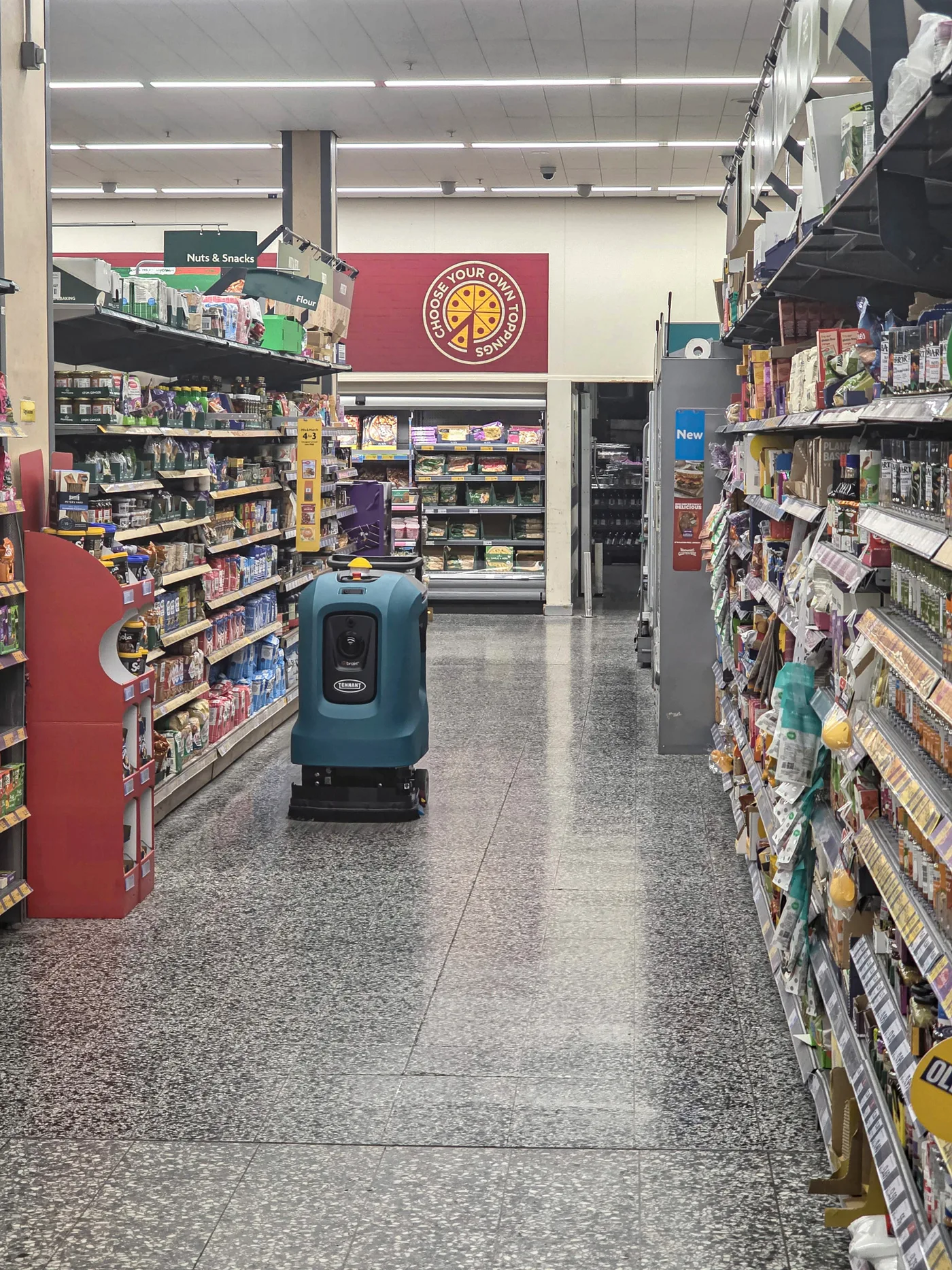
A scrubbing robot washes the floor with water and detergent, presses the brush to the surface, and immediately collects dirty water, leaving the floor dry. For smooth surfaces, tiles, concrete, and porcelain stoneware, this is the primary type: it determines the quality of the result. Key parameters: tank volume, cleaning width, and brush pressure.
Combination robots: sweeping, scrubbing, and dry cleaning in one pass
Combination models handle sweeping and scrubbing, and some can also vacuum. In one pass, such a robot removes large debris, stains, and dust, so there’s no need to run two machines. For mixed spaces—like a tiled lobby, corridor, and short carpet—this is the most convenient option.
Vacuum robots for carpets
Carpeted areas are a separate challenge: water isn’t suitable, and strong suction is needed. For hotels, offices, and conference halls, special vacuum robots are made with large dust bins and high suction power.
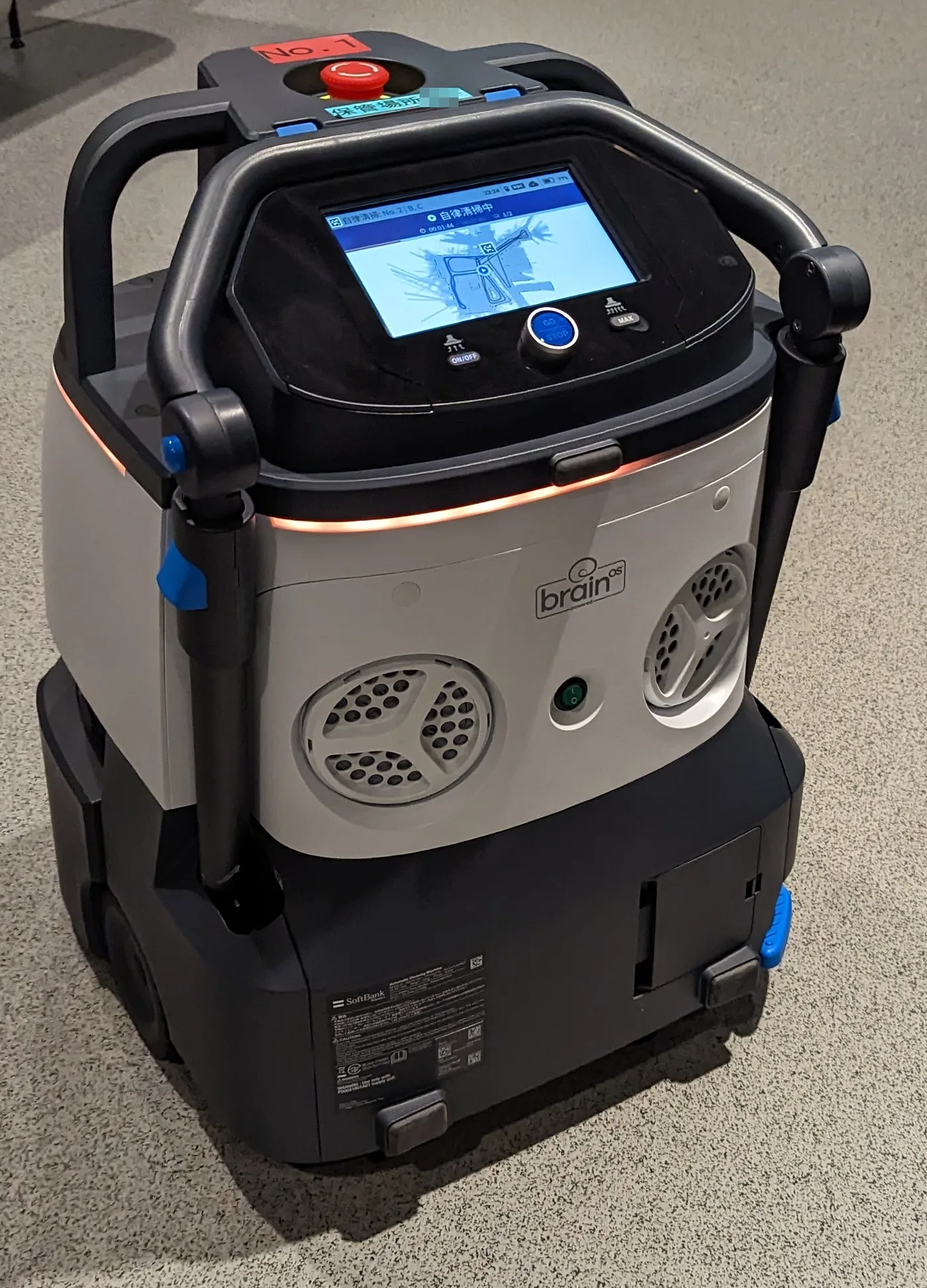
How a scrubbing robot works
Navigation: lidar, cameras, and mapping
The robot navigates using a map it builds on its first run. Lidar and cameras are used: lidar measures distances, cameras help recognize objects. Official specs for Keenon KLEENBOT C40 list lidar, visual SLAM, stereo cameras, and ultrasonic sensors; AgiBot C5 features laser-visual navigation; OrionStar CleaniBot M1 has 11 sensors for obstacle avoidance. This allows the robot to stop or go around people, carts, and chairs.
Tanks, brushes, and pressure
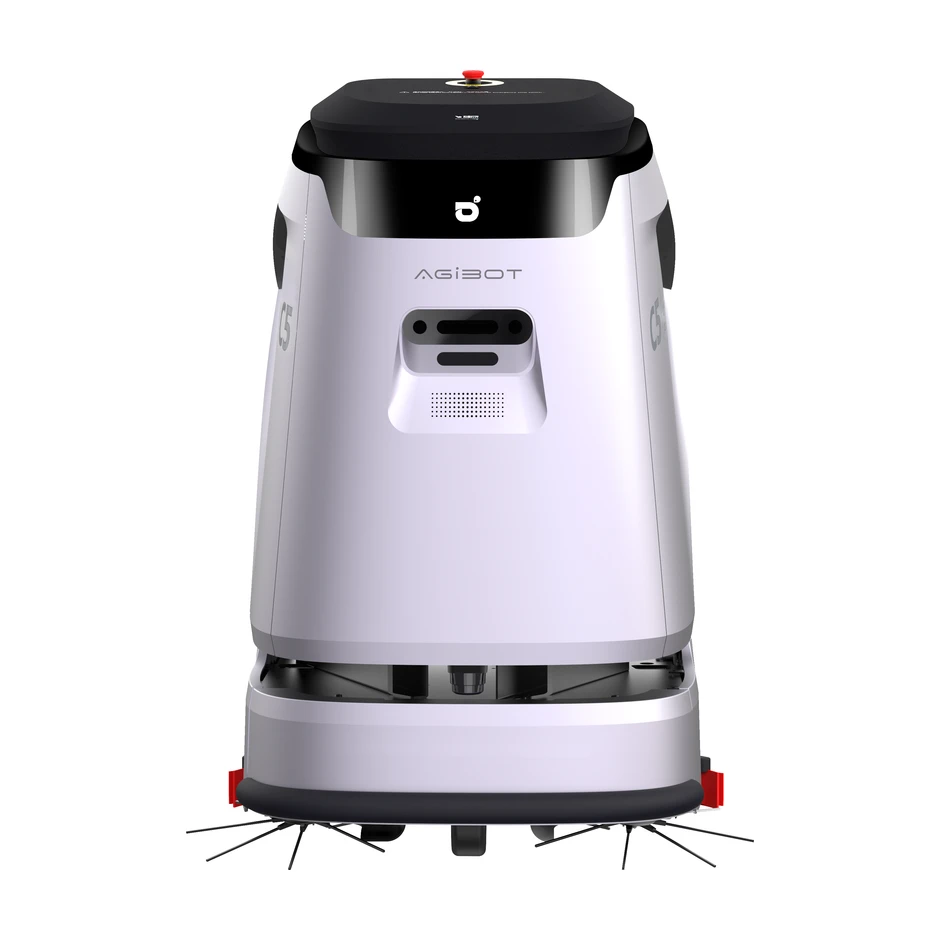
Three things determine a robot’s performance: cleaning width, tank volume, and brush pressure. The larger the tanks, the longer the machine runs without refilling or draining. The higher the brush pressure, the better it removes stubborn dirt. For example, OrionStar CleaniBot C5 features 45 and 45-liter tanks, 550 mm cleaning width, and 25 kg brush pressure.
Auto refill, auto drain, auto charging
The most important feature for unmanned operation is automated servicing. The robot charges itself, and scrubbing models also refill clean water and drain dirty water at the station. Without this, a robot would need human attention every one to two hours, defeating the purpose of autonomy. OrionStar CleaniBot M1 offers auto-refill, auto-drain, and auto-charging; AgiBot C5 features auto-charging, water refill and drain, and auto tank cleaning.
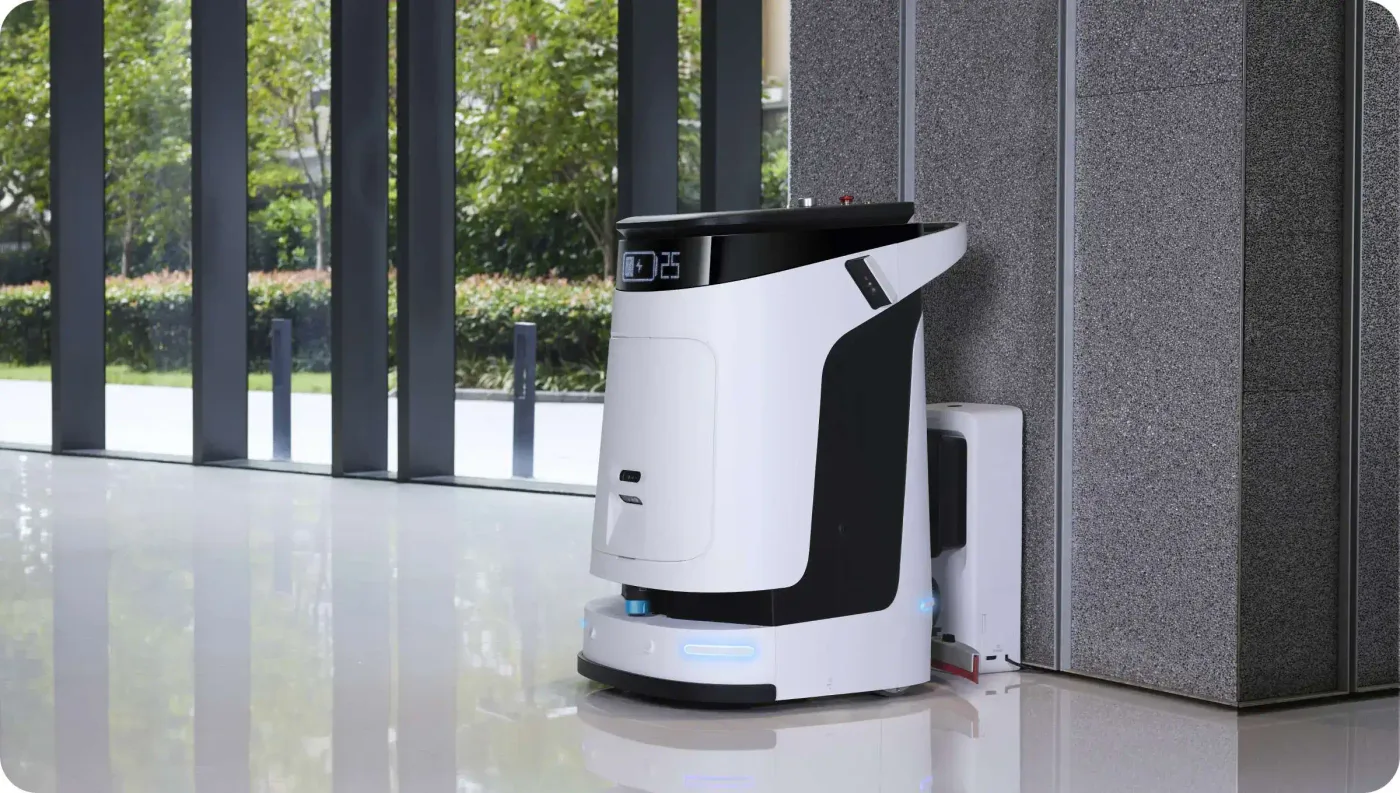
Elevators, doors, and multi-floor cleaning
In malls, hotels, and clinics, cleaning takes place on multiple floors. Keenon KLEENBOT C40 supports elevator integration via the E-BOX module; AgiBot C5 integrates with doors and elevators. This allows the robot to move between floors independently, without waiting for a person to carry it.
Where sweeping and scrubbing robots work best
Cleaning robots deliver the greatest savings where spaces are large, routes are repetitive, and cleaning is daily.
- Shopping malls: wide galleries, lobbies, food courts. Cleaning is done before opening and after closing.
- Warehouses and factories: long aisles with smooth concrete, where dust and debris accumulate constantly.
- Stations, airports, metro: large halls, 24/7 foot traffic, cleaning during night shifts.
- Offices and business centers: corridors, lobbies, meeting rooms with carpeting.
- Hotels, hospitals, clinics: consistent cleanliness, cleaning during quiet hours, less noise during the day.
- Supermarkets: aisles between shelves, where cleaning must not interrupt business.
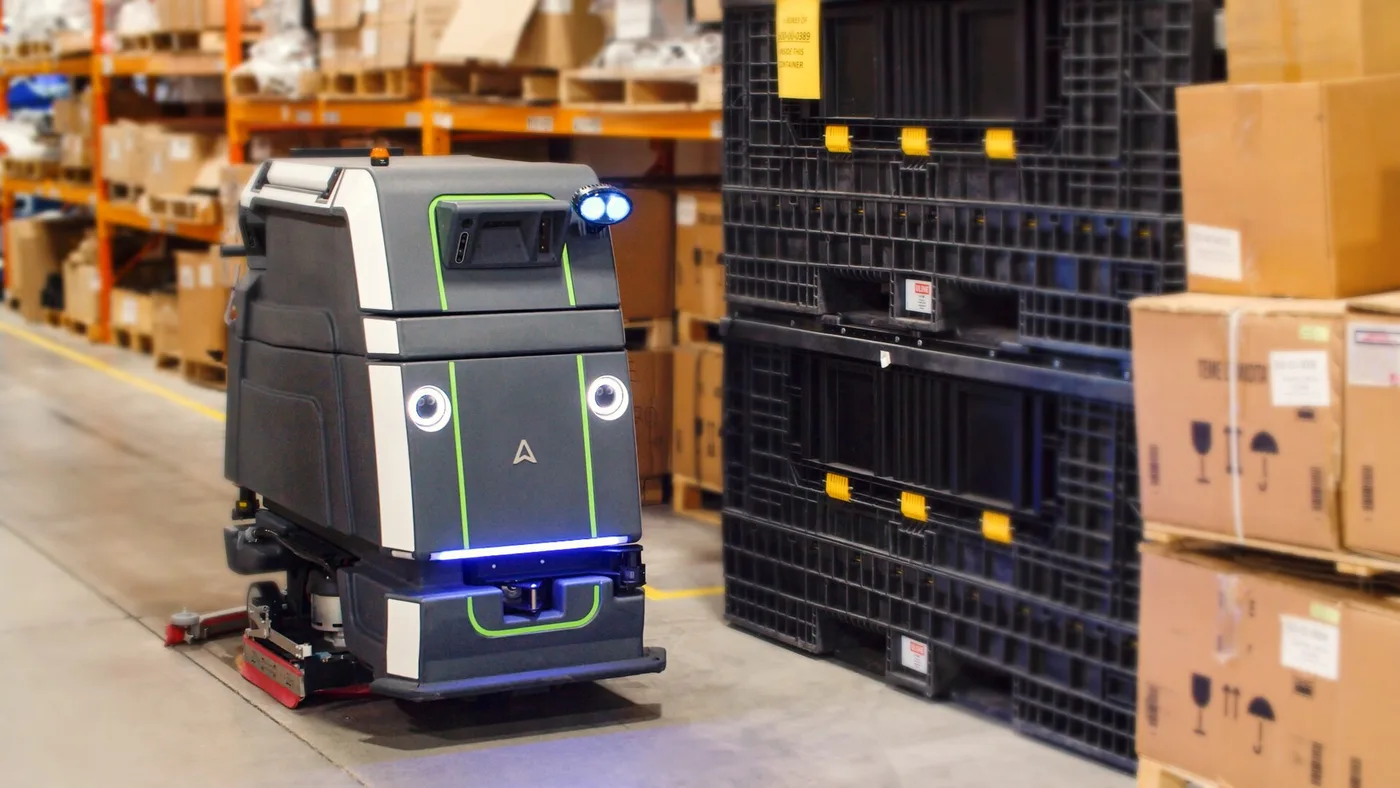
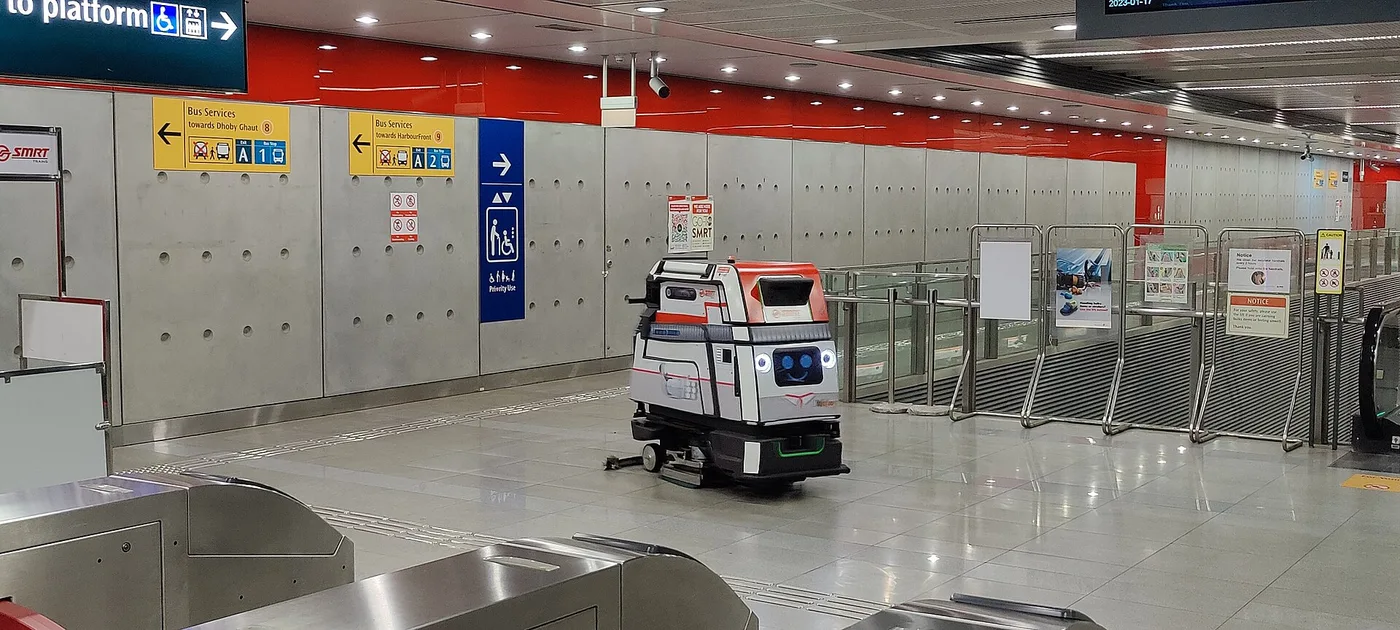
SHKARAN’s selection: scrubbing and sweeping robots
We import several classes of cleaning robots made to order. Below is a brief overview of each: their capabilities and best use cases. Detailed cards and photos are available in the catalog.
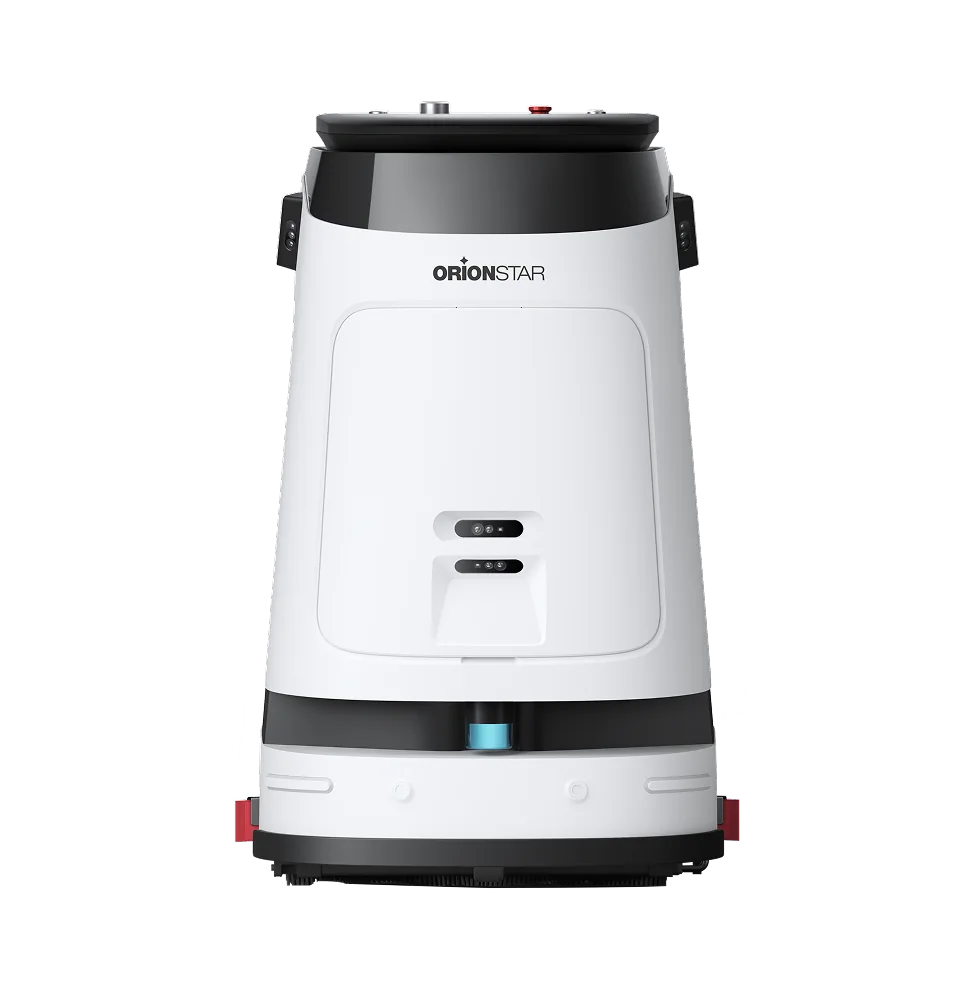
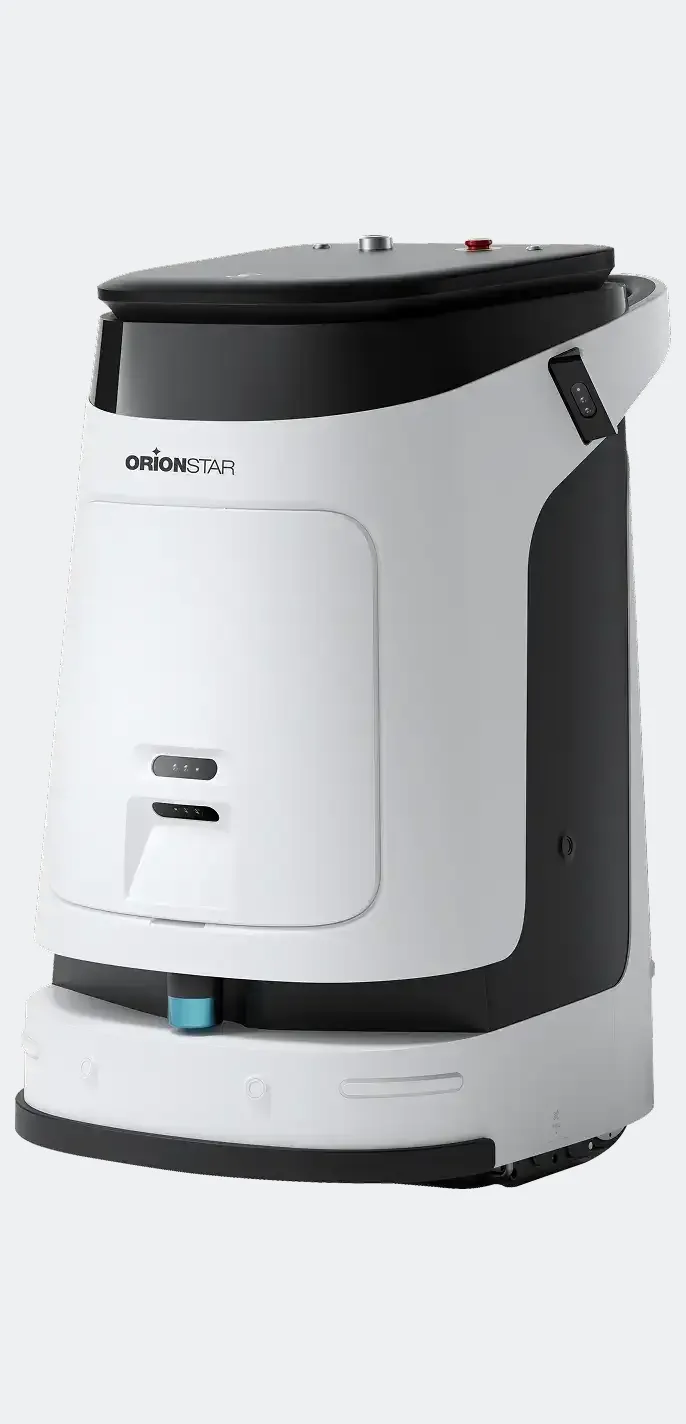
OrionStar CleaniBot M1: floor cleaning robot for malls and offices
Commercial floor scrubber: washes and dries up to 1,200 m² per hour. Wet cleaning up to 3.5 hours, dry wiping up to 8 hours. Tanks: 35 L clean water, 33 L dirty water. 11 sensors for obstacle avoidance. Auto-refill, auto-drain, and auto-charging. Ideal for malls, offices, hotels, universities, factories, airports, and stations.
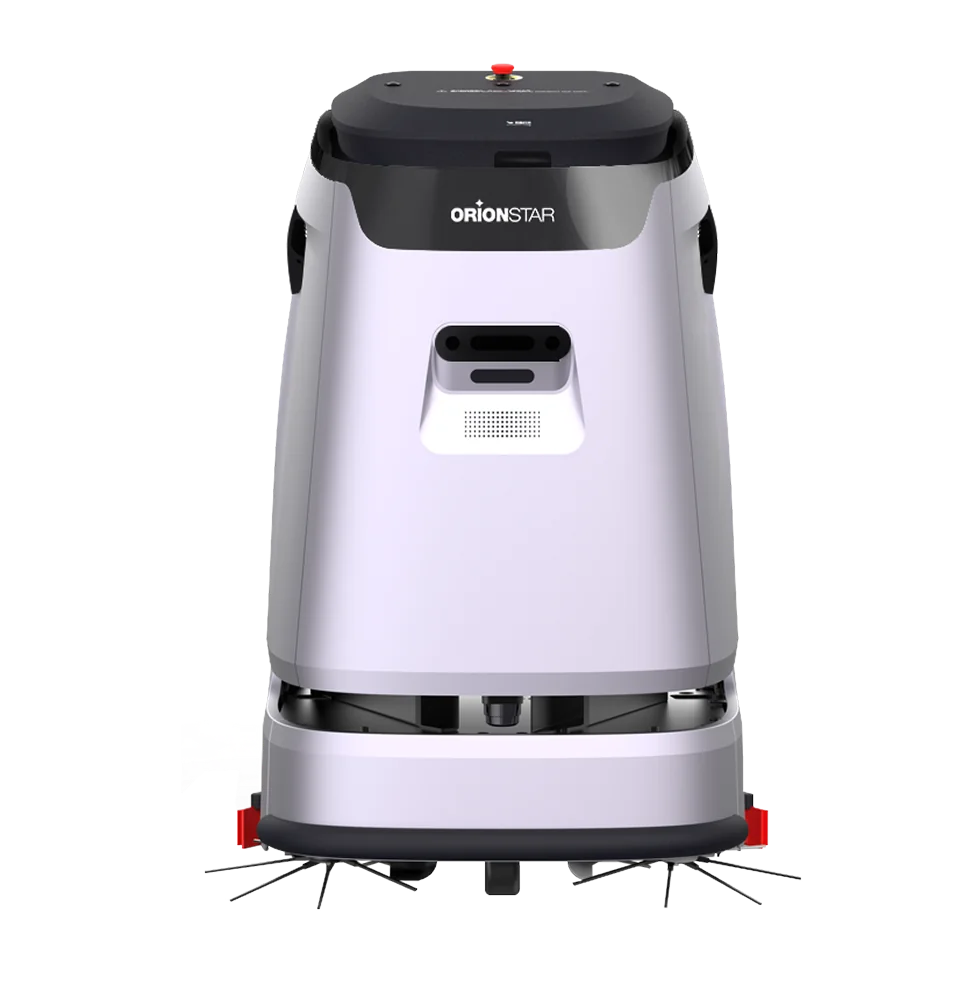
OrionStar CleaniBot C5: floor cleaning robot for large areas
Large machine for airports, factories, warehouses, and big malls: up to 1,980 m² per hour, 45 + 45 L tanks, 25 kg brush pressure, 550 mm cleaning width. Weight 170 kg, dimensions 820 × 680 × 1130 mm.
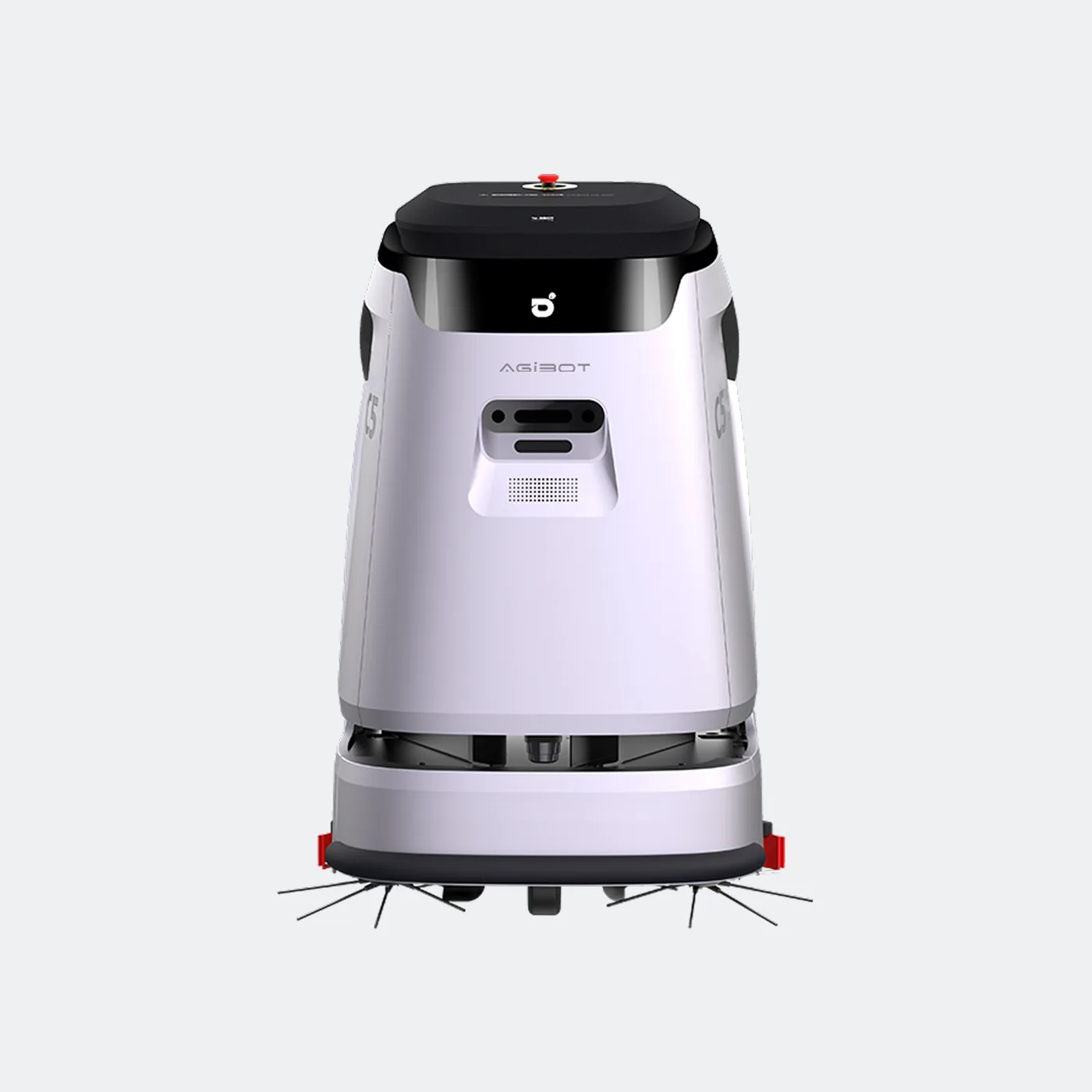
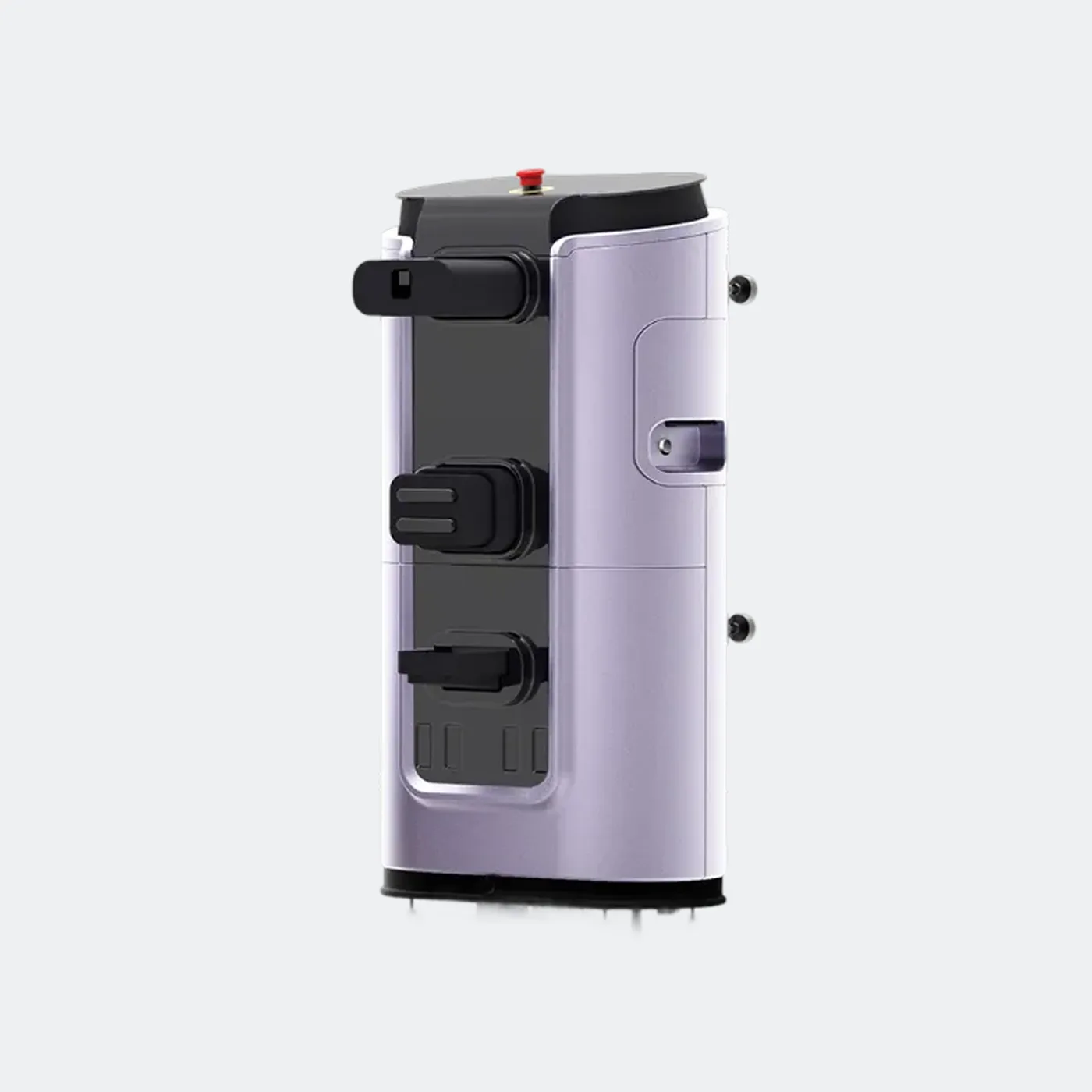
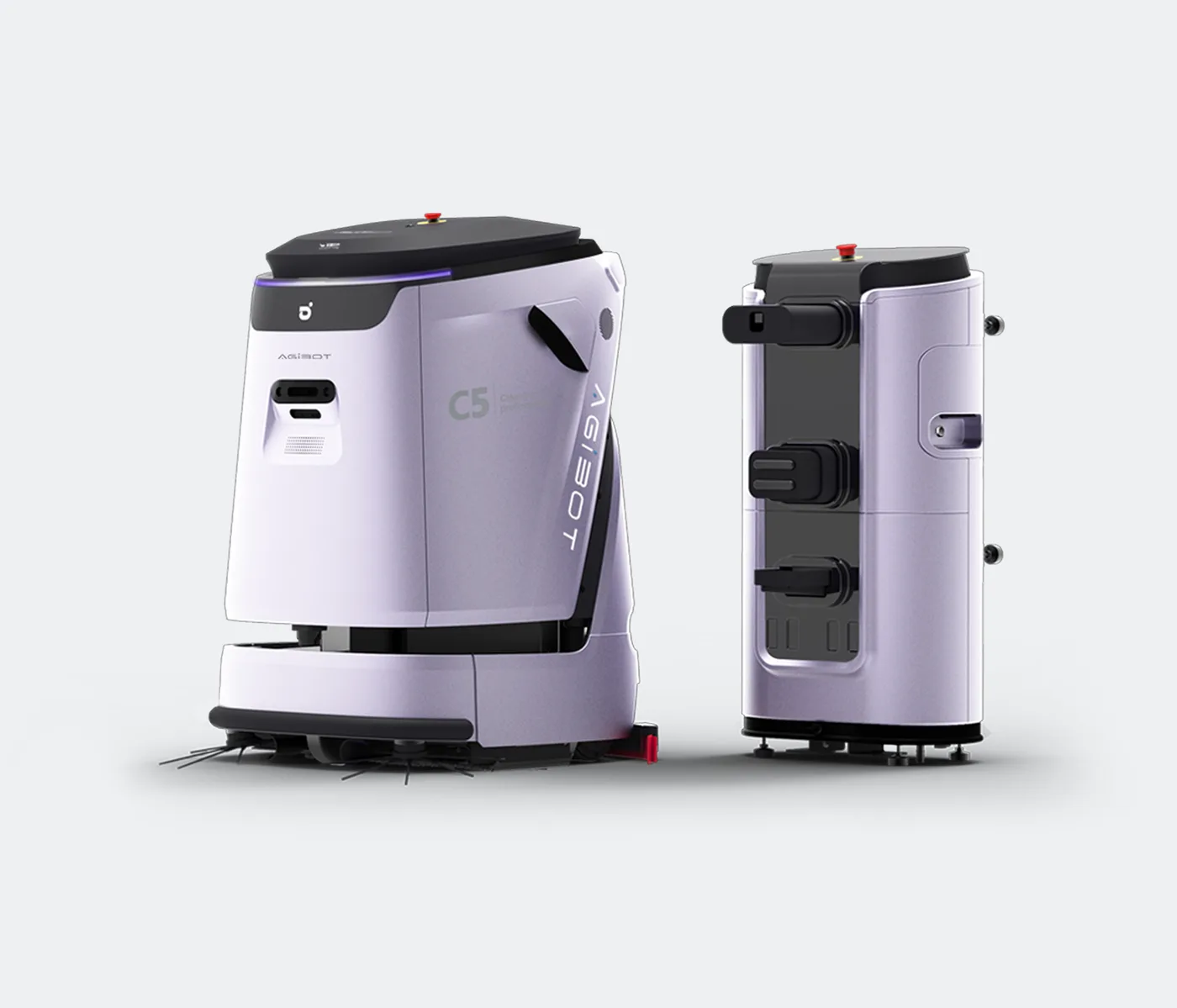
AgiBot C5: all-in-one cleaning robot for hotels, hospitals, and malls
Sweeps and mops in one pass: up to 1,980 m² per hour, up to 3 hours operation, 90 L tank, 550 mm cleaning width, 25 kg pressure. Claimed 95% debris removal. Laser-visual navigation, integration with doors and elevators, auto-charging, automatic water refill and drain, auto tank cleaning. Suitable for hotels, hospitals, malls, offices, and factories.
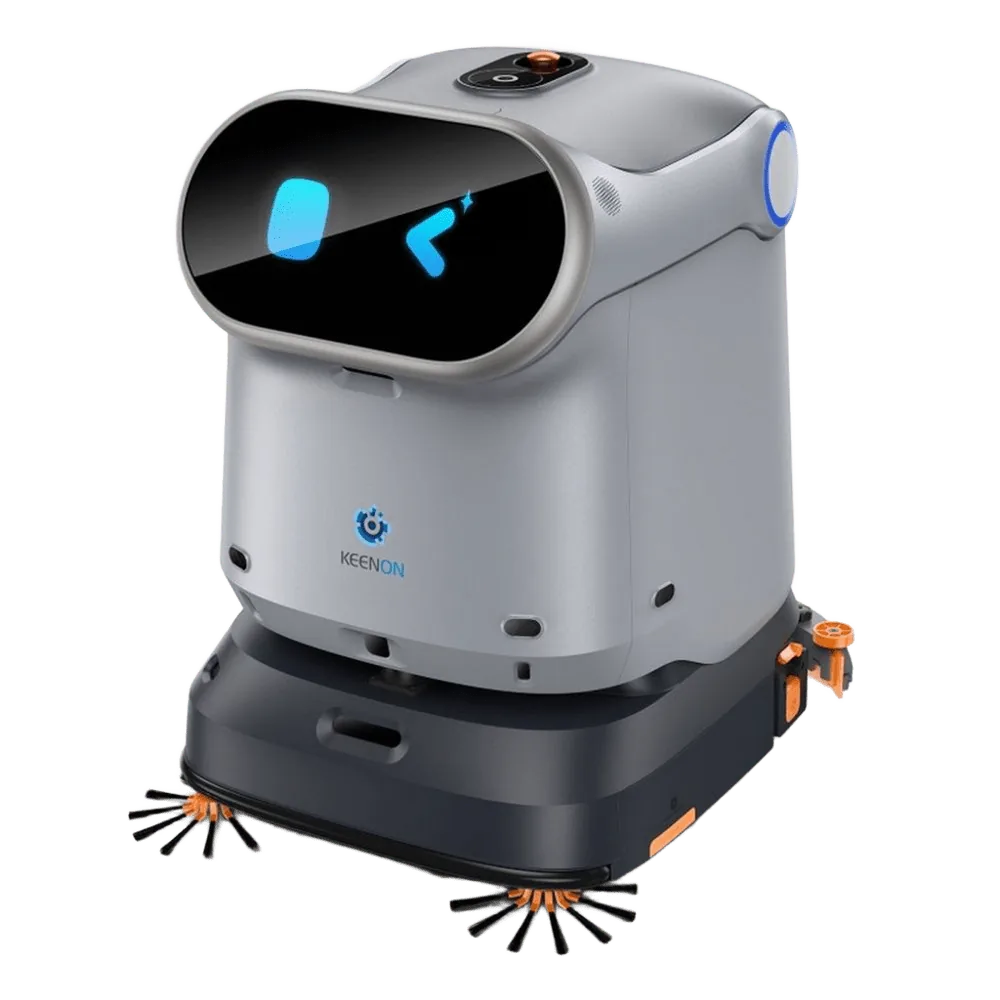
Keenon KLEENBOT C40: dry and wet cleaning for complex layouts
Cleaning robot for large spaces: dry and wet cleaning in one device. Suction up to 23,500 Pa, 40 cm cleaning width. Lidar and visual SLAM navigation, stereo cameras, and ultrasound. Passages from 65 cm, thresholds up to 3.5 cm, elevator integration via E-BOX, 2-hour charging. Perfect for malls, hotels, business centers, clinics, and warehouses with many narrow areas and floor transitions.
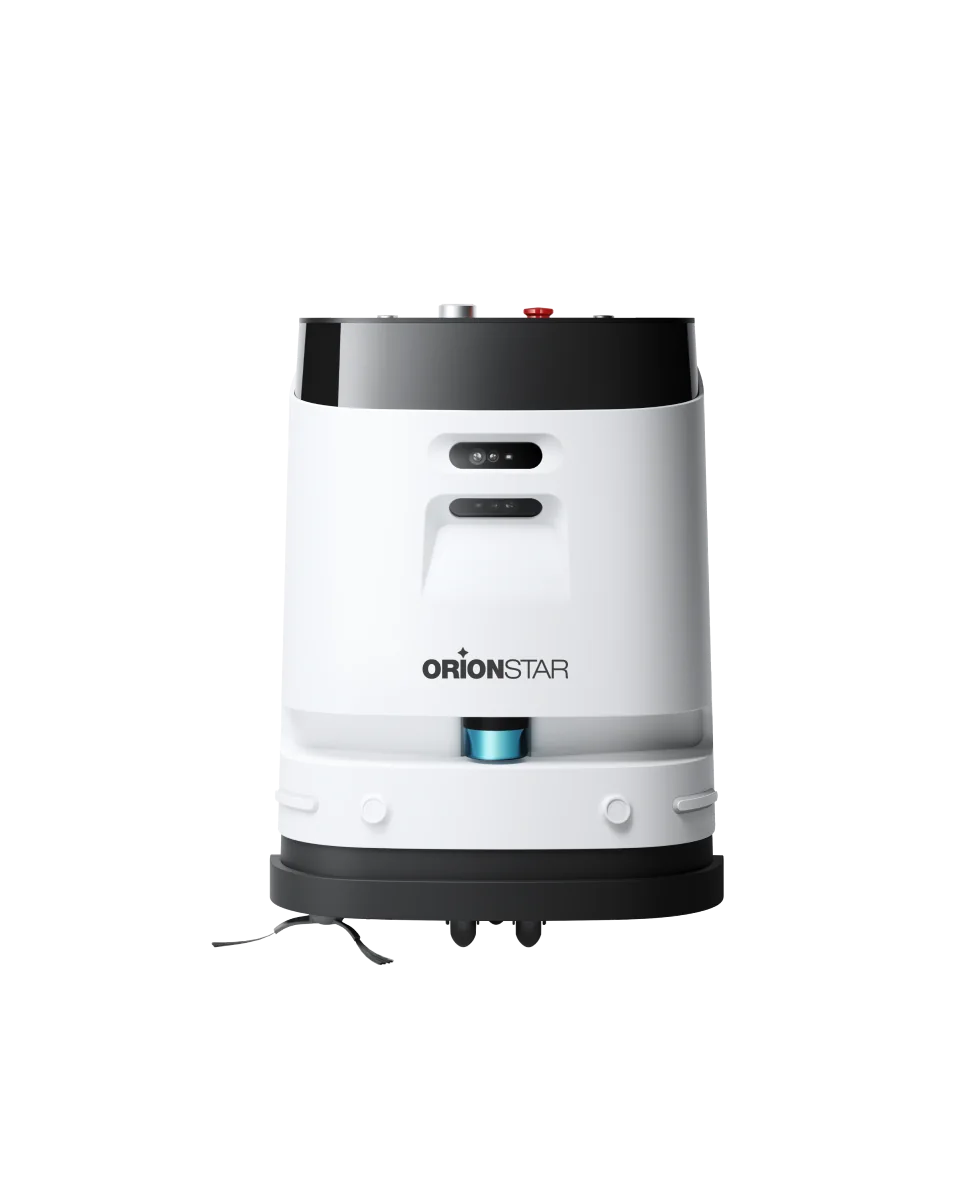
OrionStar CleaniBot K1: carpet vacuum robot
For hotels, offices, and small commercial spaces with carpets: 20 kPa suction, up to 700 m² per hour, up to 8 hours runtime, 10 L dustbin, 440 mm cleaning width, weight 46 kg. Wi-Fi and 4G connectivity.
Cleaning robot comparison: which model for which task
| Model | Type | Performance | Tanks / dustbin | Cleaning width | Features | Best for |
|---|---|---|---|---|---|---|
| OrionStar CleaniBot M1 | floor scrubber | up to 1200 m²/h | clean 35 L, dirty 33 L | — | 11 sensors, auto-refill, auto-drain, auto-charging | malls, offices, hotels, universities, airports |
| OrionStar CleaniBot C5 | floor scrubber | up to 1980 m²/h | 45 + 45 L | 550 mm | 25 kg brush pressure, 170 kg weight | airports, factories, warehouses, large malls |
| AgiBot C5 | sweeping and mopping | up to 1,980 m²/h, up to 3 h operation | 90 L tank | 550 mm | laser-visual navigation, doors and elevators, auto tank cleaning | hotels, hospitals, malls, offices, factories |
| Keenon KLEENBOT C40 | dry and wet cleaning | — | — | 40 cm | suction up to 23,500 Pa, passages from 65 cm, thresholds up to 3.5 cm, E-BOX elevators | Malls, hotels, business centers, clinics, warehouses |
| OrionStar CleaniBot K1 | carpet vacuum | up to 700 m²/h, up to 8 h | 10 L dustbin | 440 mm | 20 kPa suction, Wi-Fi and 4G | hotels, offices, small venues |
Data from the SHKARAN catalog and manufacturer materials. A dash means the value is not specified in our materials. Actual values depend on configuration and operating conditions.
How to Choose a Floor Cleaning Robot: Checklist
It's best to start selection not with the model, but with the site. Answer a few questions, and your options will narrow to two or three.
- Area and schedule. How many square meters need cleaning per shift, and during what time window. This determines performance in m² per hour.
- Floor type. Smooth floors, tiles, and concrete suit scrubbers and hybrid models; carpets require a vacuum.
- Passages and thresholds. Minimum passage width and threshold height: Keenon KLEENBOT C40 is rated for passages from 65 cm and thresholds up to 3.5 cm.
- Floors. For multi-floor cleaning, elevator and door integration is required.
- Tank volume and autonomy. The larger the tanks and runtime, the less often a person needs to interact with the robot.
- Service automation. Auto-refill, auto-drain, and auto-charging turn the robot into a machine that works without people.
- Debris or stains. Sweeping is enough for light debris; stubborn dirt needs high brush pressure.
- Control. Scheduling, zone maps, and monitoring via app or cloud are essential if you have more than one robot.
Robot Cleaner ROI: What It’s Made Of
Compare not the machine price and robot price, but the cost per hour of cleaning. The calculation includes: operator hours on a regular machine, consumables (brushes, filters, detergent, water), downtime and maintenance, as well as quality and consistency of results. The larger the area and the more frequent the cleaning, the faster the robot pays off. On small sites with infrequent cleaning, the benefit is lower and requires precise calculation.
We calculate ROI for your site: area, schedule, number of floors, and current cleaning costs. We provide figures after calculation, not in advance.
Robot Cleaner Implementation: How It Works
- Site survey: layout, flooring, passages, elevators, zones, and cleaning times.
- Model selection and calculation: we select the class and number of robots for your schedule.
- Delivery and commissioning: the robot maps the space, you mark zones and restrictions.
- Schedule and regulations: when, where, and in what mode the robot cleans, and who maintains it.
- Staff training: how to fill water, change brushes, clean filters, and resolve errors.
- Consumables and maintenance: spare brushes and filters, maintenance schedule.
What a Robot Cleaner Doesn’t Do: Honest Limitations
- The robot doesn’t clean corners, under furniture, or stains it can’t reach. These areas remain for humans.
- It doesn’t replace quality control: cleaning is periodically checked and routes are adjusted.
- It needs clear passage: obstacles on the floor, closed doors, and narrow spaces reduce cleaning area.
- Operating time is limited by tanks and battery, so routes are planned with refilling, draining, and charging in mind.
- Exact specifications depend on configuration and are confirmed during site calculation.
FAQ About Sweeping and Scrubbing Robots
How is a floor scrubber robot different from a sweeping robot?
A sweeping robot collects dry debris with brushes into a container, while a scrubber washes the floor with water, applies brush pressure, and collects dirty water. Hybrid models, like AgiBot C5, sweep and wash in one pass.
Which floor scrubber robot is best for a shopping mall?
It depends on area and layout. For large galleries and halls, OrionStar CleaniBot M1 and C5 with large tanks and service automation are suitable; for buildings with elevators and narrow spaces, Keenon KLEENBOT C40 and AgiBot C5, which can work with elevators and doors.
How many square meters does a robot clean per hour?
According to specs: OrionStar CleaniBot M1 up to 1,200 m² per hour, CleaniBot C5 and AgiBot C5 up to 1,980 m² per hour, CleaniBot K1 up to 700 m² per hour. Actual performance depends on layout, obstacles, and cleaning mode.
Does the robot fill and drain water automatically?
Some models do. OrionStar CleaniBot M1 features auto-refill, auto-drain, and auto-charging; AgiBot C5 offers auto-charging, water fill and drain, and auto tank cleaning. This eliminates the need for constant human presence.
Can the robot use elevators?
Yes, some models can. Keenon KLEENBOT C40 supports elevator integration via E-BOX module; AgiBot C5 integrates with doors and elevators. This is essential for multi-floor sites.
Can the robot clean carpets?
For carpets, you need a special robot vacuum, such as the OrionStar CleaniBot K1: 20 kPa suction, 10 L dustbin. Scrubber robots are designed for smooth surfaces.
How much does a cleaning robot cost and how quickly does it pay off?
The price depends on the model and configuration, so we provide it after calculation. Payback is determined by area, cleaning schedule, and current hourly cleaning costs. The larger and more frequently cleaned the space, the faster the payback.
How to order a cleaning robot?
Submit a request: describe your space, area, floor type, and cleaning schedule. We’ll select a model, calculate the price and lead time, deliver, and launch the robot.
Find the right cleaning robot for your space
Tell us about your site: area, flooring, number of floors, cleaning schedule. We’ll recommend a model, calculate the price and delivery time, and explain how to launch the robot.