A gas analysis robot in a mine solves a single practical task: it enters the mining area before people, measures air composition, and returns with a report. The operator receives data on CO, CO₂, H₂S, and NO₂ at each route point without entering areas where the air hasn’t been checked yet. In this article, we review the field: which robots and drones exist for air monitoring and mine inspection, who manufactures them, their capabilities, how they work without underground connectivity, and how to choose the right platform for your mine.
This material is useful for site managers, chief engineers, and industrial safety teams at enterprises in Russia and CIS countries: ore and polymetallic mines, underground mines, tunnels, and collectors. Typical conditions include water, mud, slopes, lack of connectivity, and a set of gases: CO, CO₂, H₂S, and NO₂. All platform specifications are taken from official manufacturer materials and depend on configuration. Prices are not listed here: they are calculated per project.
Why use a robot to check workings before allowing people in
After blasting, downtime, or ventilation shutdown, the air composition in the workings is unknown. Carbon monoxide, carbon dioxide, hydrogen sulfide, and nitrogen oxides are immediately dangerous and not always detectable by smell. Traditionally, a person with a portable device approaches the area and is the first to enter the unknown environment. This poses a risk to the worker and wastes time, as entry must be coordinated, prepared, and supervised.
Robotic air monitoring in mine workings changes the workflow. The machine goes first, while the operator stays in a zone where the air is already checked. The benefits are threefold:
- safety: no one enters an unknown atmosphere until the gas analyzer completes the route;
- repeatability: the same route and measurement points every time, enabling data comparison between shifts;
- documentation: a measurement log with time, coordinates, and gas values for review and regulatory purposes.
Important note. The robot does not replace company regulations or responsible personnel. The decision to allow people in remains with the operator; the robot provides verified data. All safety rules and internal mine instructions must be fully observed, and the use of such equipment coordinated with your technical and regulatory authorities.
How robotic measurement works without connectivity in the mine
Underground workings usually lack GPS, mobile, or Wi-Fi coverage. Therefore, the gas analysis robot is designed for autonomous operation: the operator sets the task at the entry point where connectivity is still available, and the machine proceeds independently. The mission consists of five steps.
- Start. The operator launches the mission at the entry point within coverage. The route and measurement points are pre-set.
- Autonomous traversal. The robot follows the route independently. Navigation is based on lidar and the mine map, without GPS or connectivity.
- Measurements. At each point, the gas analyzer records CO, CO₂, H₂S, and NO₂. Values are logged with location data.
- Return. The robot comes back to the coverage area and transmits the recorded data.
- Report. The operator receives a measurement map, point values, exceedance markers, and route photos and videos.
For permanent routes, there’s an option to place repeaters along the path, allowing the operator to receive data before the robot returns. More on underground connectivity is covered in a separate section below.
Gas analysis in the mine: which gases are measured and how
The minimum set for checking workings before allowing people in: CO, CO₂, H₂S, and NO₂. These are the gases most often used to determine entry safety: carbon monoxide and nitrogen oxides appear after blasting, hydrogen sulfide is typical for certain sulfide ores, and carbon dioxide accumulates in poorly ventilated areas. The set can be expanded by the mine, for example, to include oxygen and other channels.
Certified gas analyzer, not just a 'sensor on a robot'
The robot platform carries a gas analysis module as its payload. A certified industrial multi-gas analyzer is used as the measuring device, selected according to the measurement ranges and requirements of the specific mine. Power and data transmission are provided via the robot’s external interfaces. For ground platforms and drones, ready-made multi-gas modules exist, such as Sniffer4D: it can be mounted on a drone or ground platform to create a concentration map with location data.
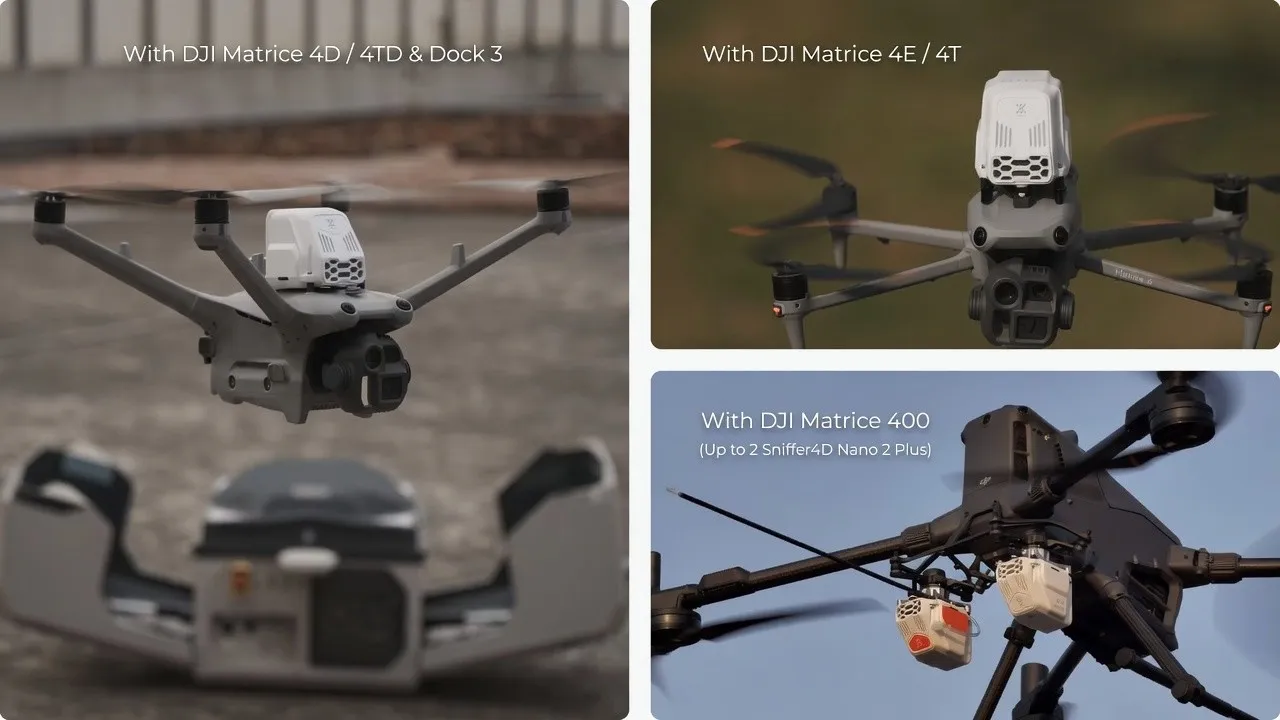
Measurement log as the main result
The robot’s primary output isn’t just a real-time reading, but a log: timestamp, map location, and values for each gas. This is exported to a report and kept for industrial safety services. Exceedance markers instantly show where air quality is out of spec and on which part of the route.
Which robots are suitable for mining operations
Three classes of platforms are considered for mining: legged (quadruped) robots, tracked robots, and drones. They don’t compete but serve different tasks.
Quadruped robot for mines: mobility and operation in water and mud
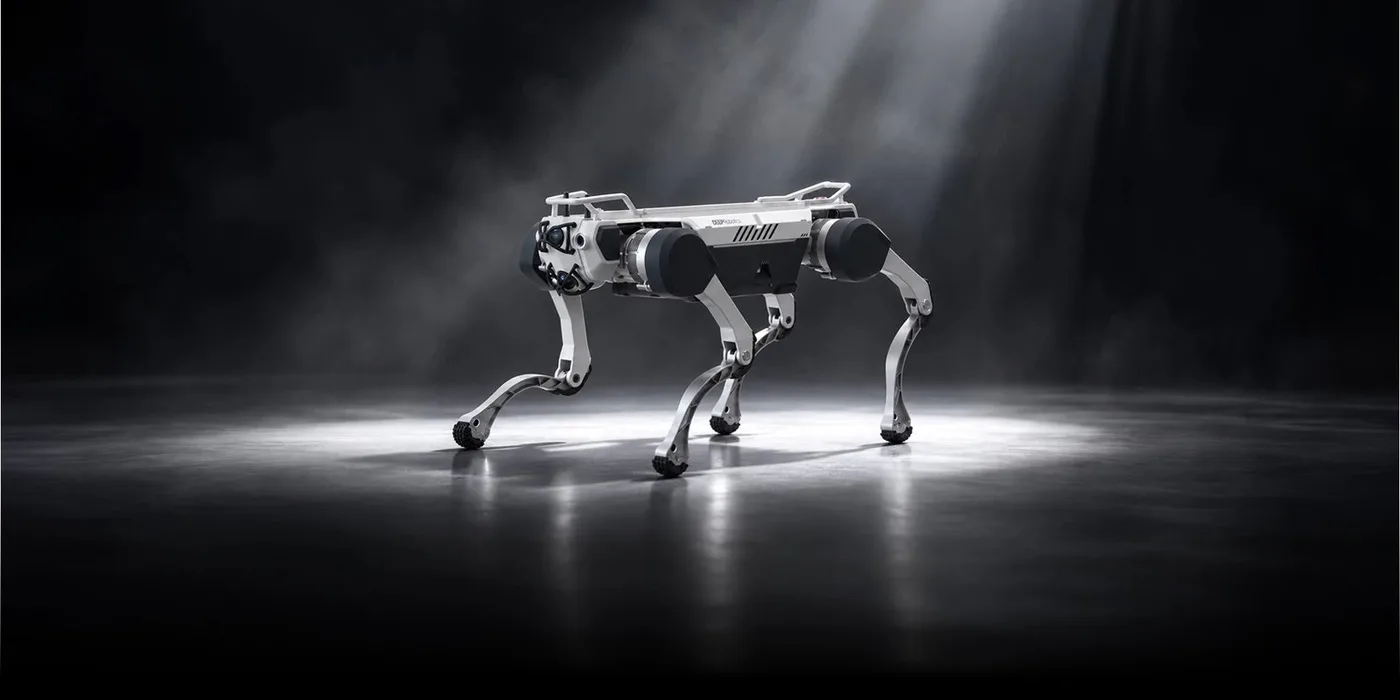
Quadruped robots traverse uneven floors, steps, and slopes where wheeled platforms get stuck. For wet and muddy operations, body protection is key: both platforms below feature IP67 and an operating temperature range from −20 to +55 °C.
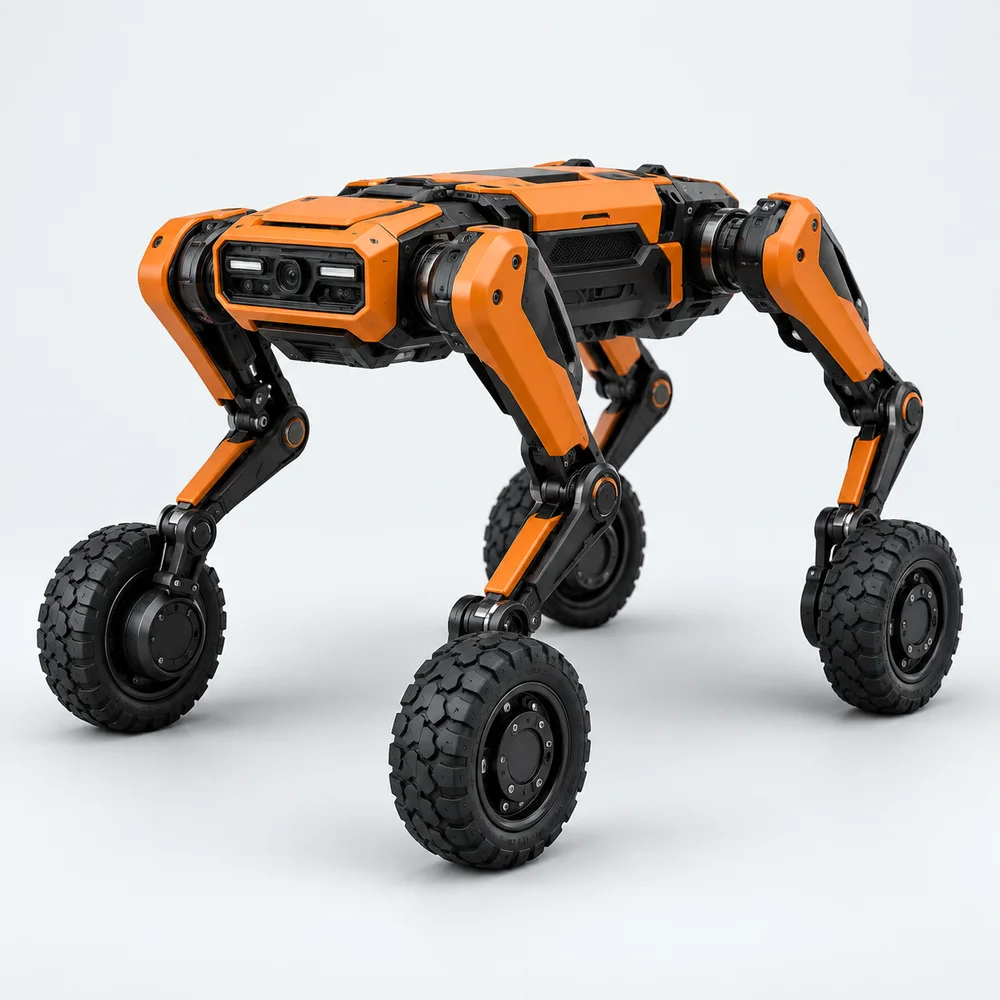
DEEP Robotics Jueying X30 Pro (China): standing dimensions approx. 1000 × 470 × 715 mm, weight with battery approx. 59 kg, payload 20 kg. Battery life about 4 hours unloaded, about 2.5 hours loaded, quick battery swap, auto-return to charging station. Handles steps up to 20 cm and slopes up to 30°. Four lidars and a camera, operates in low light and darkness. Power interfaces 24 / 12 / 5 V, Ethernet and USB for gas analyzer integration.
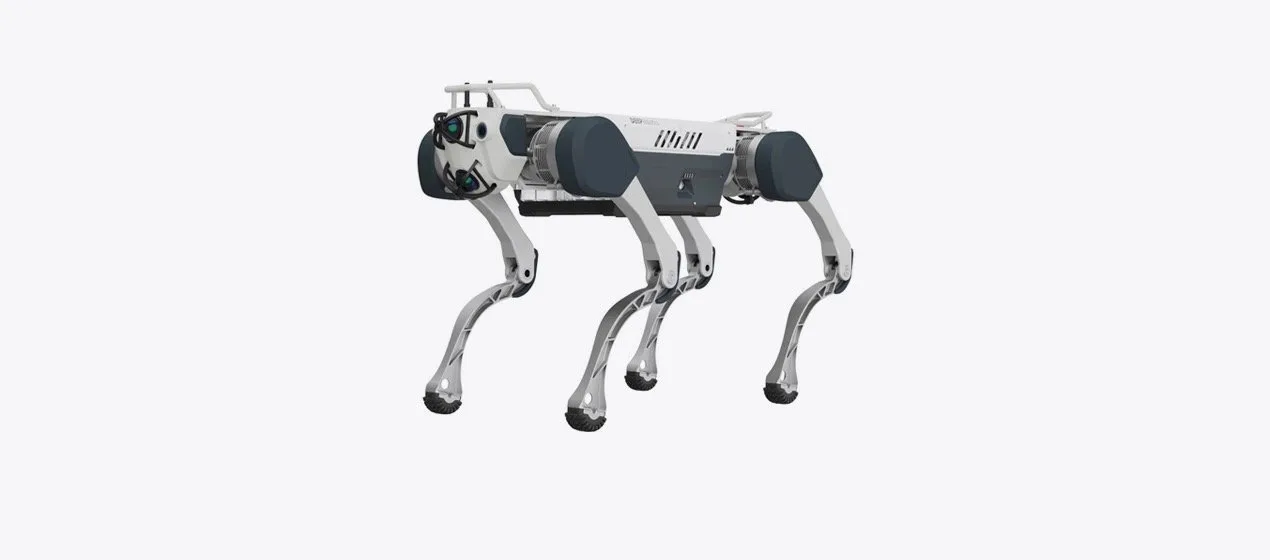
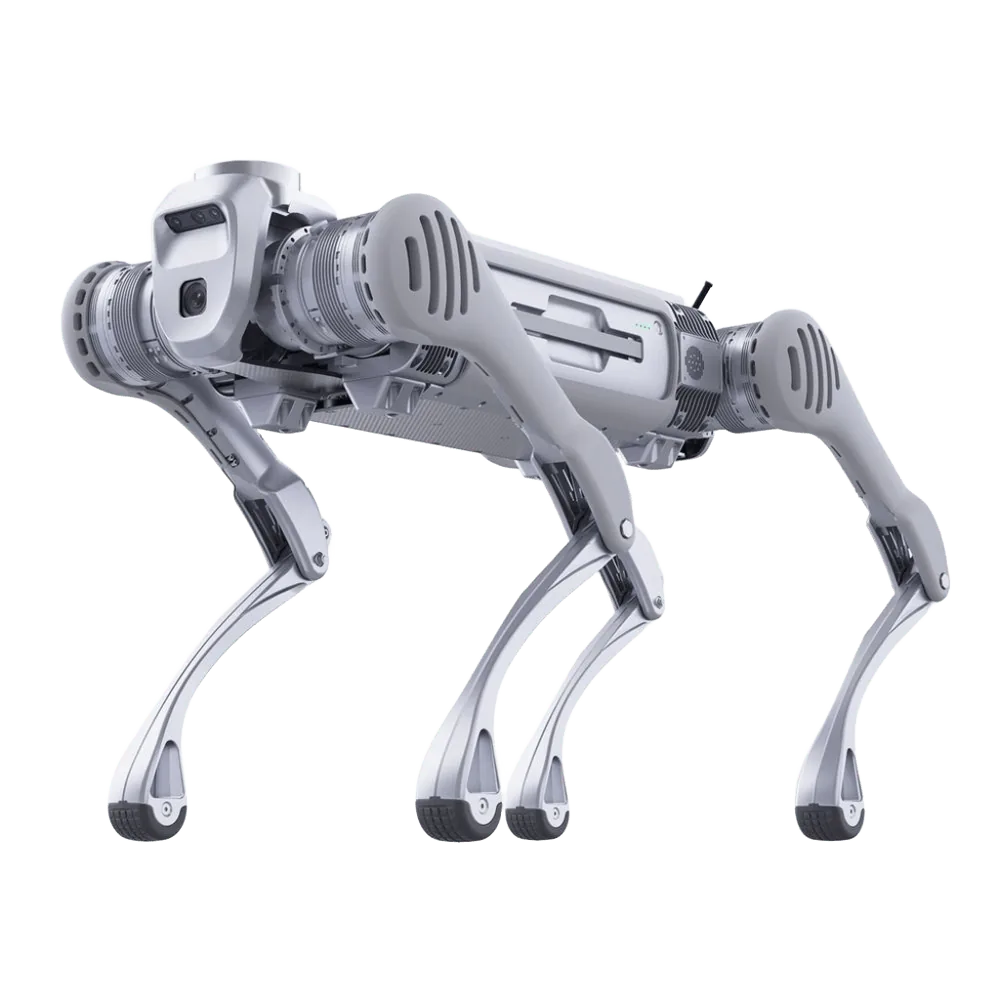
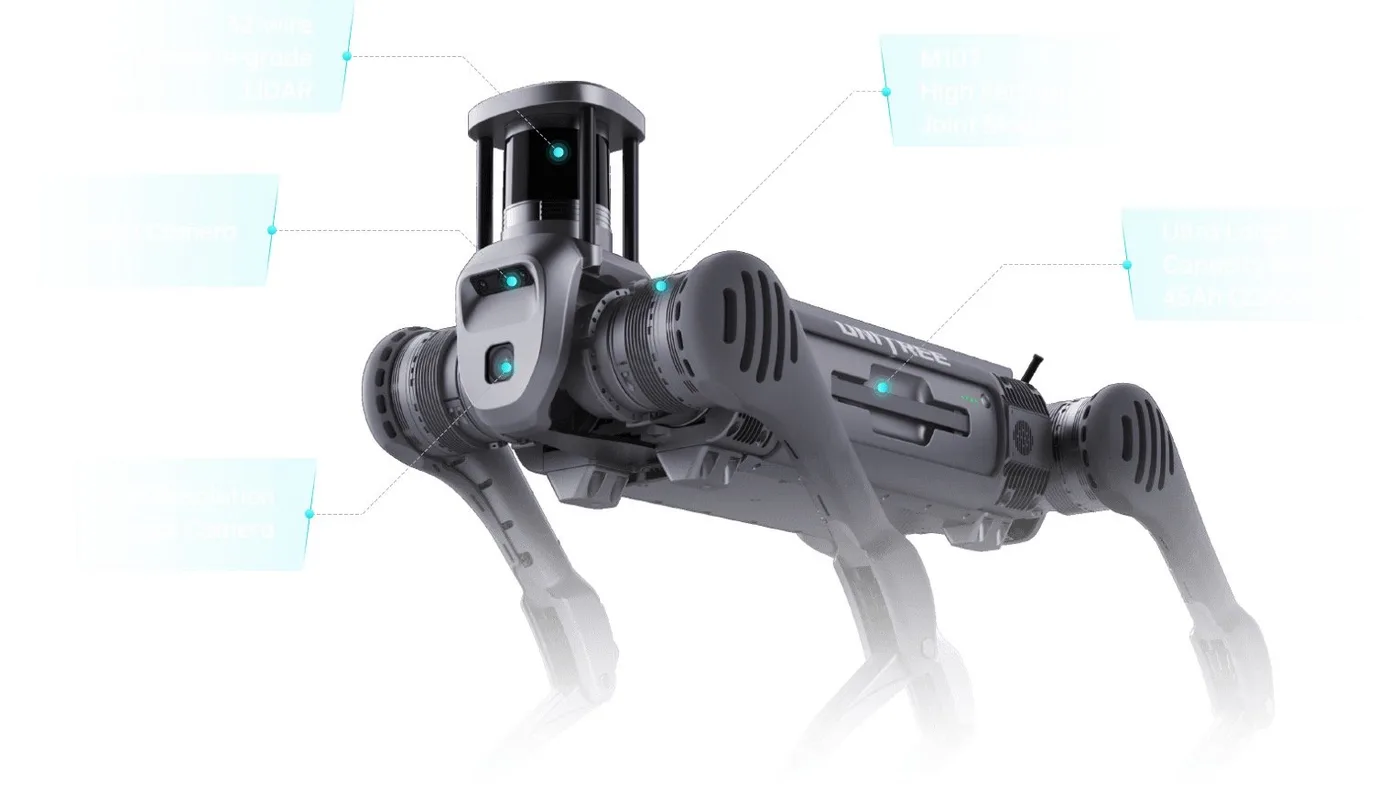
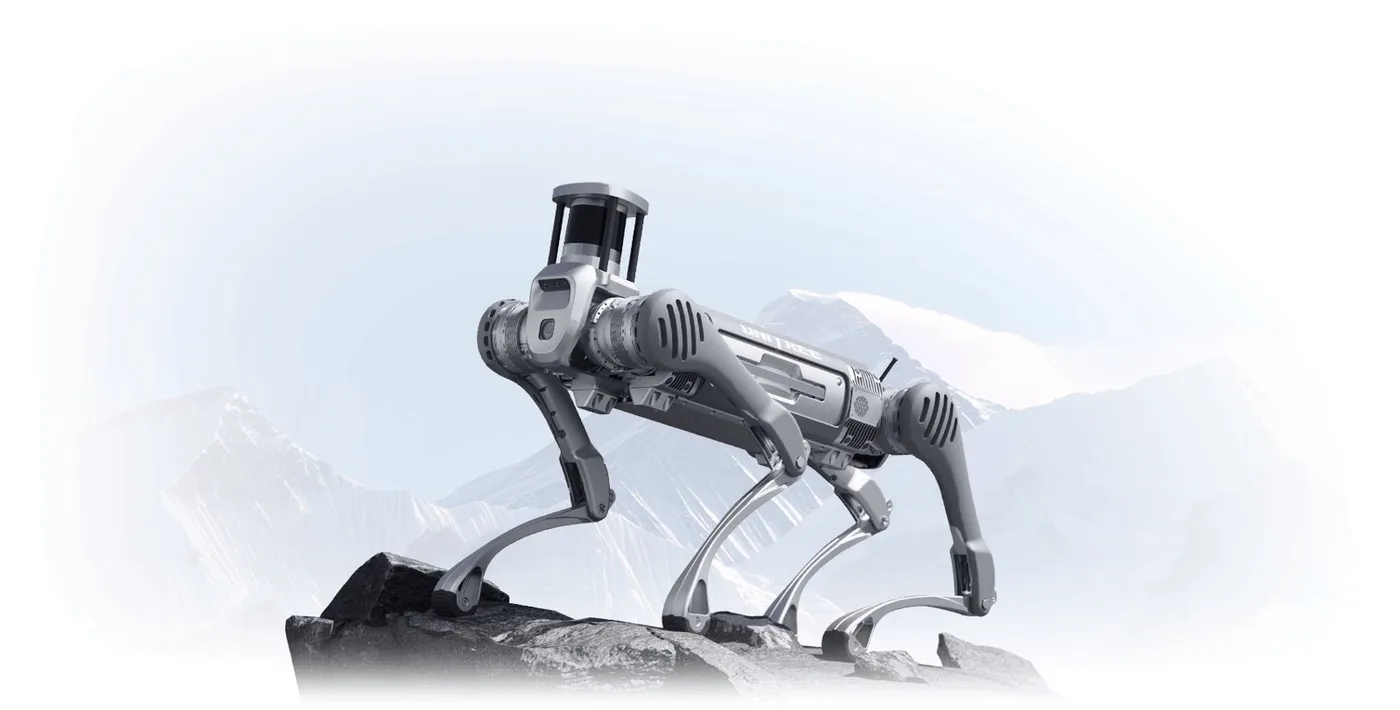
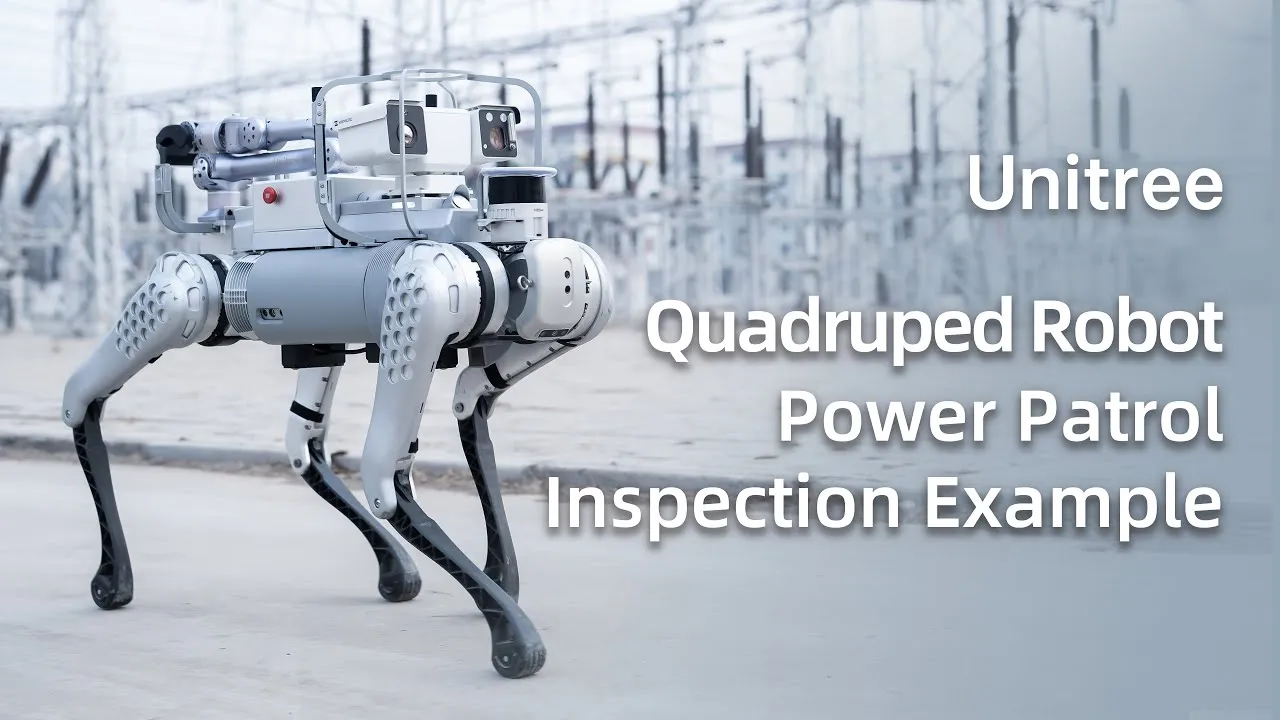
Unitree B2 (China): standing dimensions approx. 1098 × 450 × 645 mm, weight with battery approx. 60 kg, moving payload over 40 kg. Battery life 4–6 hours; with 20 kg load, over 4 hours and 15 km range. Obstacles up to 40 cm, slopes over 45°. 3D lidar, two depth cameras, two standard cameras. Four Ethernet ports, four USB 3.0, power 12 / 24 / 5 V. A heavier, more robust platform for long routes and tough terrain. More in our catalog: Unitree B2 for industrial inspection.
Tracked robot for mines: stability in mud and ATEX explosion protection
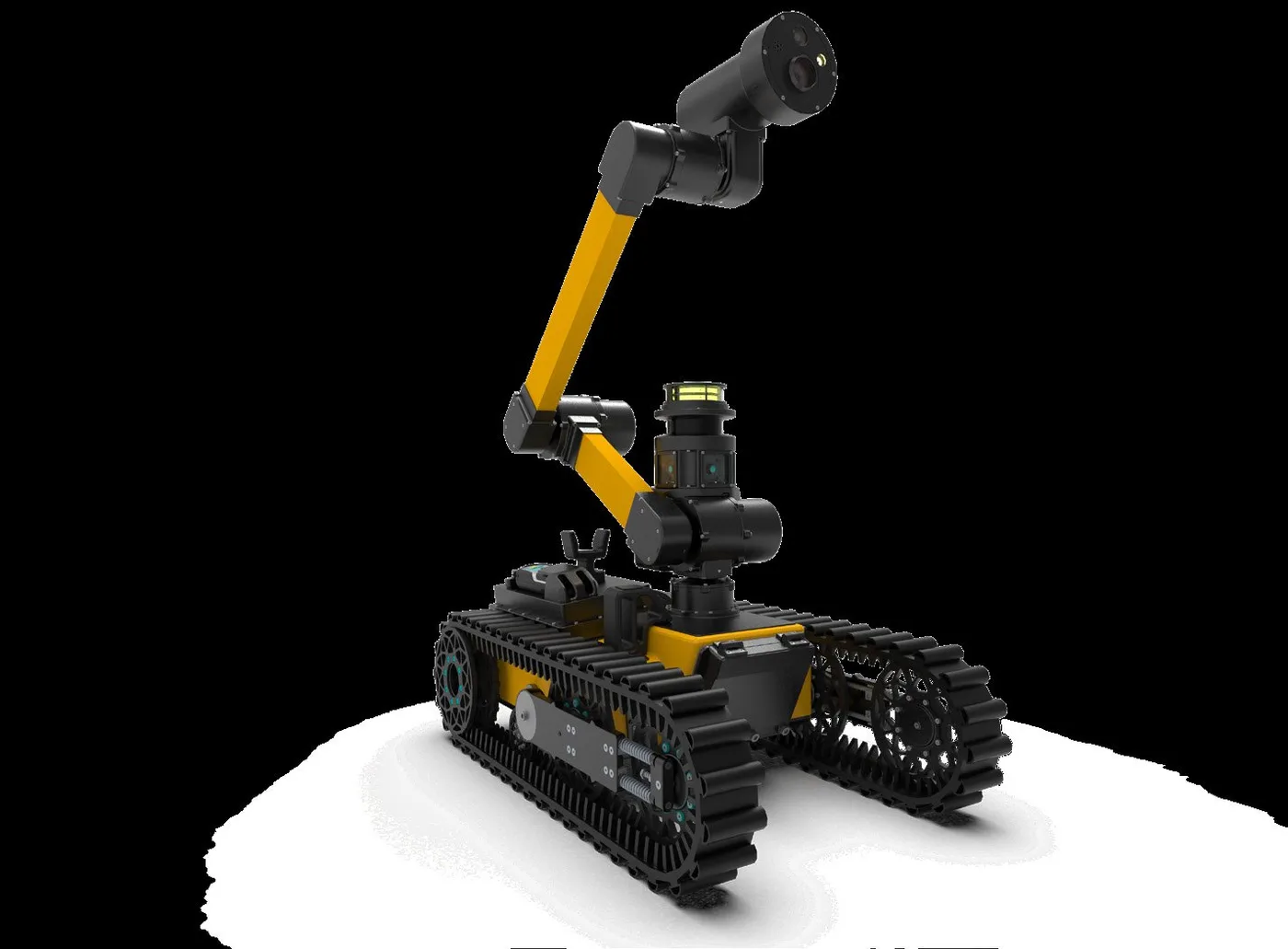
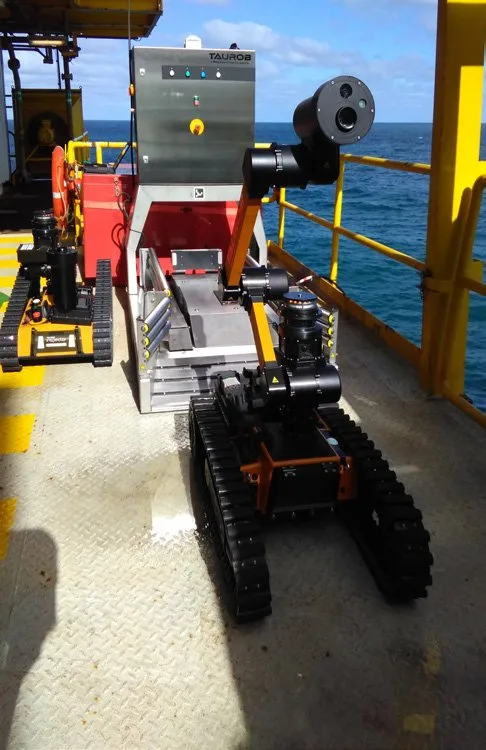
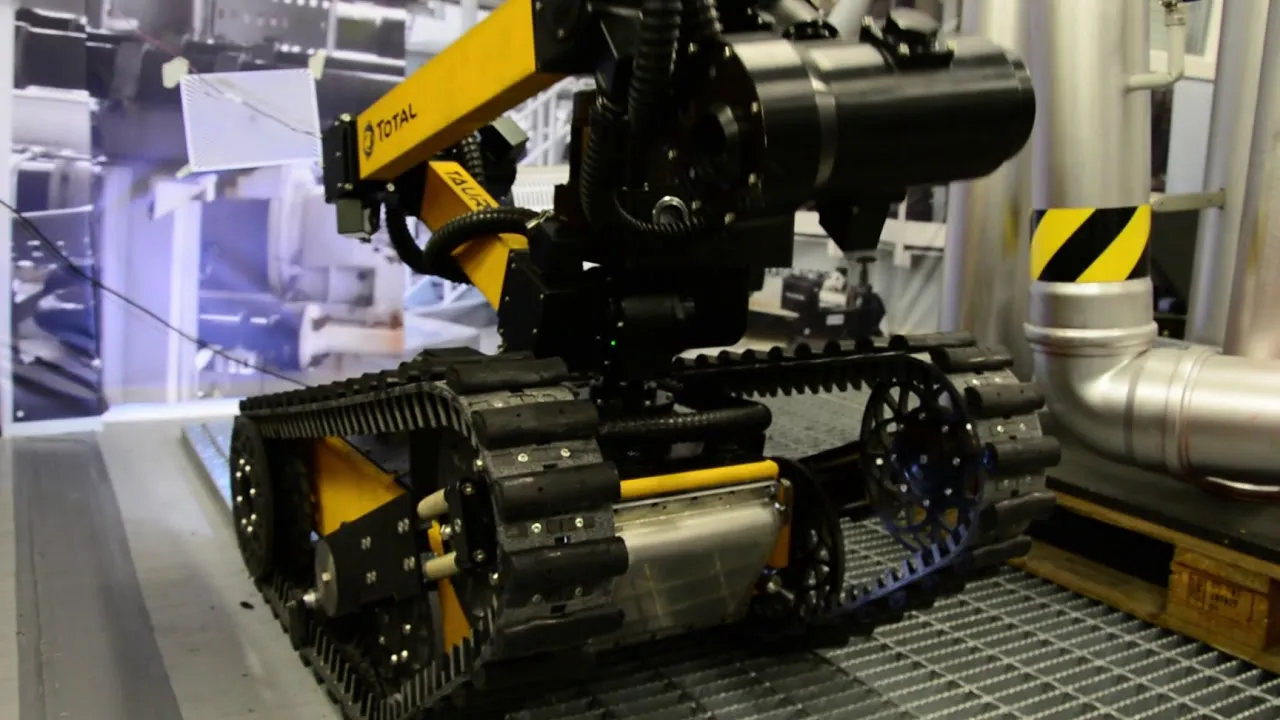
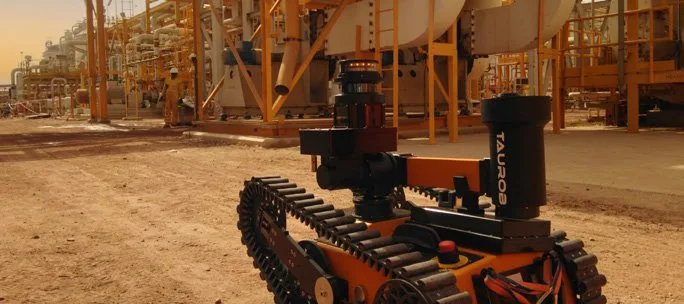
Taurob Inspector (Austria) is a tracked inspection robot. Dimensions 100 × 58 × 75 cm, weight 90 kg, speed 2.5 km/h, battery life 2 hours, swappable battery, charging station included. Handles steps and slopes up to 45°, steps 25 cm, gravel, mud, and grating floors. IP67 protection, ATEX certification, temperature from −20 to +60 °C. Features 3D lidar, 4K camera, thermal imager, 360° camera, and multi-gas sensor. Autonomous navigation, Wi-Fi or 4G connectivity.
This is the only platform here officially certified for explosion protection (ATEX). The others are not. If your mine has methane or other explosive atmospheres, address this first—before choosing a robot type.
Drone for mine inspection: exploration and 3D mapping
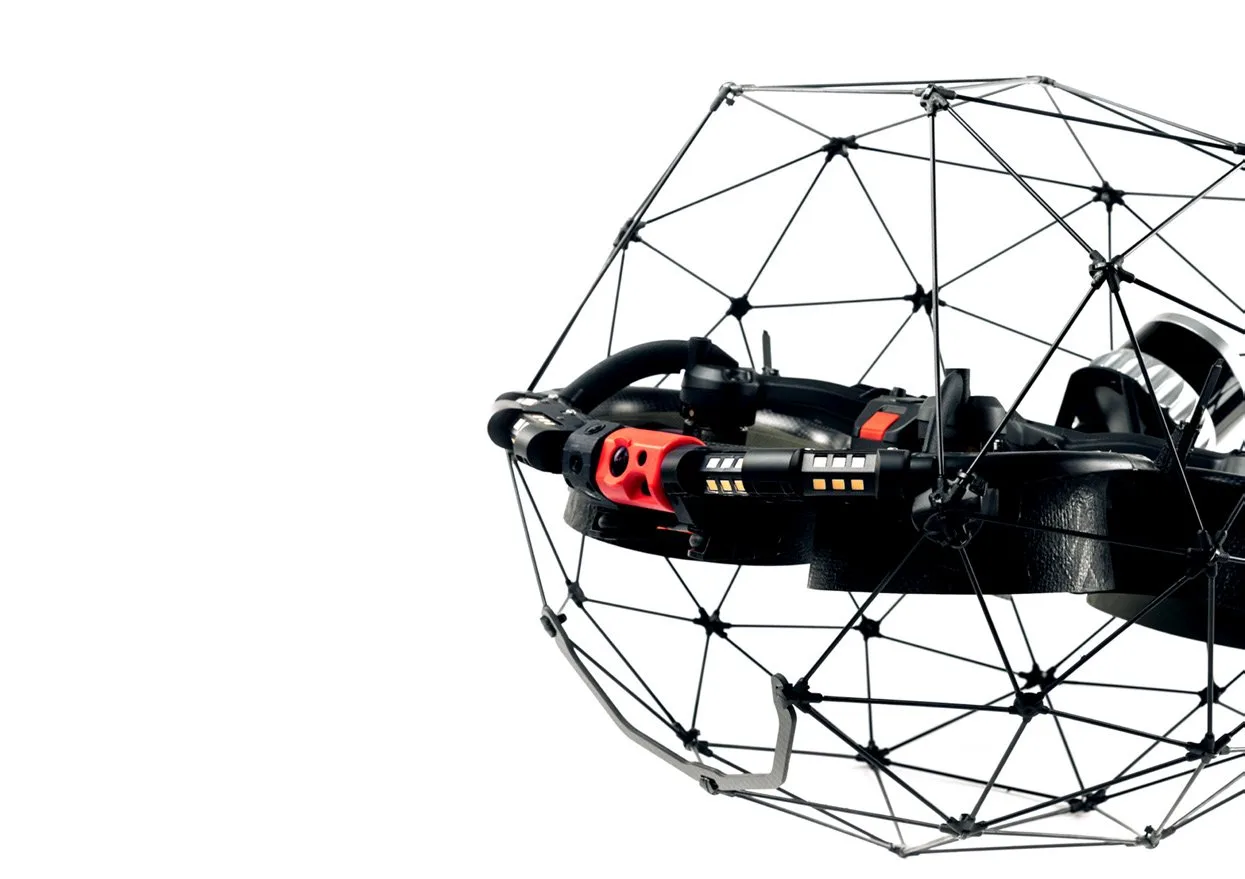
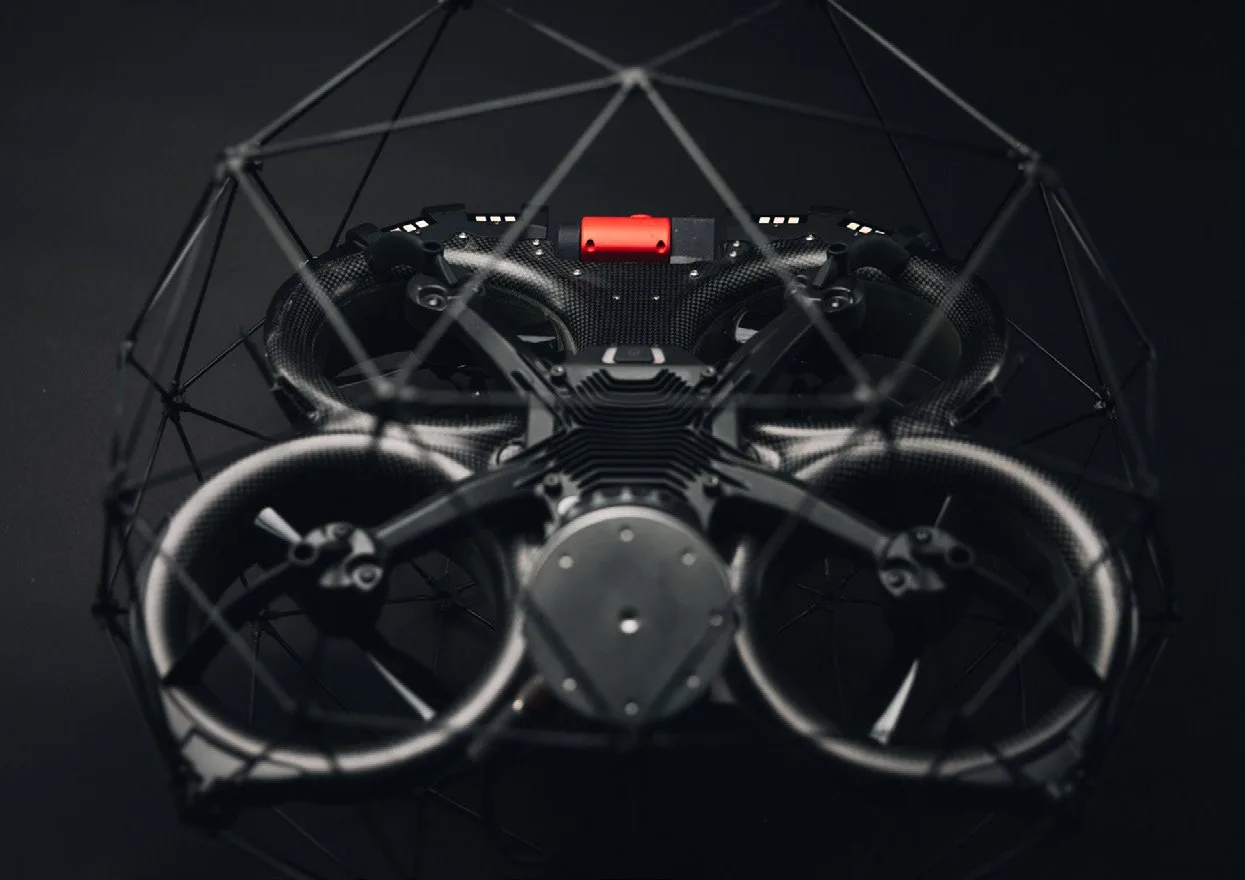
Flyability Elios 3 (Switzerland) is a drone in a protective cage for confined spaces, built to withstand collisions. Size 48 cm wide, 38 cm high, weight with lidar 2350 g, flight time over 9 minutes with lidar, battery swap under 10 seconds. Navigates via Ouster OS0-32 lidar: flies without GPS and builds a 3D map of the site. Main camera, thermal imager, built-in lighting. IP44 protection, lidar module IP68, operating temperature 0 to +50 °C.
The drone’s job is rapid scouting and 3D imaging of areas inaccessible or slow for ground robots: over debris, water, in extraction chambers. Gas sensor installation on Elios 3 must be confirmed with the manufacturer for your configuration.
Platform comparison: which for which task
| Platform | Type | Water and mud | Mobility | Runtime | Gas analysis | Best for |
|---|---|---|---|---|---|---|
| DEEP Robotics X30 Pro | legged | IP67 | steps 20 cm, slope 30° | about 2.5 h with payload | module on platform | regular pre-entry checks |
| Unitree B2 | legged | IP67 | obstacles 40 cm, slope over 45° | over 4 h with 20 kg | module on platform | long routes, tough terrain |
| Taurob Inspector | tracked | IP67, ATEX | slope 45°, step 25 cm | 2 h | multi-gas sensor | routine routes, mud, explosive environments |
| Flyability Elios 3 | drone | IP44, lidar IP68 | flies over debris and water | over 9 min | to be confirmed by the manufacturer | rapid reconnaissance, 3D map |
Data from official manufacturer materials. Actual values depend on configuration, load, and operating conditions.
Underground connectivity: how the robot works where there is none
Lack of connectivity in tunnels does not prevent the robot from operating. It navigates using lidar and a map, not GPS, and records data locally. There are two modes.
- Fully autonomous. The mission starts at the entrance, the robot returns and delivers the log. Suitable for one-time inspections and reconnaissance.
- With repeaters. Radio repeaters are placed along the route, and data is transmitted to the operator during the mission. Ideal for regular routes where real-time monitoring is important.
For long underground sections, mesh radios are used. For example, IWAVE builds mesh networks for underground operations: a chain of repeaters is assembled from such radio nodes along the robot’s route. The specific communication kit is selected based on the length and geometry of the tunnels after inspection.
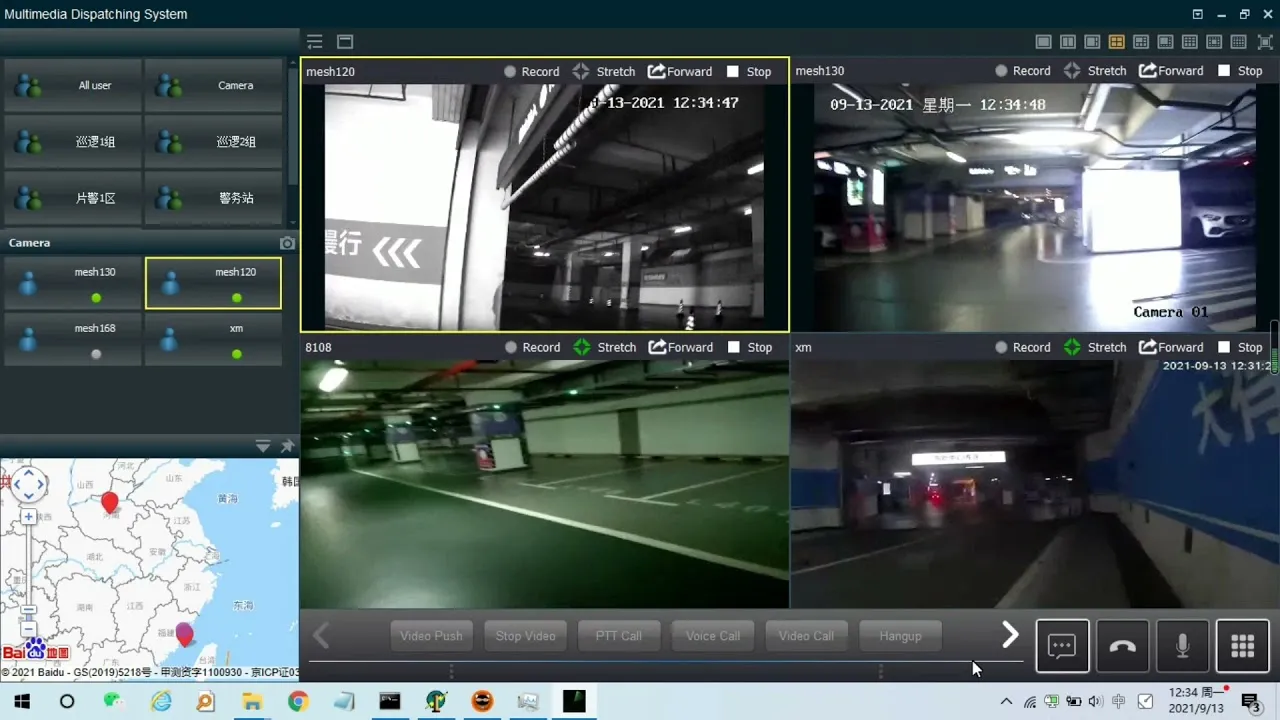
Manufacturer deployments: tunnels and mines
Below are examples of real-world use of these platforms and equipment. These are manufacturer deployments; links lead to their official videos.
Underground tunnels: regular autonomous patrols
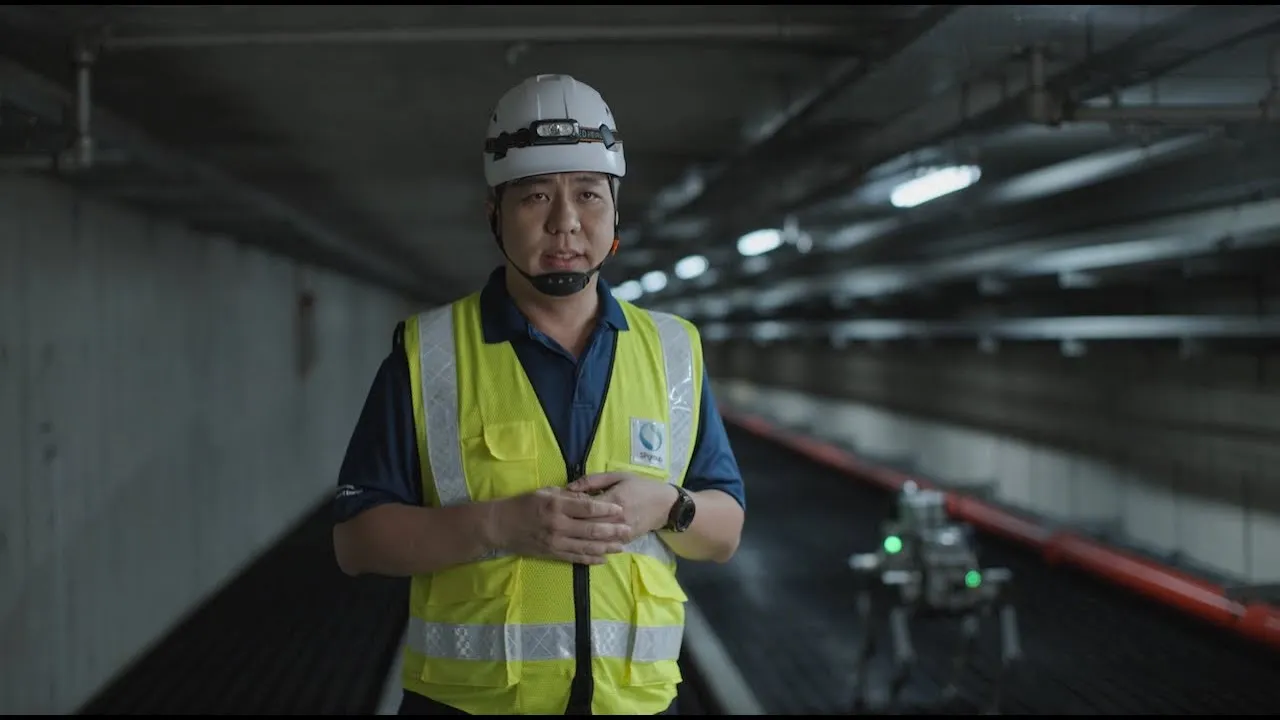
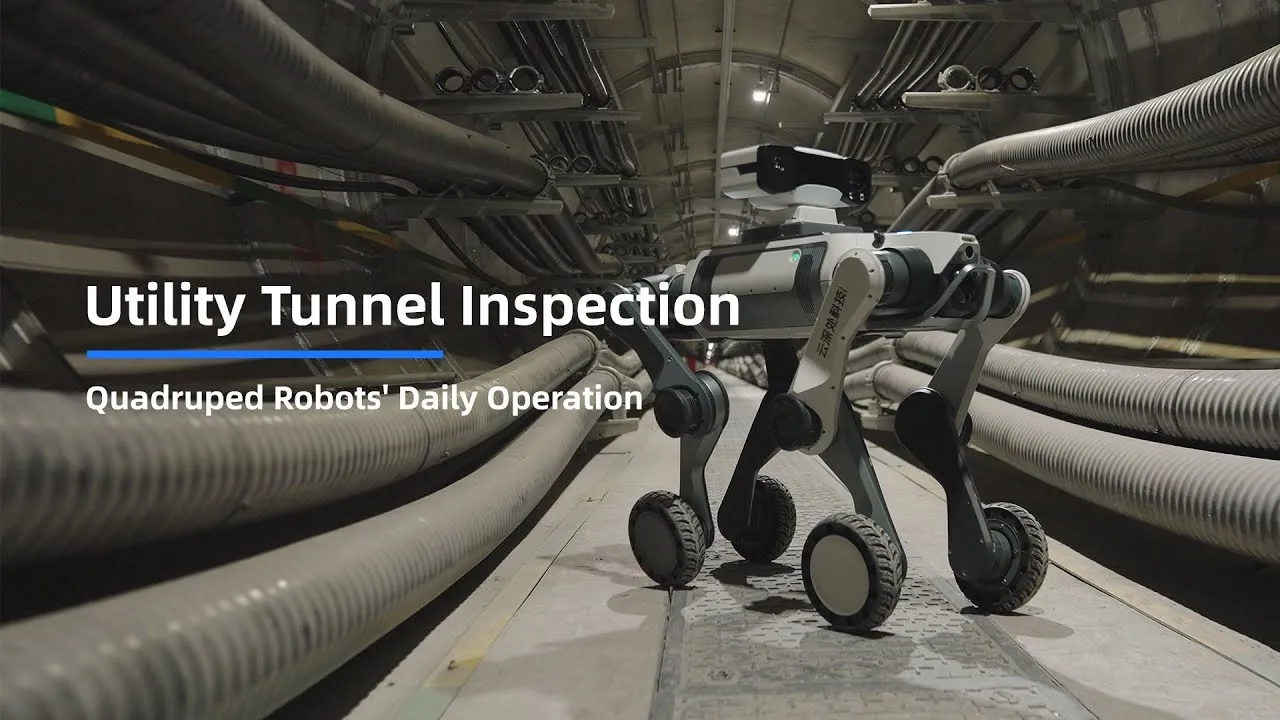
DEEP Robotics X30 at SP Group, Singapore: the “SPock” robot patrols a 40 km underground cable tunnel at a depth of 60 m. According to SP Group, this saves about 480 hours of manual inspections per year. The same robots, X30 and Lynx M20, perform daily autonomous patrols of utility tunnels with cables and pipelines: inspection and data recording.
Mines and stopes: drone reconnaissance
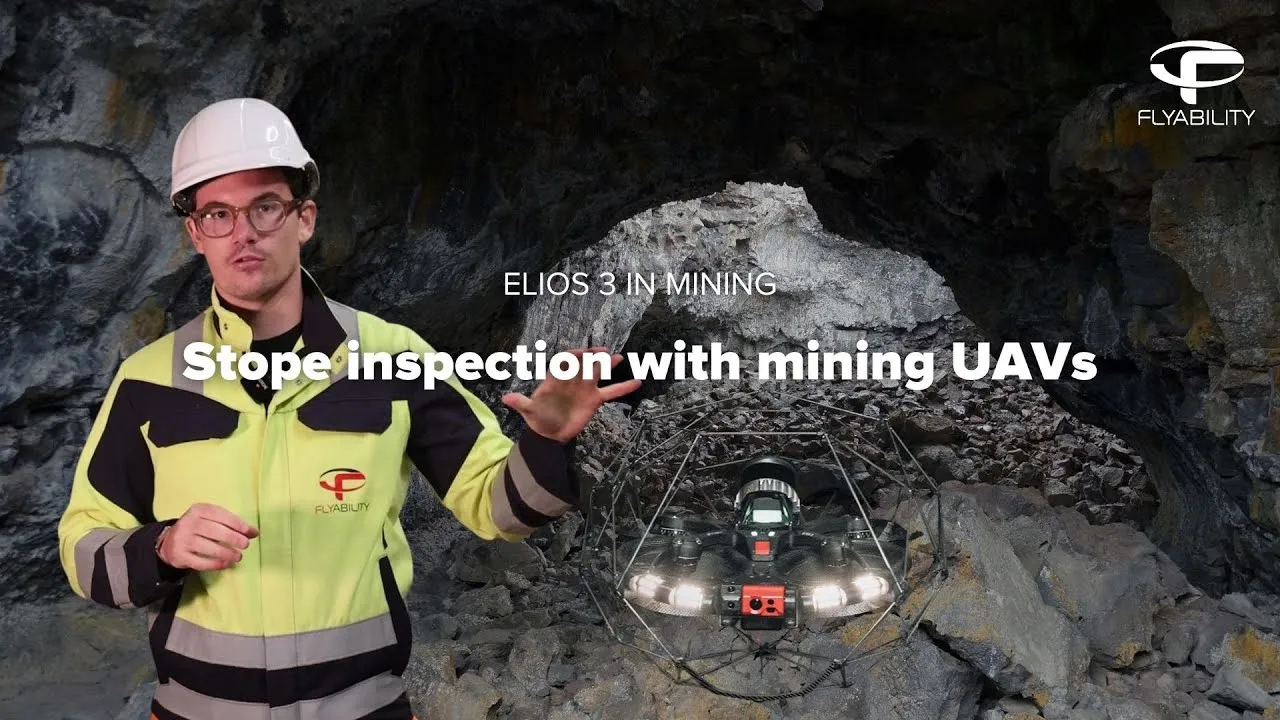
Flyability Elios 3 flies in an underground mine, including V-shaped workings: navigation without GPS and real-time 3D mapping. Another use is inspection and 3D scanning of stopes without sending people into hazardous zones.
Industrial sites: tracked and walking robots
Taurob Inspector performs autonomous inspection missions at an industrial site. Unitree walking robot conducts regular inspection rounds at a power facility.
- SP Group video: X30 robot in an underground tunnel
- DEEP Robotics video: utility tunnel patrols
- Flyability video: Elios 3 in an underground mine
- Flyability video: stope inspection
- Taurob video: Taurob Inspector mission
- Unitree video: inspection rounds
- AIRINS video: Sniffer4D gas analysis module
- IWAVE video: mesh network underground
How to choose a robot for a mine: SHKARAN’s recommendation
There is no universal answer, but for the typical request—'inspection of workings before allowing personnel, plus reconnaissance in water, mud, and slopes, without connectivity'—we suggest this setup.
- Main tool: walking robot with gas analyzer, Unitree B2 or DEEP Robotics X30 Pro. Handles water, mud, and slopes, operates without connectivity, suitable for regular tunnel inspections.
- Reconnaissance: Elios 3 drone for rapid visual inspection and 3D mapping of areas that are dangerous or time-consuming for ground robots to reach.
- Alternative: tracked Taurob Inspector if routes are fixed, stability on mud and built-in gas sensor are top priorities, or if explosion protection is required.
- Pilot: start with one section. Survey the tunnels, select the platform, refine the route and reporting, then scale up.
Questions to ask yourself before choosing
- Is there an explosive atmosphere in the mine, such as methane? If so, you should start with platforms that have certified explosion protection.
- Which gases and in what ranges need to be monitored, and is oxygen required?
- What are the routes: one-time inspections after blasting or continuous patrols?
- What are the most challenging areas: steps, slopes, flooded zones, debris?
- What is the route length one way, and are repeaters needed?
- What report format does your industrial safety team require?
Your answers to these questions become the technical brief for which we prepare a technical review tailored to your site: platforms, gas analysis module, communications, mission plan, and pilot setup.
What the robot doesn't do: honest limitations
- It does not replace the decision of responsible personnel to allow people entry and does not override safety regulations.
- It does not guarantee explosion safety: this requires a platform with the appropriate certification, and according to manufacturers, this is only claimed for the Taurob Inspector.
- Operating time is limited by the battery: about 2 hours for the tracked platform, 4–6 hours for the walking robot, and just minutes for the drone. Routes are planned accordingly, and batteries are swapped as needed.
- The drone is great for reconnaissance and 3D mapping, but cannot replace a ground robot on long routine routes.
- Exact specifications and the possibility of installing a specific gas module depend on the configuration and are confirmed during the technical review process.
Frequently asked questions about gas analyzer robots for mines
Which robot is best for gas analysis in a mine?
For regular inspections before allowing personnel, a walking robot with a gas analyzer is most often chosen, such as Unitree B2 or DEEP Robotics X30 Pro: it handles water, mud, steps, and slopes. For continuous routes and explosive environments, the tracked Taurob Inspector with ATEX is considered; for reconnaissance, the Elios 3 drone. The final choice depends on mine conditions.
Does the robot work in areas without connectivity?
Yes. The robot navigates by lidar and map, not GPS or mobile networks, follows a pre-set route, records measurements linked to the map, and uploads data after returning to the coverage area. For continuous routes, repeaters can be installed so the operator receives data in real time.
Which gases does the gas analyzer robot measure?
Minimum set: CO, CO₂, H₂S, and NO₂. Oxygen and other channels can be added as needed. A certified industrial multi-gas analyzer is used, configured for the required ranges.
Are these robots suitable for explosive mines?
Not all. According to official manufacturer materials, ATEX explosion protection is claimed only for the Taurob Inspector. Unitree B2, DEEP Robotics X30 Pro, and Elios 3 drone do not have explosion protection. For mines with methane or other explosive atmospheres, this must be addressed before selecting a platform.
Can a drone inspect workings instead of a person?
The Elios 3 drone, protected by a cage, withstands collisions, flies without GPS, and builds a 3D map of the workings, making it ideal for reconnaissance and surveying extraction chambers without human entry. Flight time is over 9 minutes with lidar, so it is designed for quick inspections, not long routine patrols. Gas sensor installation should be confirmed with the manufacturer.
How long does the robot run on a single battery?
According to manufacturers: DEEP Robotics X30 Pro runs about 4 hours unloaded and about 2.5 hours loaded, Unitree B2 from 4 to 6 hours (over 4 hours and 15 km with a 20 kg load), Taurob Inspector about 2 hours, Elios 3 over 9 minutes. Batteries are swappable; actual times depend on configuration and conditions.
How do you start deploying a robot at a mine?
Begin with a pilot on a single site: we survey the workings, select the platform and gas analysis module, test the route and reporting, then scale up. The starting point is a technical brief: gases, routes, conditions, length of workings, and reporting requirements.
Request a technical review for your site
Describe your task: which mine or tunnel, which gases need monitoring, presence of water, slopes, explosive atmosphere, and route lengths. We will prepare a technical review of platforms for your site: mission plan, gas analysis module, communications, and pilot plan. Submit a request on the order page or contact us directly.