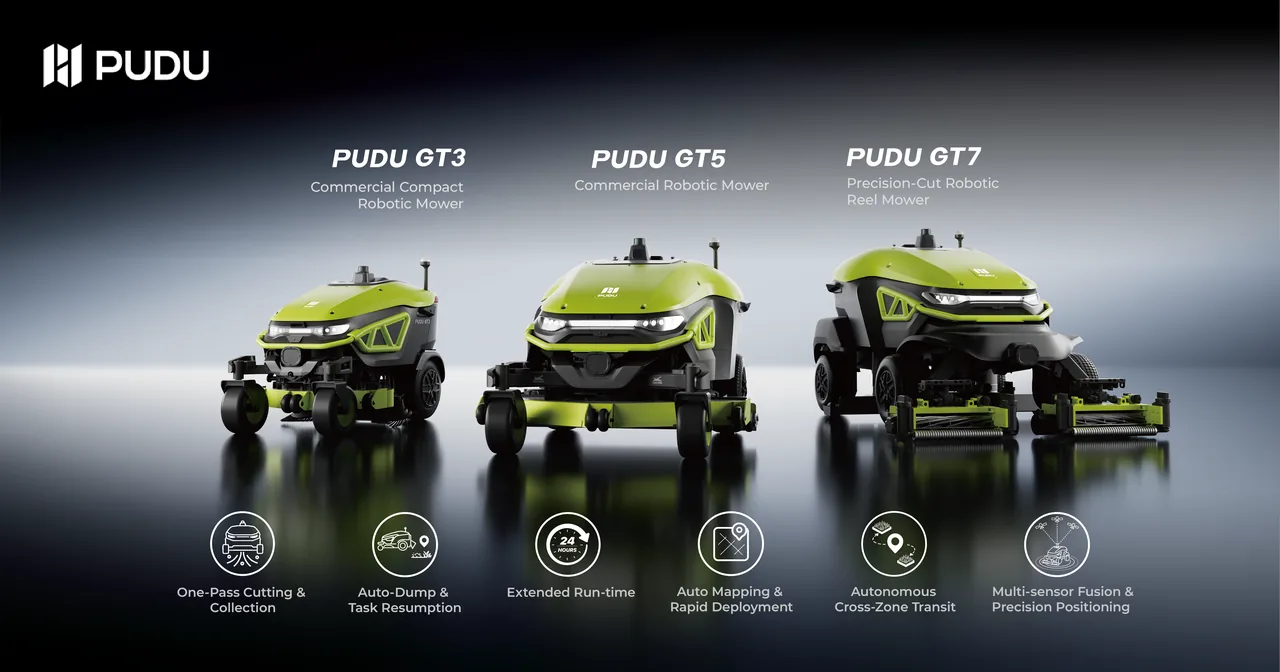
Pudu Robotics, known for service robots in restaurants, hotels, and cleaning, has entered a new segment: professional lawn care. On September 1, the company announced the PUDU GT series of commercial robotic mowers with three models, and from September 15–18 showcased them live for the first time at the GaLaBau expo in Nuremberg.
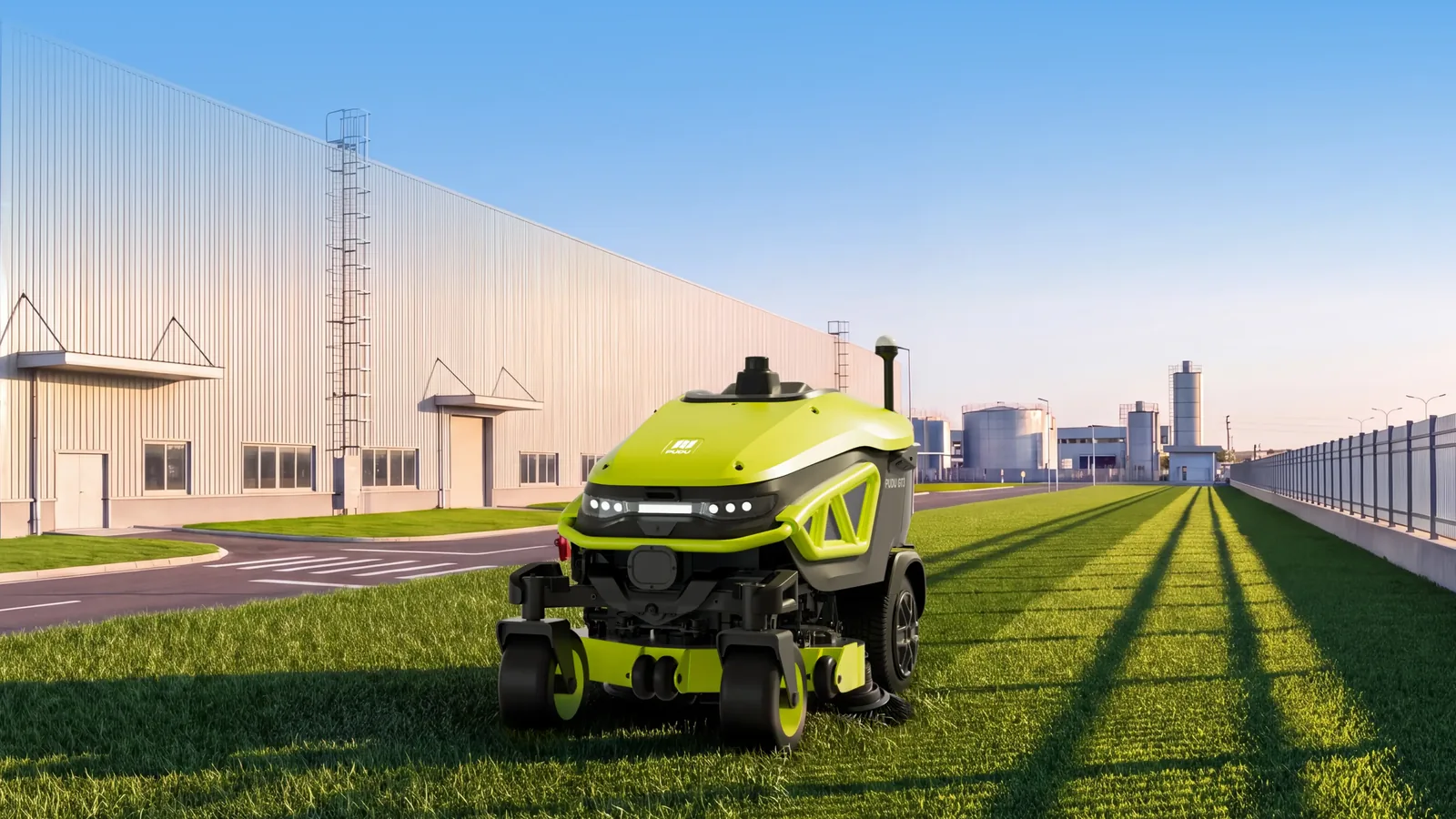
The most compact, GT3, with a 91 cm cutting width, is designed for business parks, campuses, hospitals, and other areas with segmented lawns and pathways. It mows and collects grass, and uses disc brushes to sweep tiles and edges — replacing two machines at once.
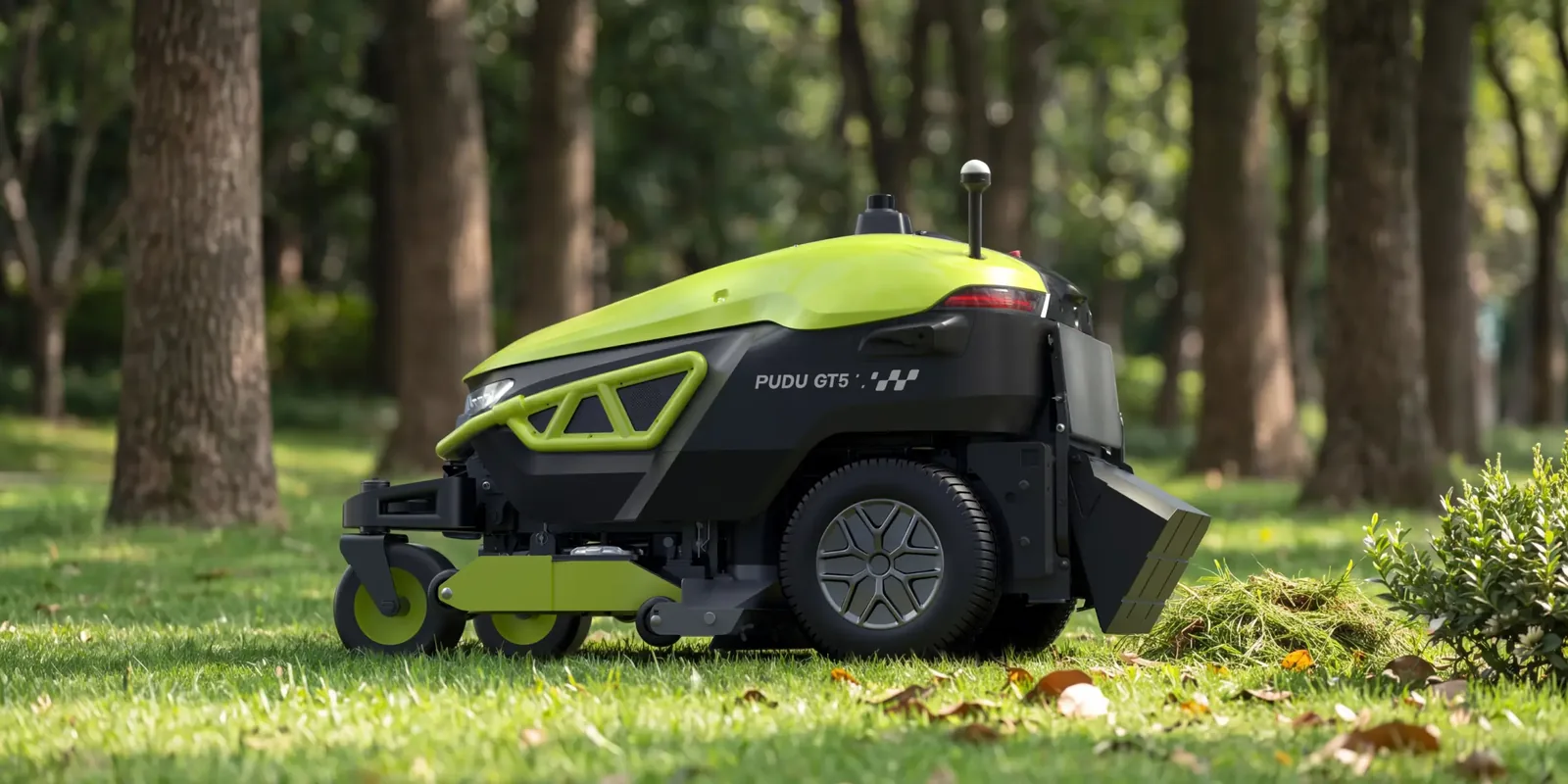
GT5 is a rotary mower with a 152 cm width for large lawns in parks, residential complexes, and commercial sites. According to the manufacturer, it covers about 0.8 ha per hour, runs up to 10 hours, and can mow up to 6.5 ha on a single charge. Grass, leaves, and debris are collected in one pass.
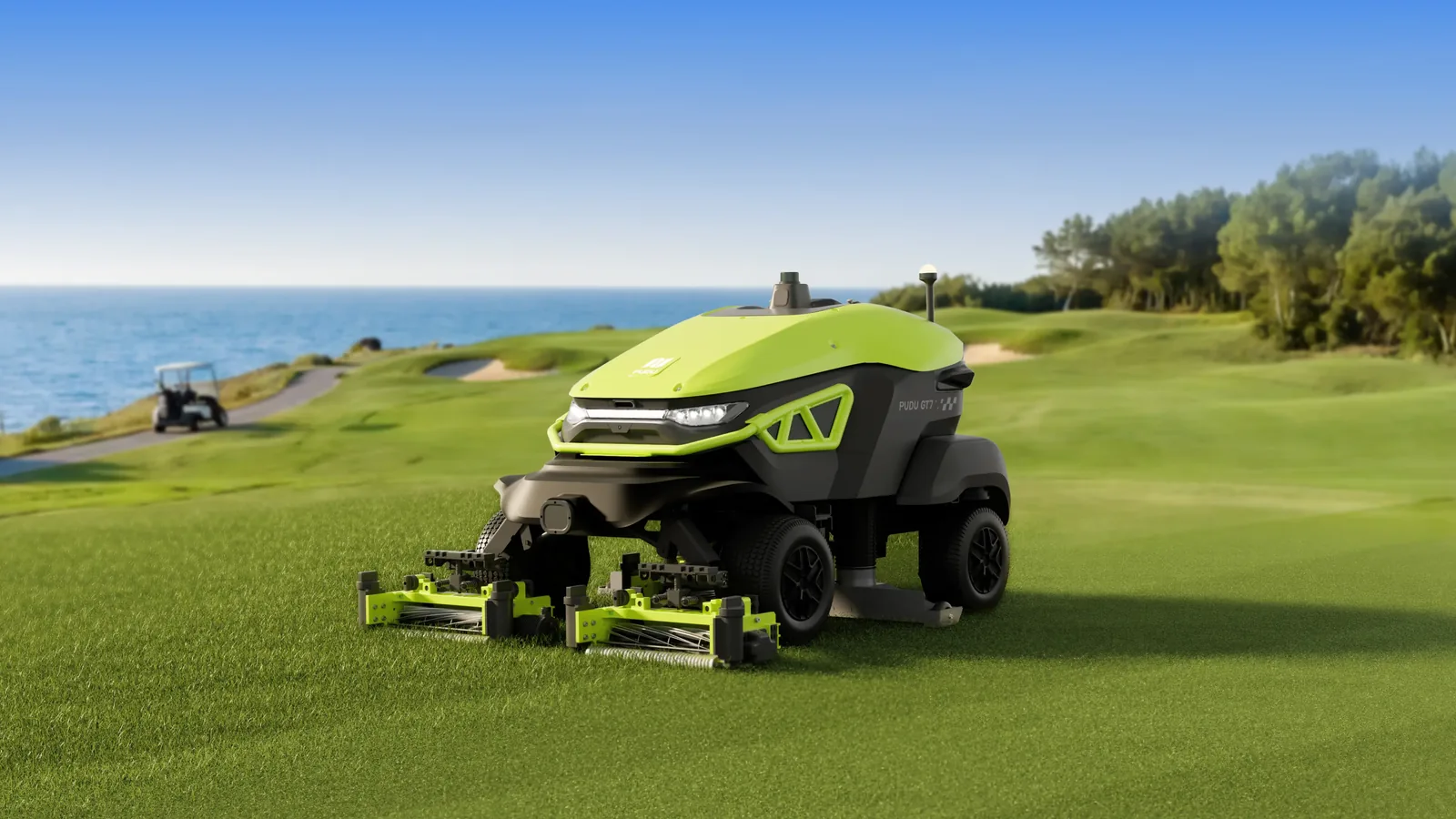
GT7, with three floating drum cutting units and a total width of 160 cm, is designed for golf courses and sports arenas. Navigation combines RTK, lidar, and cameras, with positioning accuracy up to ±2.5 cm. The operator sets stripe angles and offsets for repeatable mowing patterns; the machine handles slopes up to 30° and runs without an internal combustion engine, making it much quieter.
All three models detect people, vehicles, animals, and obstacles using lidar, cameras, and depth sensors, build their own map and route, and can switch to manual control if needed. The body is metal, chassis steel, protection is IP66, and there’s an emergency stop. Prices are not yet announced; the next showcase is planned for the ISSA expo in Australia in October.
For property managers and facility services, this signals that autonomous mowing is moving beyond private lawns. Pudu has already delivered over 130,000 robots to more than 85 countries and has a service network. But with prices and delivery dates still unknown, the choice between GT3, GT5, and GT7 depends on your site layout: segmented grounds, large open lawns, or sports turf with high mowing standards.