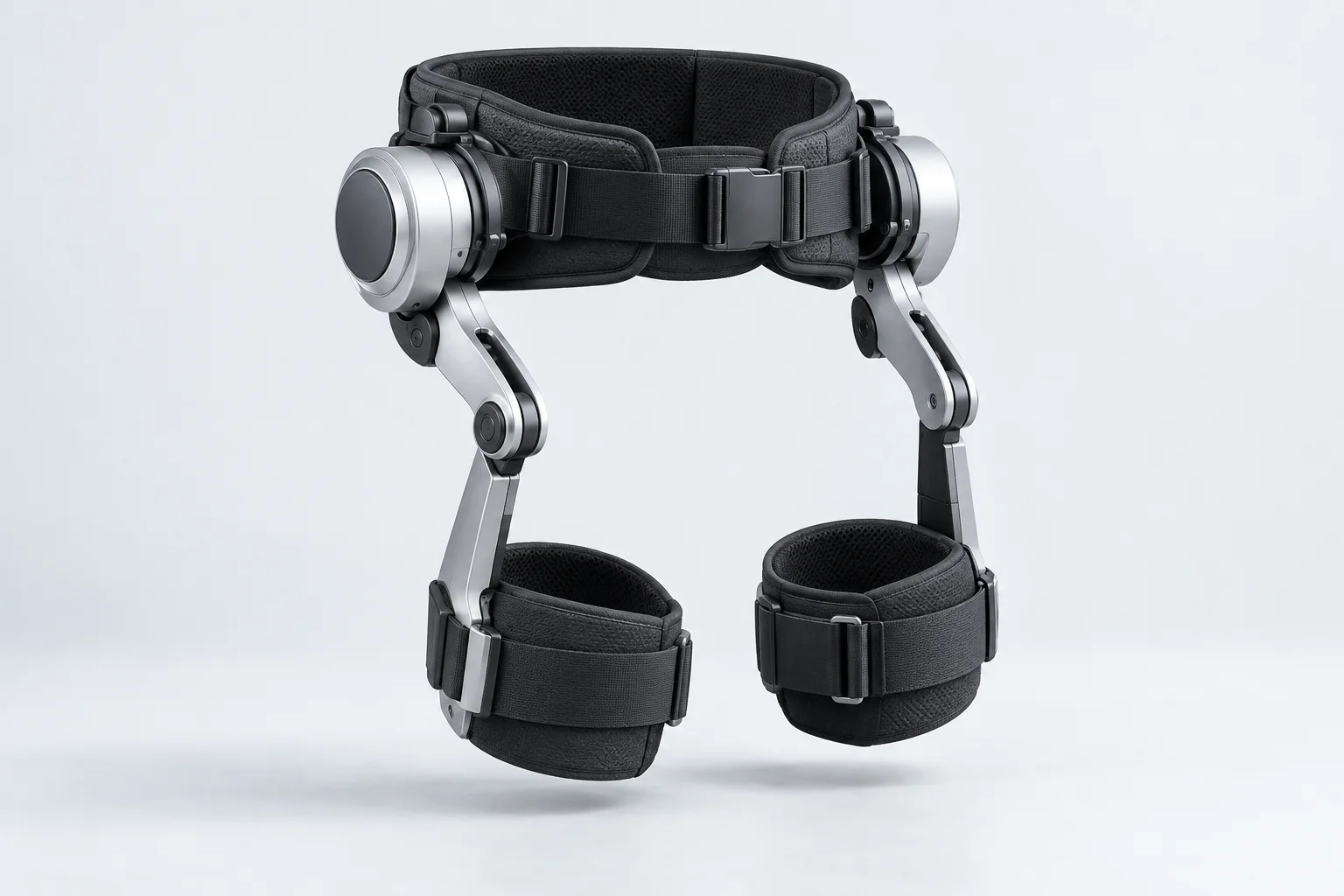
Hypershell, previously known for hip exoskeletons, unveiled its flagship Halo model at IFA 2026 in Berlin. This is a full-leg exoskeleton with four actuators: motors are installed at both the hip and knee joints, working as a unified system. The entire structure weighs 2.6 kg.
The carbon fiber and titanium frame runs continuously from hip to shin, transmitting force directly along the entire leg. The hip joint is flexible, mimicking natural movement, while the rigid rear thigh plates are replaced with a flexible strap. Each knee module weighs about 170 g.
The combined peak power of the four motors is up to 1,490 W, with a maximum assisted speed of 17 km/h. Over 30 sensors monitor leg movement, and the control algorithm—trained on 10,000 hours of motion data—predicts intent in about 200 ms and adjusts support up to 2,500 times per second, according to the manufacturer. During squats, muscle fatigue around the knee is reduced by up to 40%; on descents, the system helps brake and softens impacts.
The removable 370 g battery is rated for 20 km and can be worn on a belt or in a backpack. Protection is IP54; when folded, the exoskeleton takes up less than 8 liters and fits in a backpack. The pre-fitted Halo can be put on in about 20 seconds and taken off in 5. Assistance settings and route planning can be controlled by voice or text via the AI assistant Shelly.
The first 200 units will be released as the Origin Edition with individual numbering; pre-order price is $2,299, €2,299, or £2,199. Sales will start in the USA, Canada, Europe, the UK, and China, with deliveries beginning in November.
Until now, consumer exoskeletons mainly supported the hip, leaving the knee without assistance. Halo fills this gap, significantly expanding options for hikers, those with knee strain, and anyone seeking exoskeletons for rugged terrain. There are no independent tests yet, so it's best to verify the promised energy savings with the first production units.